
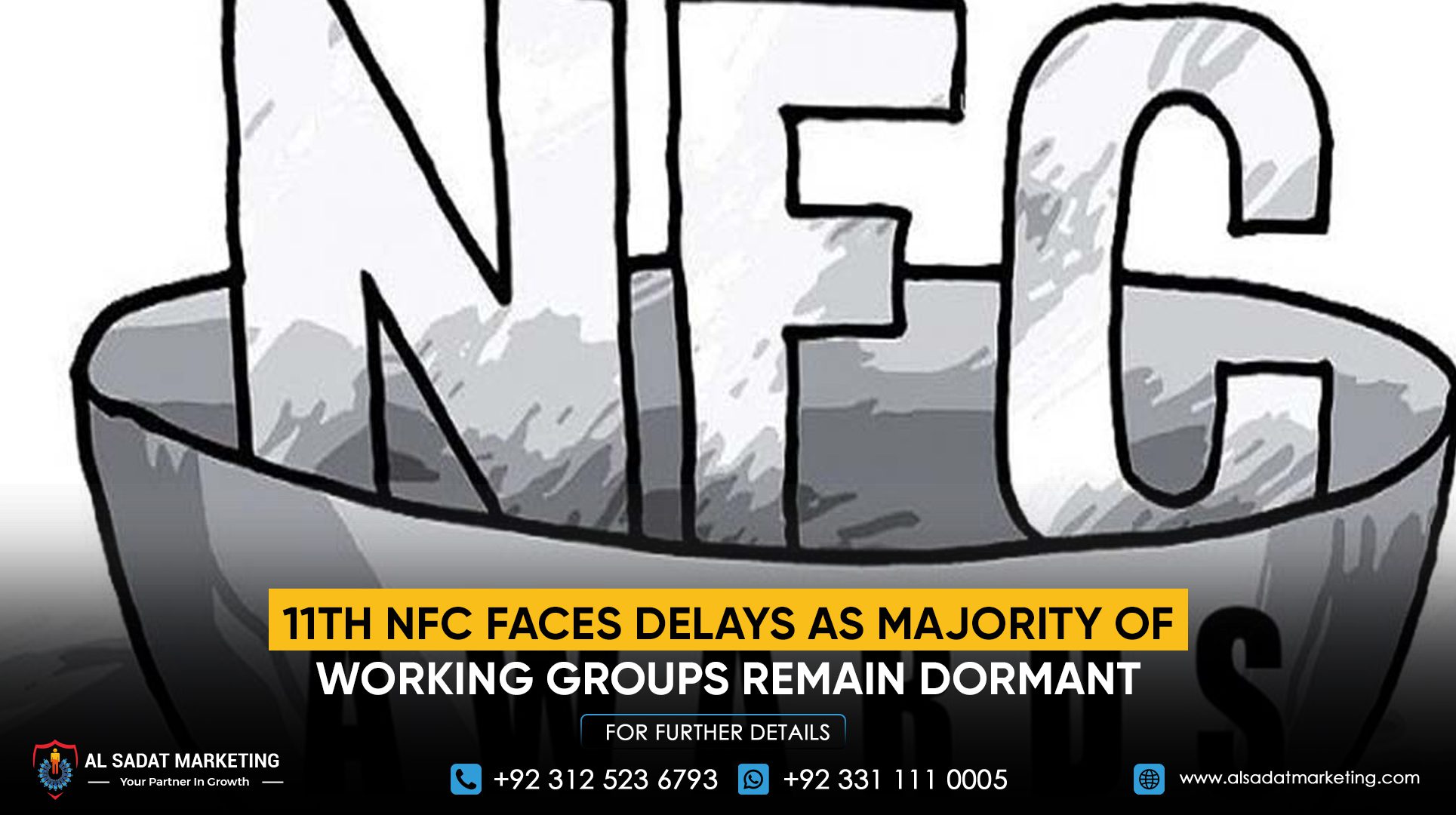
The 11th National Finance Commission (NFC) has yet to hold its second session, raising concerns over delays in finalizing a new revenue-sharing formula more than 15 years after the last award.
The second meeting, originally scheduled between January 8 and 15, did not take place, and most of the commission’s eight technical working groups have yet to become operational, according to a report by Dawn.

So far, only two working groups have met—and even they have held just a single session. The remaining six groups have not met at all since their formal notification in mid-December, effectively stalling progress on the 11th NFC award.
The most active group is examining the fiscal impact of merging the former tribal areas into Khyber Pakhtunkhwa. Led by KP Finance Minister Muzammil Aslam, the group requested detailed calculations from the federal finance secretary on how the ex-FATA allocation would affect other provinces’ shares. Officials say the group has not been able to meet again due to the unavailability of this data.
Another group, focused on divisible pool taxes and led by Finance Minister Muhammad Aurangzeb, met once in late January. It is reviewing whether certain taxes should be added or removed from the divisible pool, including the possibility of excluding customs duties, as international trade falls under federal jurisdiction.
The six other working groups—covering issues such as vertical resource distribution between the federal government and provinces, national debt, tax-to-GDP improvement, direct transfers to provinces, horizontal distribution criteria, and federal expenditures in provincial domains—have not held any meetings.
A finance ministry official attributed the delay partly to overseas commitments of the finance minister and finance secretary. Provincial representatives, however, said their group meetings were repeatedly disrupted because federal officials were unavailable.
At the NFC’s first meeting on December 4, the federal government proposed raising additional revenue equivalent to more than 5 percent of GDP over the next three years—roughly Rs. 6.5 trillion annually at current levels. Provinces were asked to increase their own revenues to 3 percent of GDP through property taxes, agricultural income tax, and sales tax on services.
The federal government argued that higher revenues are needed to address a widening fiscal deficit, which has grown from about 4 percent of GDP to over 6.6 percent since 2010, contributing to rising debt following the 7th NFC award.
During the same meeting, Sindh objected to any discussion on provincial expenditures, stating that the NFC’s constitutional mandate is limited to revenue distribution. The federal government has since sought legal advice suggesting that expenditure matters can also be discussed in the NFC forum.
Under IMF-backed reform talks, the federal government has proposed greater provincial participation in funding disaster response, health programs, and major infrastructure projects. Punjab and KP have also informally supported reducing the weight of population in the NFC distribution formula.
Constitutionally, the NFC is responsible for distributing the net proceeds of major federal taxes—including income tax, sales tax on goods, excise duties, and export duties—between the federation and the provinces.
The 11th NFC was formed on August 22, but its first meeting was repeatedly postponed before finally taking place in December. The previous 7th NFC award, announced in 2009, remained in effect for 15 years instead of the constitutionally mandated five-year term.
Under the current formula, provincial shares are based on population, poverty, revenue generation, and inverse population density. Punjab receives 51.74 percent, Sindh 24.55 percent, Khyber Pakhtunkhwa 14.62 percent, and Balochistan 9.09 percent.