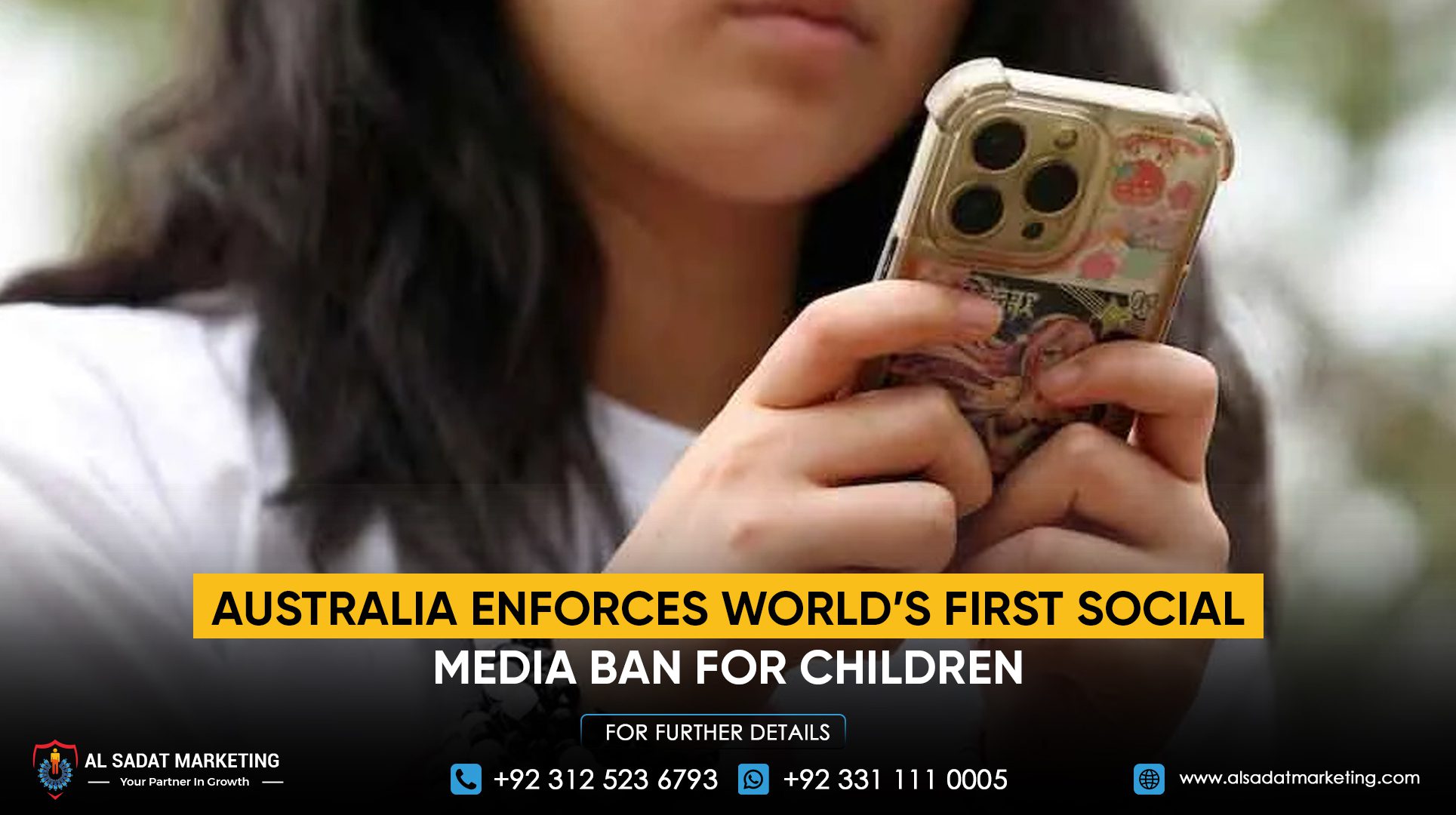
Australia has become the first country in the world to ban social media access for children under 16, blocking platforms such as TikTok, YouTube, Instagram, and Facebook from midnight. Under the new law, ten major platforms have been ordered to prevent underage access or face fines of up to A$49.5 million ($33 million). The decision has sparked debate among technology companies and free-speech advocates but has been welcomed by parents and child-safety groups.
The move comes amid rising global concerns about the impact of social media on children’s mental health, online safety, and exposure to harmful content. Governments around the world are now closely watching Australia’s rollout as they consider their own age-based restrictions.

Prime Minister Anthony Albanese, in a video message set to be played in schools, said the ban aims to ease the pressure on young Australians who struggle with the addictive nature of endless feeds and algorithm-driven content. He encouraged students to spend the upcoming holidays trying new hobbies, staying active, and spending time with family and friends instead of scrolling on their phones.
For more than a year, experts have questioned whether any country could successfully block children from using platforms that are deeply embedded in modern life. The ban now marks a real-time test case that lawmakers across Europe, Asia, and the United States are expected to study.
Digital policy analysts say Australia’s move could set a global precedent. Curtin University professor Tama Leaver described it as “the canary in the coal mine,” noting that governments worldwide are watching how Australia is challenging Big Tech over child protection.
The ban initially applies to ten platforms, though the list will evolve as new apps emerge. Most companies, except Elon Musk’s X, have agreed to comply using tools such as age inference, age estimation via selfies, ID verification, and linked bank accounts. Musk criticized the law, calling it “a backdoor way to control access to the internet,” and a High Court challenge is already underway.
For social media companies, the enforcement comes at a time when global user growth is slowing, and usage patterns are shifting. While platforms say they earn little from under-16 users, they warn that the ban disrupts their long-term audience pipeline. The government says 86% of Australians aged eight to 15 used social media before the ban.
Not all young people agree with the decision. Some fear the restrictions could isolate teens who rely on online platforms for community and emotional support. Fourteen-year-old Annie Wang said the ban may make life harder for LGBTQ+ youth and those with niche interests who depend on social media to connect with others. “It’s going to be worse for some people,” she said, adding that the change could negatively impact mental health for those who already feel disconnected.
Australia’s bold move now begins a major social experiment, one that could reshape global norms on children’s access to digital platforms