
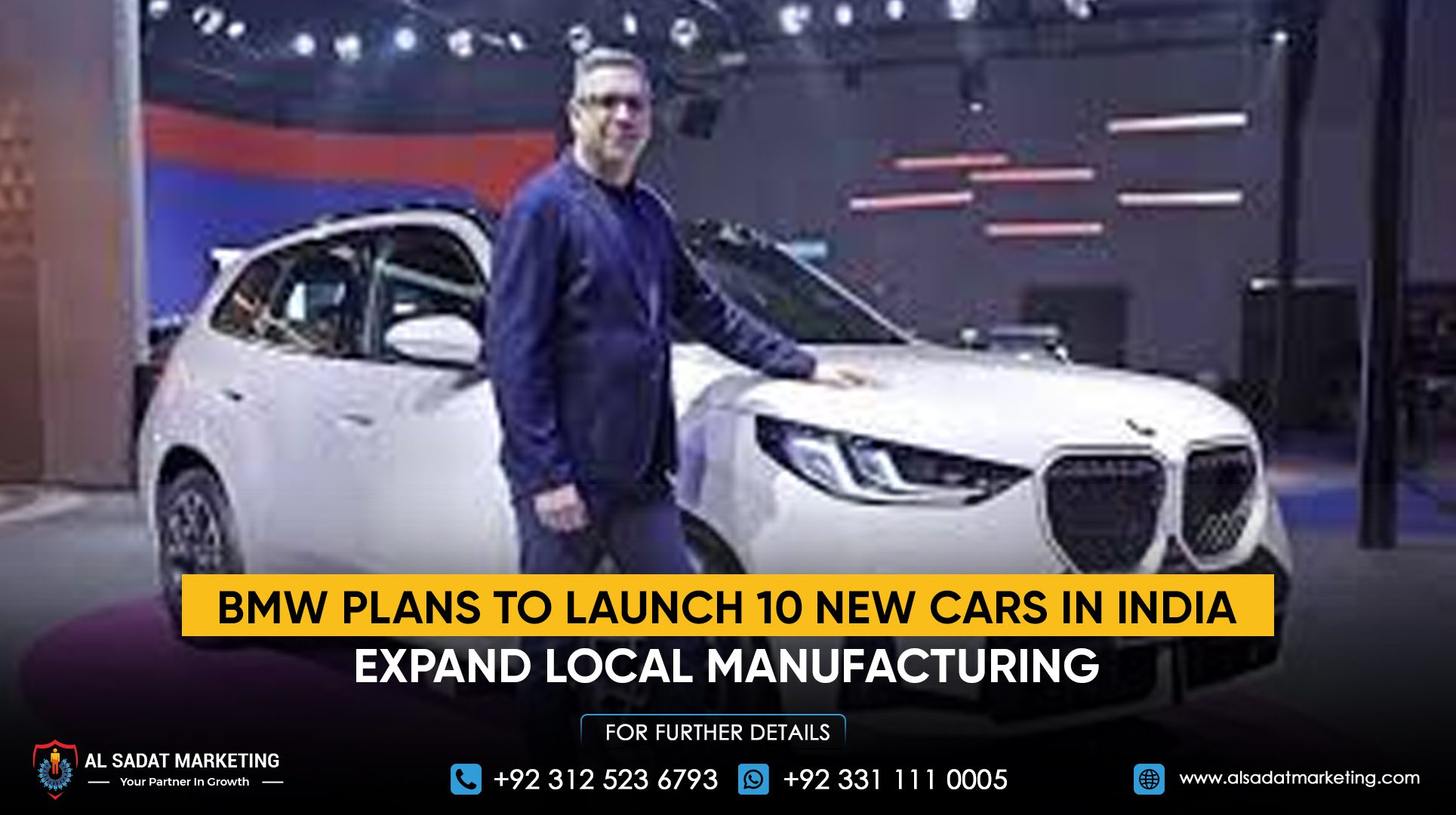
BMW is set to significantly expand its presence in India this year by launching 10 new cars, including electric vehicles and models from its popular MINI brand, as it looks to build on strong recent growth despite the country’s small luxury car market.
Speaking to Reuters in Mumbai, BMW India CEO Hardeep Brar said the German automaker plans to maintain its growth momentum in 2026 through a mix of new launches and upgrades. Alongside the 10 new models, BMW will introduce 17 product upgrades, with more than one-third of the launches coming under the MINI brand.

BMW recorded its highest-ever annual sales in India in 2025, selling 18,000 cars, a 14 percent increase compared to the previous year. This performance helped the company narrow the gap with its main rival and market leader, Mercedes-Benz.
Also Read: Why Lakeshore City Is Emerging as Pakistan’s Next Tourism-Driven Commercial Hub in 2026
Despite the strong growth, luxury cars remain a niche segment in India, accounting for only about 1 percent of total car sales of more than four million units annually. High import duties continue to push up prices, limiting wider adoption.
Brar noted that simply competing within this small luxury segment is not enough to drive long-term growth. To address this, BMW is focusing on expanding its portfolio and lowering costs by increasing local sourcing. Currently, around 50 percent of the parts for BMW cars assembled in India are sourced locally, including seats, engines, axles, and tyres. The company aims to raise this share further, although specific targets were not disclosed.
BMW has already taken a major step toward localization in the electric vehicle space. Last year, it began local assembly of the BMW iX1 in India, marking its first locally assembled EV in the country. This move allowed BMW to price the model competitively against petrol-powered cars and helped boost its electric vehicle sales by 200 percent.
As a result, EVs now account for 21 percent of BMW’s total sales in India, up sharply from around 8 percent in 2024. Encouraged by this growth, the company is exploring the possibility of locally sourcing EV components such as motors, although Brar said these discussions are still at an early stage.
Brar also emphasized the importance of government policy in sustaining EV growth. He said the continuation of the current 5 percent tax rate on electric vehicles, compared with 40 percent or more on petrol and diesel cars, is critical for encouraging investment and expanding the luxury EV market.
While overall EV penetration in India stands at around 4 percent, the figure is closer to 10 percent in the luxury segment. According to Brar, maintaining supportive tax policies for a defined period will be essential until electric vehicles can compete independently without incentives.