
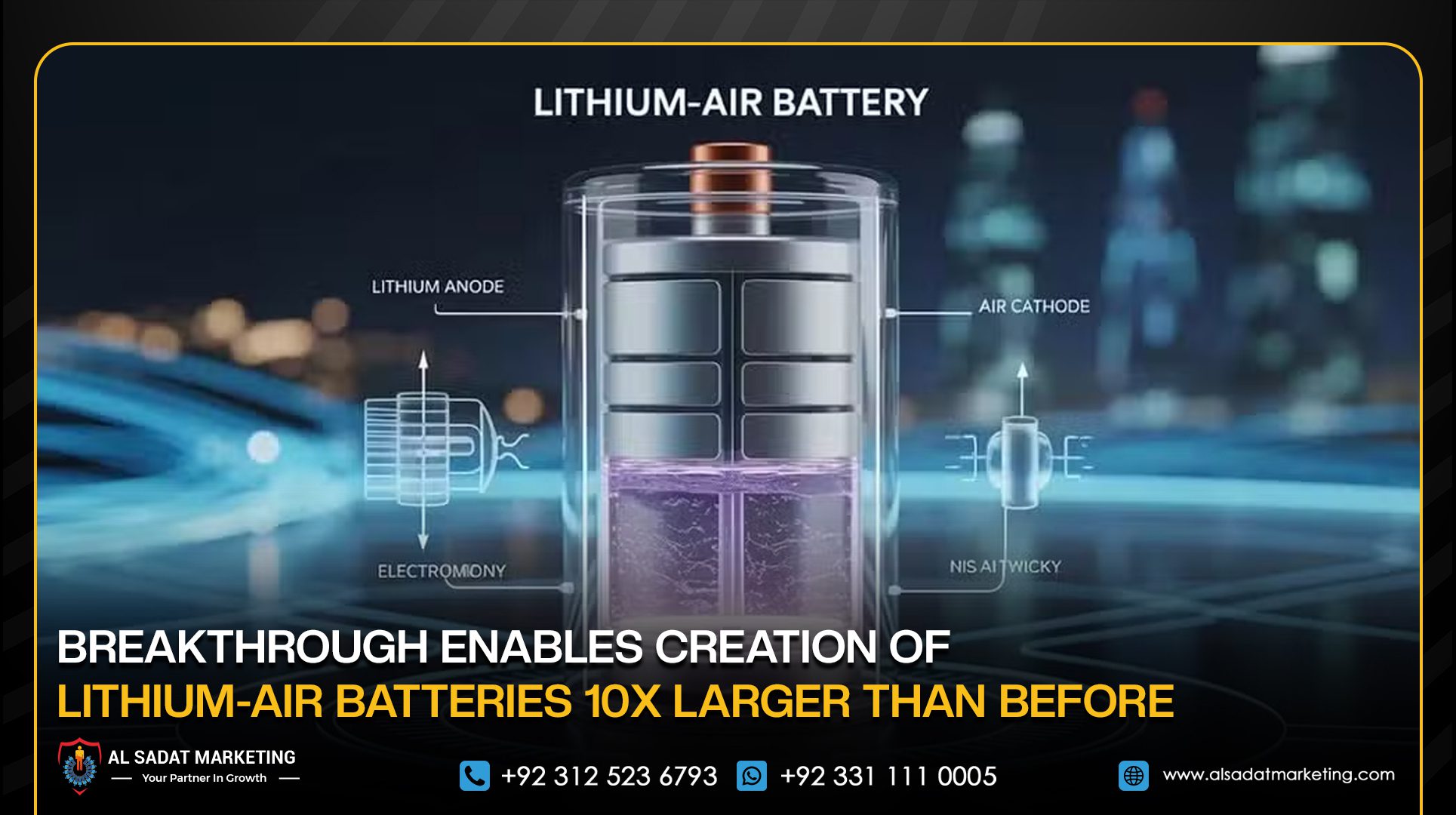
Scientists have developed a new catalyst technology that could significantly improve the performance and lifespan of next-generation lithium-air batteries, a system widely seen as a potential successor to current lithium-ion batteries.
The research centers on tungsten diselenide (WSe₂), a two-dimensional material that traditionally has limited chemical activity. By modifying its structure, researchers have managed to activate a much larger portion of its surface, leading to better energy capacity, faster charging and discharging, and improved long-term stability.

Lithium-air batteries have long been considered promising because they can theoretically deliver energy densities more than ten times higher than lithium-ion batteries. However, their progress has been slowed by key challenges, including slow reaction speeds and short operational lifespans.
To overcome these issues, scientists from the Korea Institute of Science and Technology and the Institute for Advanced Engineering introduced platinum atoms into the WSe₂ structure and created atomic-level vacancies where selenium atoms are missing. These changes effectively turned previously inactive مناطق of the material into active catalytic sites.
As a result, the material can interact more efficiently with oxygen during battery operation, improving critical processes such as oxygen reduction and oxygen evolution. At the same time, the structure maintains good electrical conductivity, which is essential for stable battery performance.
Tests showed that lithium-air batteries using this new catalyst were able to sustain more than 550 charge-discharge cycles, even under fast operating conditions. The system also demonstrated better durability compared to conventional catalysts like platinum on carbon and ruthenium oxide.
Researchers say this approach could reshape how two-dimensional materials are used in energy systems by making their entire surface active instead of relying only on edges.
Beyond lithium-air batteries, the technology could also be applied to other areas such as water electrolysis and fuel cells, where efficient catalysts are critical.
If successfully commercialized, this development could play a key role in advancing high-capacity energy storage and powering future technologies, including electric vehicles and other high-demand energy systems.