
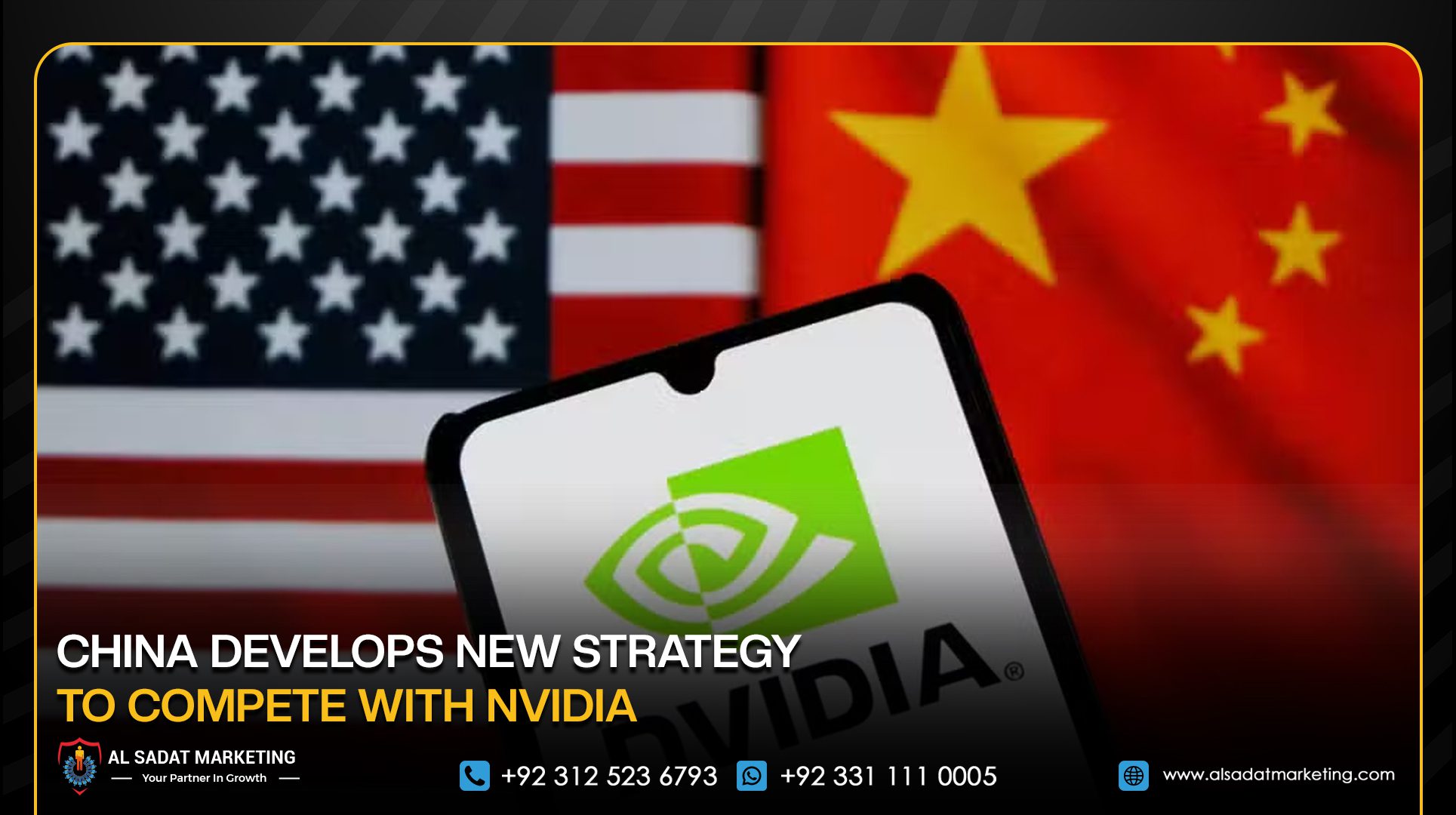
China is actively looking for ways to reduce its dependence on Nvidia’s CUDA platform, which has long been a major factor behind the company’s leadership in artificial intelligence.
Wei Shaojun has encouraged the country’s AI sector to start developing alternatives to Western technologies, including CUDA, to strengthen technological independence.

Why CUDA Matters
CUDA is widely considered one of Nvidia’s biggest strengths. CEO Jensen Huang has often highlighted how the software ecosystem plays a key role in attracting developers and maintaining Nvidia’s dominance in AI.
Because CUDA is mature and well-supported, many developers rely on it heavily — but this also means they become dependent on Nvidia’s hardware.
A Different Approach: Software-Defined Chips
Instead of creating a direct competitor to CUDA, Wei Shaojun has proposed an alternative approach known as software-defined chips (SDCs).
This concept shifts more control to software rather than fixed hardware designs, allowing systems to be more flexible and adaptable.
How It Works
In a software-defined chip system, workloads do not depend on a CUDA-like layer. Instead, the chip operates on a programmable grid, where instructions are generated by a compiler.
This design allows software to run without being tied to a specific hardware instruction set. Unlike traditional GPUs that rely on schedulers to manage tasks, SDCs use a more controlled method where data movement is planned in advance with precise timing.
Challenges Ahead
While the idea offers flexibility, it is not without difficulties. Wei Shaojun noted that building alternatives through translation layers or entirely new ecosystems would require massive investment.
Even the SDC approach brings its own challenges, including complex compiler design, routing limitations, and the need to rethink traditional hardware architectures.
Industry Context
Some companies are already working on similar ideas, including SambaNova Systems and Groq. However, their solutions are typically tailored for specific tasks and are not full replacements for GPUs.
Overall, China’s exploration of these alternatives highlights the growing importance of software ecosystems in shaping the future of AI hardware.