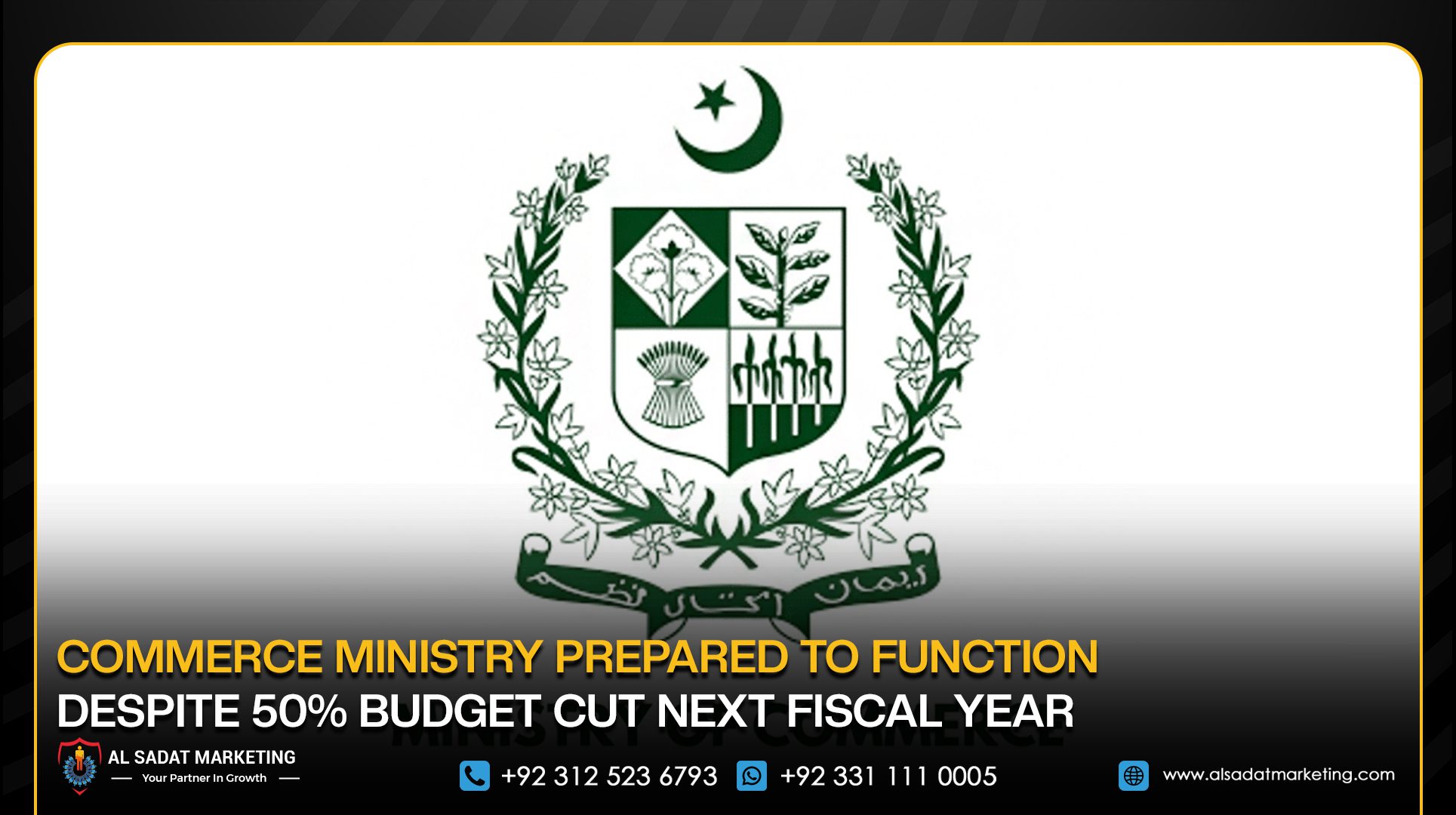
The Ministry of Commerce has told a Senate panel that it is prepared to manage its operations even if its non-development budget is cut by up to 50 percent in the next fiscal year, as fiscal pressures continue to mount amid the evolving situation in the Middle East.
Speaking before the Senate Standing Committee on Commerce, chaired by Anusha Rahman, Commerce Secretary Jawad Paul said the government had already reduced non-Employee Related Expenditure (non-ERE) releases by 20 percent in the final quarter of FY2025-26, with further tightening expected in FY2026-27.

During the session, Saleem Mandviwala highlighted concerns over shrinking fiscal space, pointing to the recent Rs. 80 billion subsidy on petroleum products. He warned that Pakistan’s fragile financial position could limit the government’s ability to meet future budgetary demands.
In response, the commerce secretary said the ministry would adjust its expenditure plans accordingly, even under significant budget cuts. The ministry has proposed a relatively modest 9 percent increase for FY2026-27, seeking a total allocation of Rs. 1.707 billion compared to Rs. 1.562 billion in the current fiscal year.
A major increase has been requested for the Trade Development Authority of Pakistan, with proposed funding of Rs. 9.951 billion for FY2026-27, up sharply from Rs. 2.6 billion this year. Officials said the increase is necessary following the abolition of the Export Development Surcharge (EDS), which had previously supported export-related initiatives.
However, the committee expressed reservations about whether such a significant increase could be accommodated given ongoing fiscal constraints. It is recommended that TDAP submit its annual business plan to the Export Development Fund (EDF) board by April 2026 to align funding with available resources.
The ministry has also proposed allocations for several attached bodies, including:
- Rs. 248 million for the Pakistan Institute of Trade and Development
- Rs. 142 million for the Directorate General of Trade Organisations
- Rs. 415.5 million for the Trade Dispute Resolution Organisation
- Rs. 914 million for the National Tariff Commission
In addition, Rs. 20 billion has been proposed under the Export Development Fund, along with Rs. 12.158 billion for export support schemes such as DLTL and TUFF, and Rs. 7.427 billion for trade missions abroad.
The committee approved the ministry’s overall budget proposals and also cleared Rs. 4.83 billion for the Quetta Expo Centre project, subject to relocation. Sarfraz Bugti has agreed to develop the project at an alternative site recommended by the committee.
To resolve disagreements over the location, the committee has invited the chief minister to attend its next meeting on March 31, either in person or via video link. It also suggested allocating land from the National Disaster Management Authority’s available 125 acres, although the commerce secretary expressed reservations about pursuing the project jointly with the authority.
The discussions reflect growing fiscal constraints facing the government, as ministries prepare for tighter budgets while attempting to sustain key economic and export-related initiatives.