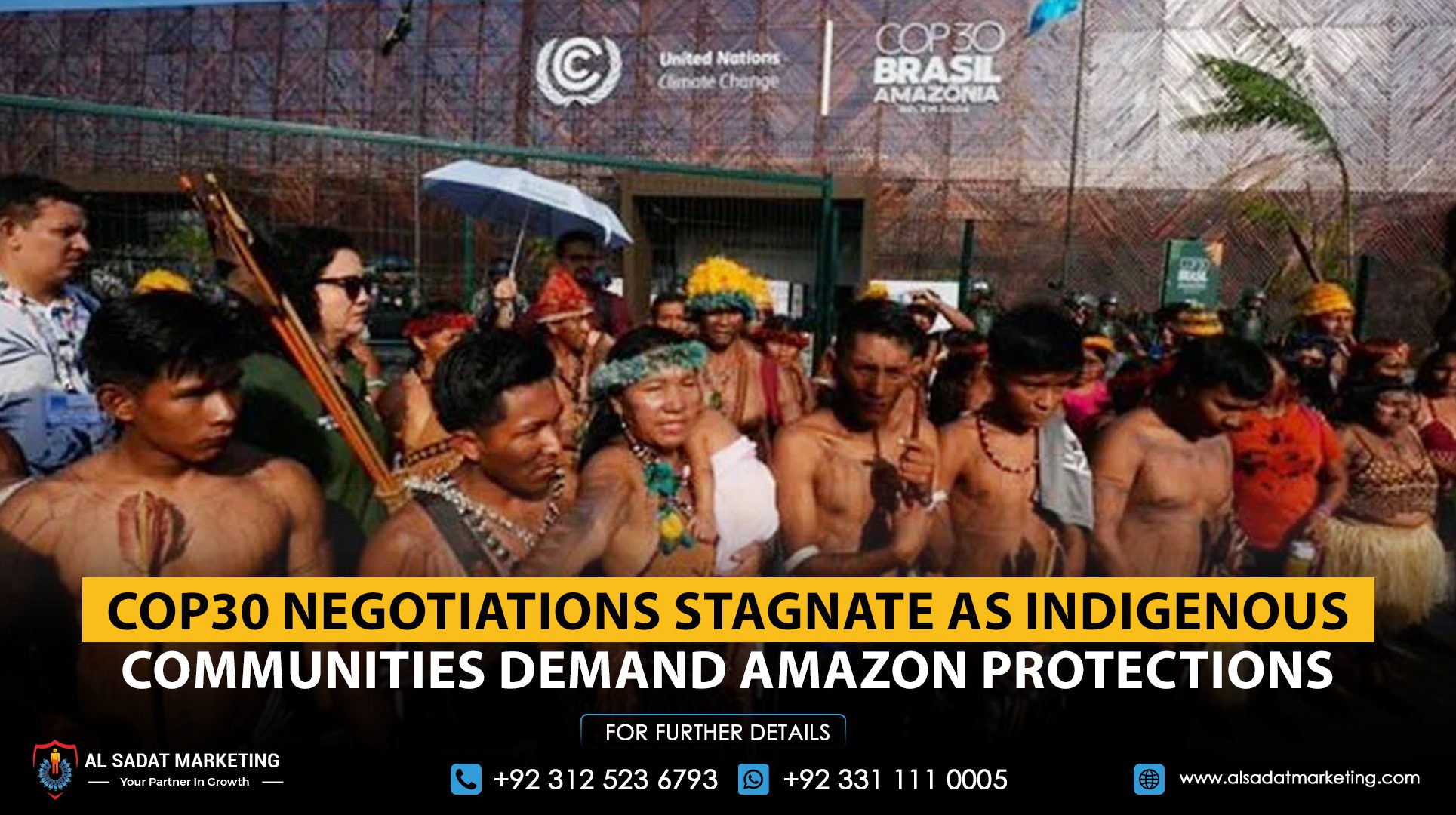
Climate negotiations at COP30 entered a tense phase as the summit reached its midpoint, with countries still struggling to agree on several major issues. While delegates debated inside the venue, Indigenous groups gathered outside to push for stronger protection of their lands and full inclusion in climate decision-making.
Indigenous communities held a peaceful sit-in at the main entrance, demanding a direct meeting with COP30 President Andre Correa do Lago. Members of the Munduruku group, whose territory covers nearly 24,000 square kilometers in northern Brazil, said their forests were being destroyed for corporate gain. They urged global leaders to recognize that Indigenous people play a central role in protecting the Amazon and stabilizing the climate.

Brazilian President Luiz Inacio Lula da Silva has repeatedly highlighted Indigenous participation as essential for this year’s climate talks. During their meeting with Correa do Lago, Indigenous leaders questioned why they were invited to Belem but excluded from the main negotiation rooms. Organizers promised more conference passes, though Environment Minister Marina Silva suggested that many of their concerns were directed at Brazil’s federal government rather than the COP process itself.
Inside the summit, negotiators from 195 countries continued discussions on earlier climate agreements, especially on measuring and strengthening global resilience against extreme weather events. Known as “adaptation,” this topic is central to helping vulnerable nations cope with worsening climate impacts.
However, several delegates voiced worry that COP30 could end with a weak outcome. Andrew Wilson, deputy secretary general for policy at the International Chamber of Commerce, warned that the summit risks falling short of expectations if progress continues at the current pace.
The transition away from fossil fuels remains one of the most sensitive issues. Brazil and other nations want the conference to send a clear message about moving beyond fossil fuels, building on commitments made at COP28. But the topic has not been added to the formal agenda, making it harder to secure strong language.
One option could be to address fossil fuel transition in the final cover text, the key document that summarizes the conference’s overall agreement. Norwegian Climate Minister Andreas Bjelland Eriksen said that even limited progress in Belem would be a positive sign for global cooperation.
Despite mixed signals and concerns about reduced U.S. involvement, negotiators hope to build momentum and reach a unified message before the summit concludes.