
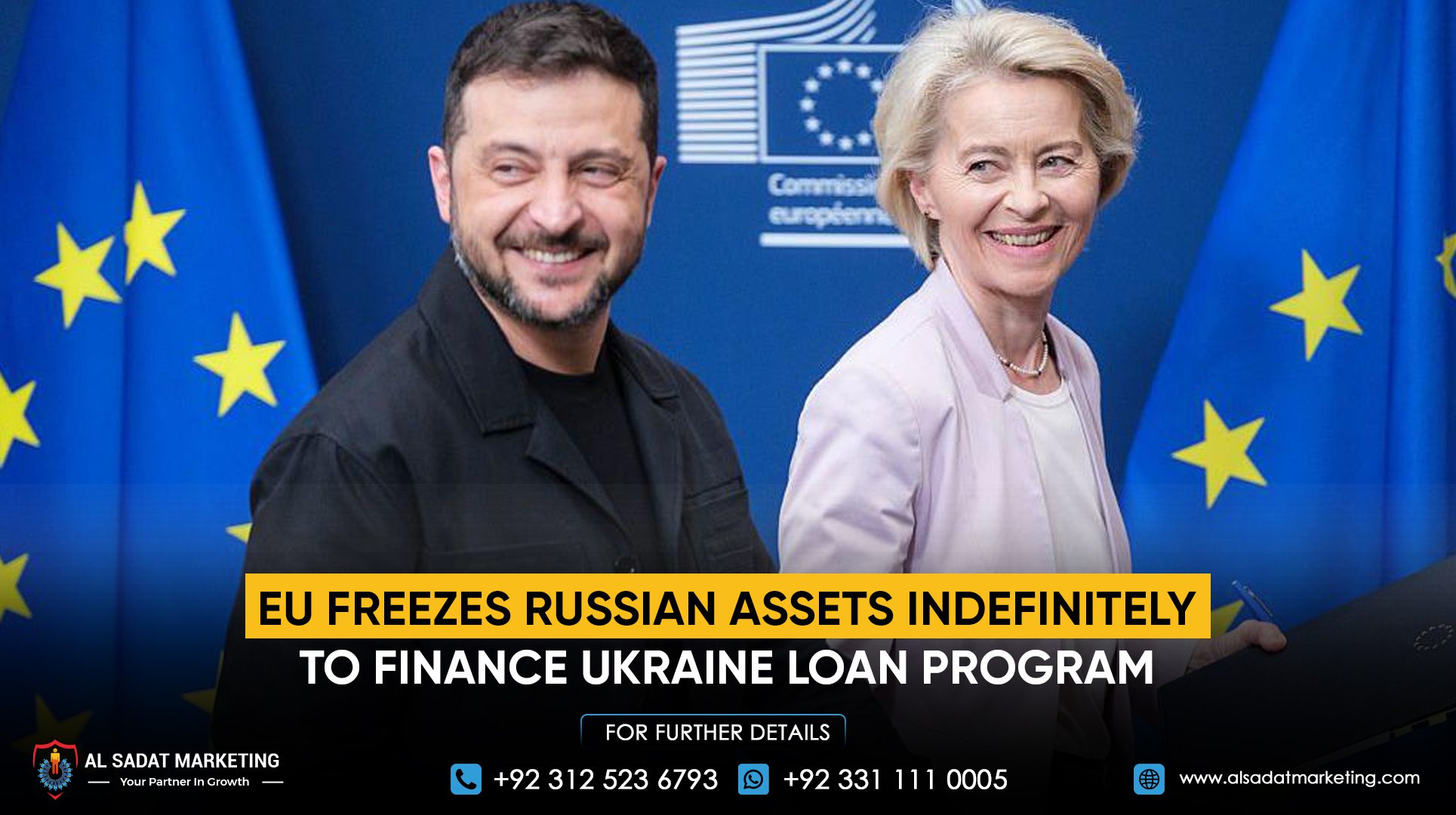
The European Union has agreed to freeze Russian central bank assets indefinitely, clearing a major obstacle in plans to use the funds to financially support Ukraine as it continues to defend itself against Russia’s invasion.
EU member states have decided to immobilize around €210 billion ($246 billion) in Russian sovereign assets for an open-ended period, ending the previous requirement to renew the freeze every six months. The move prevents any single member state, including Hungary or Slovakia, from blocking the continuation of the asset freeze in the future.

The decision is designed to facilitate an EU-backed loan of up to €165 billion for Ukraine, intended to cover both military assistance and civilian budgetary needs for 2026 and 2027. Under the proposed structure, the loan would only be repaid if Russia pays reparations, effectively allowing the EU to advance future compensation owed by Moscow to Kyiv.
Belgium, where the majority of the frozen assets are held at the Brussels-based securities depository Euroclear, has raised concerns about potential legal exposure if Russia challenges the arrangement. EU diplomats are therefore working on guarantees to shield Belgium from any financial or legal consequences.
Germany has already committed €50 billion in guarantees to support the proposed reparations loan. Ukrainian leaders welcomed the decision, with Prime Minister Yulia Svyrydenko calling it a landmark step toward justice, accountability, and sustained international support for Ukraine.
EU leaders are expected to meet on December 18 to finalize the details of the loan package and address remaining concerns, with the aim of securing full consensus among all member states.
Russia has strongly condemned the move, with the Russian central bank calling the planned use of its frozen assets illegal. Moscow has filed a lawsuit against Euroclear, arguing that the freeze has restricted its ability to access and manage its funds. Hungarian Prime Minister Viktor Orban also criticized the decision, warning it could cause serious damage to the EU and vowing to push for what he described as a lawful resolution.
The agreement comes as discussions continue about Ukraine’s potential EU membership, with some officials floating January 1, 2027, as a possible target date. However, European diplomats caution that such a timeline would be extremely challenging.
The indefinite asset freeze and proposed reparations-based loan underscore the EU’s long-term commitment to supporting Ukraine financially while maintaining pressure on Russia through sustained sanctions.