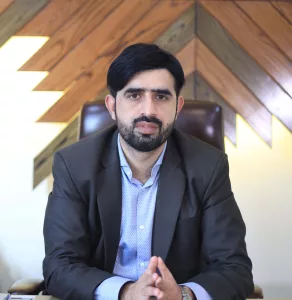

Federal Minister for Finance and Revenue, Senator Muhammad Aurangzeb, held a meeting at the Finance Division with a high-level international investors’ delegation comprising representatives from the International Finance Corporation (IFC), British International Investment (BII), the Asian Development Bank (ADB), and Baltoro Capital.
During the meeting, the finance minister said Pakistan has made notable progress in restoring macroeconomic stability over the past 18 months. He highlighted improvements in exchange rate stability and foreign exchange reserves, which are expected to provide import cover for around three months by the end of the year. He also pointed to efforts aimed at reducing the investment deficit and fostering a more stable and predictable economic environment.

Aurangzeb described IFC, ADB, and BII as long-standing development partners and welcomed their increased engagement, particularly in private sector financing and local currency initiatives. Discussions focused on safeguarding and expanding private sector exposure, reducing sovereign risk, and promoting greater private participation through innovative local currency financing structures.
The minister briefed the delegation on Pakistan’s ongoing trade liberalization agenda, including tariff rationalization to enhance competitiveness and dismantle long-standing protectionist barriers. He said the reform trajectory is designed to align Pakistan more closely with successful Southeast Asian economies. He also noted that the services sector continues to perform strongly, with exports expected to maintain their upward momentum.
Energy sector reforms, tax policy improvements, and administrative measures to enhance tax collection were also discussed. Aurangzeb reaffirmed the government’s commitment to broadening the tax base, strengthening compliance, and aligning tax policy with economic growth objectives.
On the financial side, he informed the delegation that Pakistan is meeting its debt repayment obligations smoothly and is exploring access to international capital markets through approved instruments such as the inaugural Panda Bond and the Global Medium-Term Note (GMTN) framework.
He emphasized that strengthening domestic investor confidence remains a key priority, citing recent developments such as the privatization of Pakistan International Airlines through a local consortium as evidence of growing domestic investment commitment and a positive signal for global investors.
Representatives from ADB, IFC, BII, and Baltoro Capital reaffirmed their support for Pakistan’s reform and investment agenda. They highlighted their focus on mobilizing private sector participation, supporting trade, and facilitating private equity investments in infrastructure, SMEs, mid-sized enterprises, job creation, and economic diversification.
Participants also underscored the need to mobilize both domestic and foreign capital, rationalize tax structures affecting investment vehicles, and develop a strong pipeline of private equity platforms to sustain capital formation. They stressed continued collaboration with the government on tax reforms, investment facilitation, and improving the overall business climate.
The meeting concluded with a shared commitment to deepening cooperation and advancing a stable, investment-friendly, and private sector-led growth model for Pakistan.