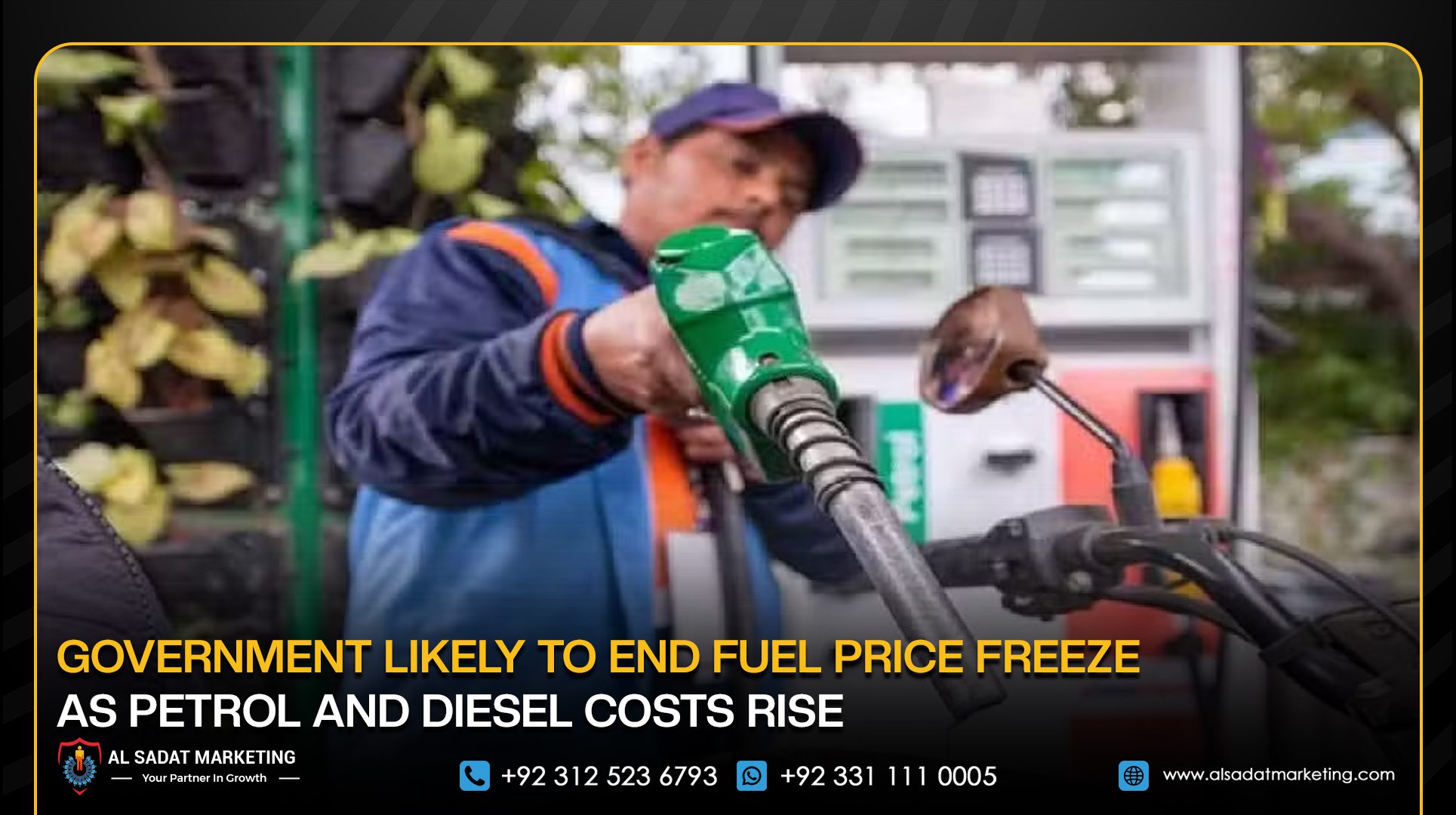
The Government of Pakistan is considering ending the freeze on petrol and diesel prices as rising global energy costs continue to put pressure on public finances and fuel supply management.
The move comes at a time when prices of other fuels, particularly jet fuel and kerosene, have increased sharply and are now significantly out of line with international market rates. Officials say maintaining the current price freeze is becoming increasingly difficult as the gap between domestic and global prices widens.

Recent data shows that jet fuel (JP-1) has increased by Rs. 84 per litre, or around 22%, reaching Rs. 472, while kerosene prices have risen by about Rs. 71 per litre, or nearly 20%, to Rs. 429 within a short span. Since early March, jet fuel prices have surged by nearly 150%, while kerosene has risen by around 127%, reflecting volatility in global markets amid ongoing geopolitical tensions.
Despite these increases, the government has kept petrol and diesel prices unchanged after an earlier hike of Rs. 55 per litre. To sustain this policy, the state has been absorbing significant costs, currently estimated at around Rs. 175 per litre on diesel and Rs. 75 per litre on petrol. Overall, approximately Rs. 69 billion has been allocated in subsidies to cushion consumers from rising prices.
However, officials warn that continuing this approach may not be sustainable, particularly as Pakistan’s ongoing discussions with the International Monetary Fund place greater emphasis on fiscal discipline. Delaying price adjustments could also lead to stronger inflationary pressures in the future.
In response, policymakers are now exploring a shift away from broad price controls toward targeted relief measures. A high-level committee formed under Prime Minister Shehbaz Sharif has reviewed proposals to provide subsidies specifically for owners of two- and three-wheelers, aiming to protect lower-income groups while reducing the overall fiscal burden.
The impact of rising fuel costs is already being felt across multiple sectors. In the aviation industry, higher jet fuel prices have led to a noticeable increase in ticket fares, with domestic travel costs rising by Rs. 10,000 to Rs. 15,000 and international fares increasing by Rs. 30,000 to Rs. 40,000. Airlines have also introduced fuel surcharges ranging from $10 to $100 on certain routes.
Operational challenges have been compounded by disruptions in regional airspace, forcing airlines to take longer routes and further increasing costs. More than 300 flights by Pakistani carriers, including many operated by Pakistan International Airlines, have reportedly been cancelled amid the ongoing situation.
Export sectors are also facing pressure. Industry representatives say higher fuel costs have led to additional logistics charges, including Rs. 50 per kilogram on air cargo shipments, raising concerns about the competitiveness of perishable exports in international markets.
Despite these challenges, authorities maintain that fuel supply conditions remain stable. Imports for March and April have been secured, refinery operations are continuing, and supply chains across the country are functioning without disruption.
As global energy markets remain volatile, the government appears to be moving toward a more balanced approach, weighing the need for fiscal sustainability against the importance of protecting consumers from sudden price shocks.