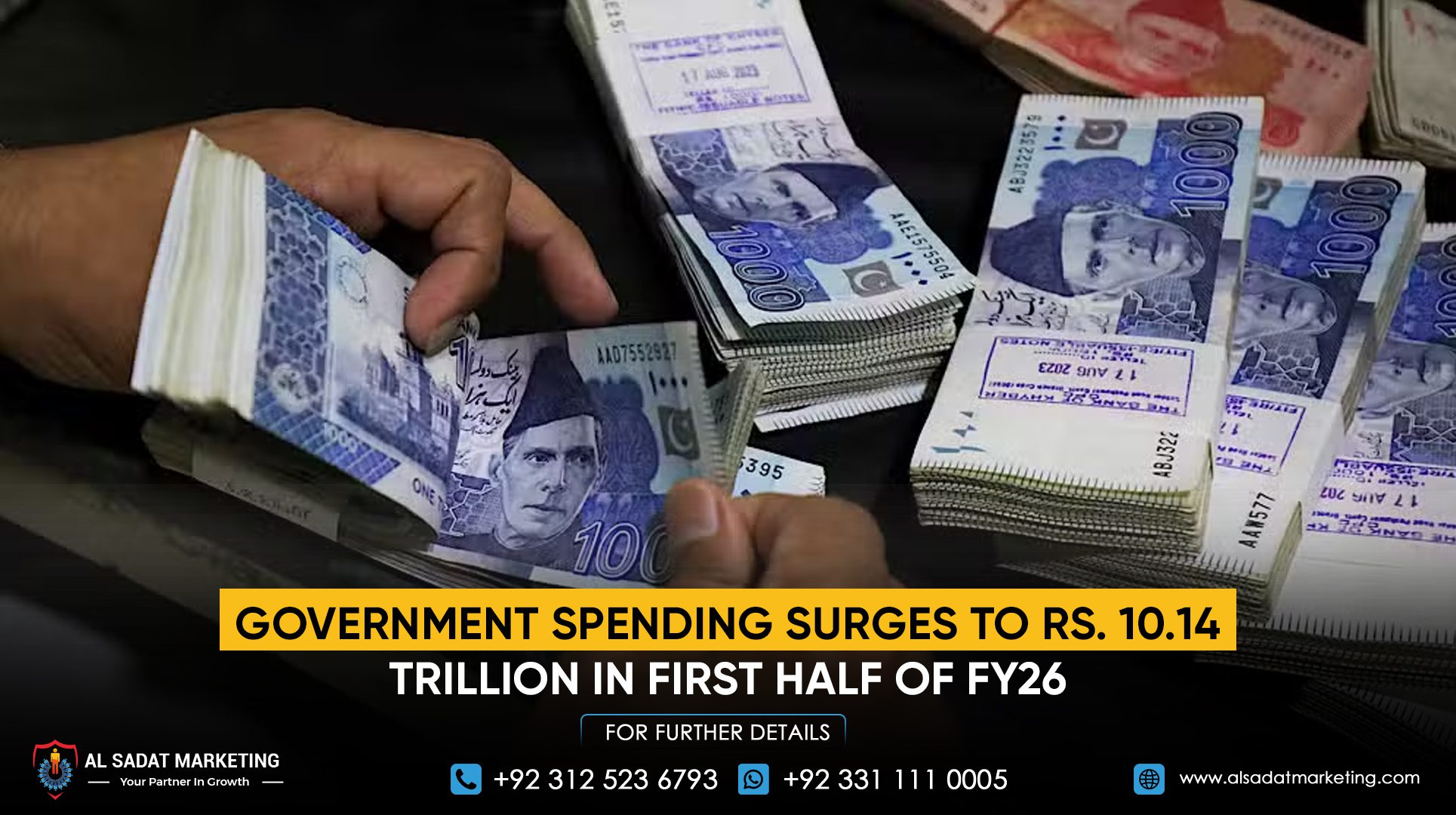
The federal government’s total expenditure during the first half of the ongoing fiscal year (July–December) stood at Rs. 10.141 trillion, according to data released by the Ministry of Finance.
Spending increased notably in the second quarter, rising by Rs. 606.1 billion compared to the first quarter. Consequently, the budget balance for July–September weakened sharply, dropping from Rs. 2.119 trillion to Rs. 541 billion, reflecting growing expenditure pressures.

Despite the surge in spending, the government posted a primary surplus of Rs. 4.105 trillion during the six-month period, signaling fiscal consolidation before accounting for debt servicing obligations.
Total government revenues during July–December amounted to Rs. 10.683 trillion. Of this, tax revenue contributed Rs. 6.729 trillion, while non-tax revenue reached Rs. 3.954 trillion. Federal revenue totaled Rs. 6.160 trillion, whereas provincial revenue stood at Rs. 568 billion.
Interest payments remained the largest component of expenditure, with debt servicing amounting to Rs. 3.563 trillion in the first half of the fiscal year. Defence spending during the same period reached Rs. 1.044 trillion.
To address financing needs, the government secured Rs. 34 billion from external sources and Rs. 575 billion through domestic borrowing over the six months.
Other key expenditures included Rs. 504 billion allocated to pensions, Rs. 380 billion for civil government operations, and Rs. 462 billion in subsidies.
On the revenue front, collections included Rs. 822 billion from the Petroleum Development Levy, Rs. 8.8 billion through the CPP levy, and Rs. 25 billion from the carbon levy. Additionally, the State Bank of Pakistan transferred a profit of Rs. 2.428 trillion to the federal government during the period.
Under the National Finance Commission (NFC) Award, provinces received Rs. 3.616 trillion so far in the current fiscal year. Punjab was allocated Rs. 1.796 trillion, Sindh Rs. 901 billion, Khyber Pakhtunkhwa Rs. 586 billion, and Balochistan Rs. 322 billion.