
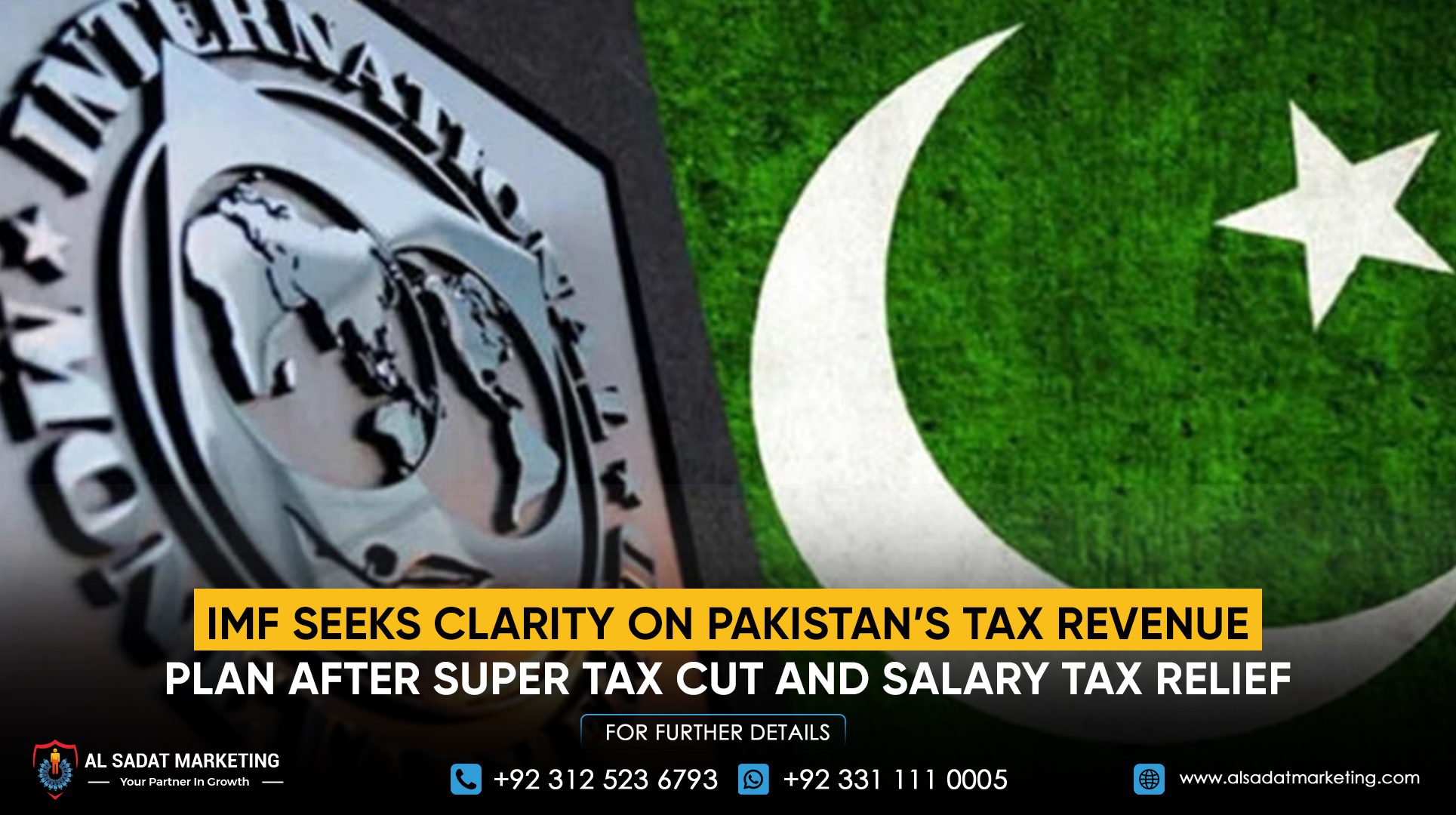
The International Monetary Fund has raised concerns about Pakistan’s ability to meet future revenue targets if the government proceeds with plans to abolish the Super Tax and reduce income tax rates for salaried individuals in the upcoming federal budget.
During virtual discussions with Pakistani authorities, the IMF mission questioned how the government would sustain revenue growth in fiscal year 2026–27 if these tax relief measures are implemented.

Officials said the Federal Board of Revenue could still collect around Rs. 13.4 trillion to Rs. 13.5 trillion by June 2026 through enforcement measures, settlements of tax litigation, and outstanding installments related to the Super Tax.
However, the IMF noted that such gains may largely be temporary and may not provide a sustainable pathway for meeting next year’s tax targets.
Pakistani officials told the IMF that these measures should not be viewed as one-off revenue sources. They argued that resolving long-pending tax disputes in courts could generate billions of rupees in additional collections in the coming fiscal year.
Formal budget negotiations between Islamabad and the IMF are expected to resume in May 2026, when key fiscal assumptions and revenue targets for the next financial year will be finalized.
Earlier discussions at the Prime Minister’s Office produced a proposal to seek IMF approval for abolishing the Super Tax and cutting income tax rates for the salaried class by about five percentage points in the next budget.
The proposal has faced resistance from the IMF, which questioned how the government would replace an estimated Rs. 150 billion in revenue generated by the levy.
Officials said it is still uncertain whether the IMF will agree to eliminate the tax unless credible alternative revenue sources are presented.
As part of broader fiscal reforms, the government has created a Tax Policy Office within the Ministry of Finance to develop proposals for the next federal budget.
Further discussions are expected after the IMF and the World Bank Group conclude their Spring Meetings in Washington scheduled from April 13 to April 18.
Officials added that new tax proposals may include adjustments to income tax slabs for higher earners. Such changes could reduce government revenue by Rs. 15 billion to Rs. 20 billion, meaning the FBR would need to introduce alternative measures to offset the shortfall before securing IMF approval.