
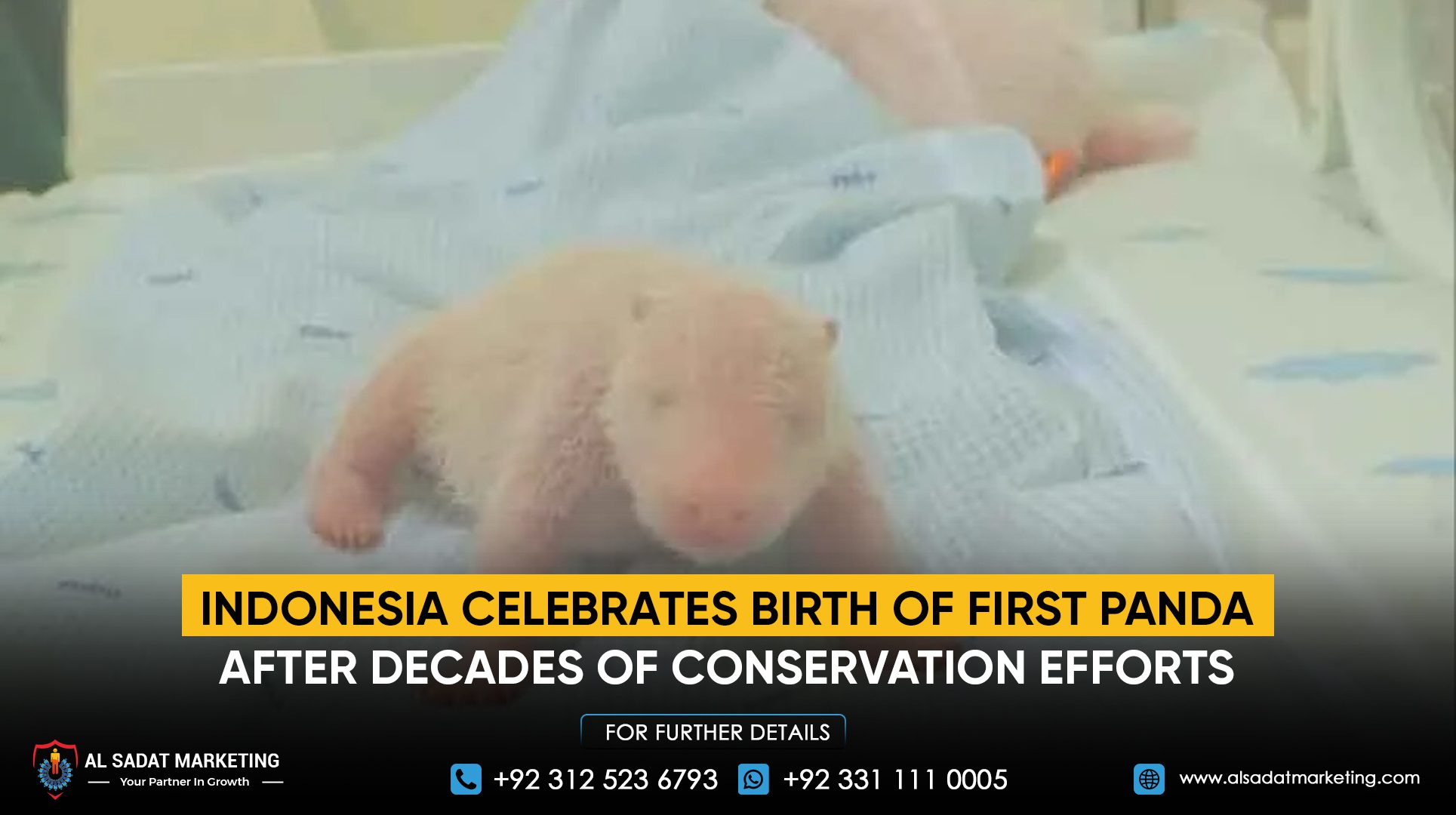
Indonesia has marked a historic conservation achievement with the birth of its first-ever giant panda cub, a milestone that highlights growing international cooperation to protect the vulnerable species.
The panda cub was born on November 27 at Taman Safari Indonesia in Bogor, West Java. He is the offspring of giant pandas Cai Tao and Hu Chun, who arrived in Indonesia in 2017 under a 10-year joint research and conservation programme symbolising Indonesia–China friendship.

Taman Safari Indonesia’s Corporate Communication Manager, Trully Erlynda, described the birth as the result of nearly a decade of sustained international collaboration. She said the arrival of the cub is a proud year-end achievement for Indonesia and reflects the success of global conservation partnerships.
The successful birth followed an artificial insemination procedure carried out in August by Taman Safari’s veterinary team in collaboration with Germany’s Leibniz Institute for Zoo and Wildlife Research (IZW). Reproduction in giant pandas is notoriously difficult, as females are fertile for only two to three days a year, with eggs remaining viable for just a few hours, making natural breeding rare.
Taman Safari has been working on artificial insemination efforts since 2022, though earlier attempts were unsuccessful. In 2024, fertilisation was confirmed, but the embryo did not develop fully. The successful 2025 procedure involved close hormone monitoring, detailed behavioural observation, and strict adherence to international animal welfare standards, with Chinese experts closely supporting the pregnancy and delivery.
Following the birth, specialists from China’s Panda Centre and the China Conservation and Research Centre for the Giant Panda (CCRCGP) arrived in Indonesia to assist with early neonatal care and continue to provide technical support. According to Taman Safari, the cub is in stable condition, showing healthy vocalisation, effective nursing, and steady weight gain. Over the next one to two months, the cub is expected to develop motor skills, grow fur, open his eyes, and regulate body temperature. He is not yet open for public viewing.
On December 4, Indonesian President Prabowo Subianto officially named the panda cub Satrio Wiratama, meaning “a noble, brave, and virtuous warrior,” and gave him the nickname Rio. During a meeting with Wang Huning, chairman of China’s Chinese People’s Political Consultative Conference (CPPCC), the president shared photos of the newborn, underscoring the diplomatic and conservation significance of the birth.
The Presidential Palace said Rio’s birth is expected to further strengthen Indonesia-China relations while raising public awareness about wildlife conservation and the protection of endangered species, reflecting Indonesia’s commitment to environmental sustainability.
With this achievement, Indonesia joins Singapore, Malaysia, and Thailand as the only Southeast Asian countries to successfully breed a giant panda through artificial insemination. According to the IUCN Red List, giant pandas remain classified as vulnerable, with an estimated 1,860 individuals in the wild and around 700 living in managed care worldwide.