
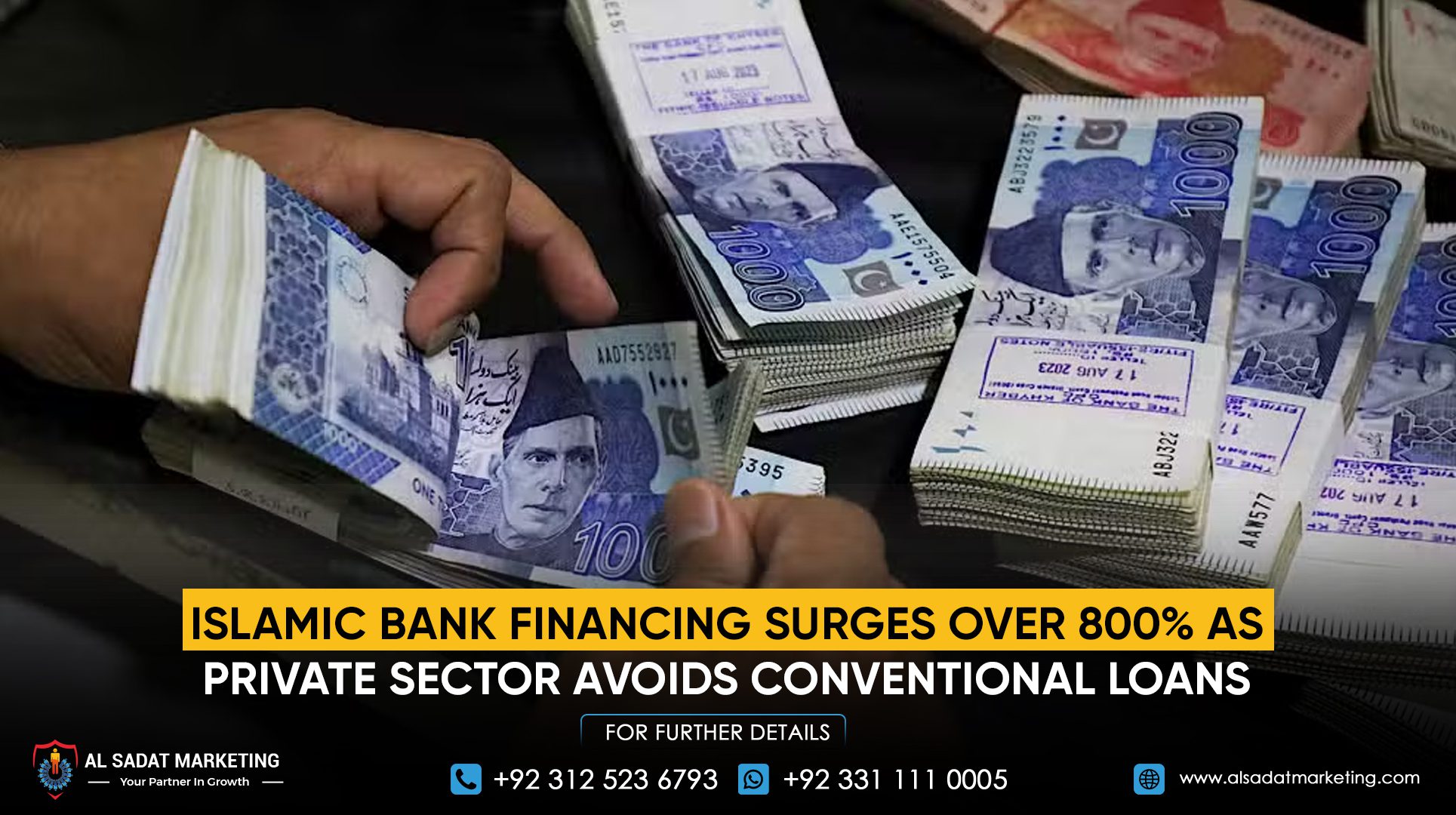
Pakistan’s private sector largely avoided borrowing from conventional banks in the first half of the current financial year, instead repaying loans and shifting toward Islamic banking, according to data from the State Bank of Pakistan (SBP).
Between July and January 16, businesses secured Rs. 708 billion in financing from Islamic banks, while retiring Rs. 120 billion in loans taken from interest-based banks during the same period.

A major share of this growth came from Islamic banking branches of conventional banks, which provided Rs. 467 billion in financing. This marks an 834 percent increase from just Rs. 50 billion in the same period last year, showing a sharp change in borrowing preferences.
Full-fledged Islamic banks extended Rs. 241 billion in financing during the period, down from Rs. 678 billion a year earlier. This suggests that Islamic windows and branches of conventional banks captured a larger portion of new demand.
In contrast, conventional banks saw a net loan repayment of Rs. 120 billion by the private sector, compared with Rs. 638 billion in net lending during the same months last year.
Banking analyst Ibrahim Amin said the industry is steadily moving away from interest-based lending toward Sharia-compliant financing, mainly due to lower financing rates and growing trust in Islamic banking products.
He added that conventional banks, which have wider branch networks, are increasingly guiding customers toward their Islamic banking branches and windows. Banks are also using targeted marketing and incentives to support this transition, a trend expected to continue as competition in Islamic finance grows.
The government aims to fully shift Pakistan’s banking system to Sharia-compliant operations by the end of 2028, in line with a ruling by the Federal Sharia Court.
According to SBP data, Pakistan currently has six full-fledged Islamic banks and 15 conventional banks offering Islamic banking services through dedicated branches.
Meanwhile, recent policy measures include a reduction in export refinance rates to 4.5 percent and a cut in the Cash Reserve Requirement, steps taken to improve liquidity in the banking system.