
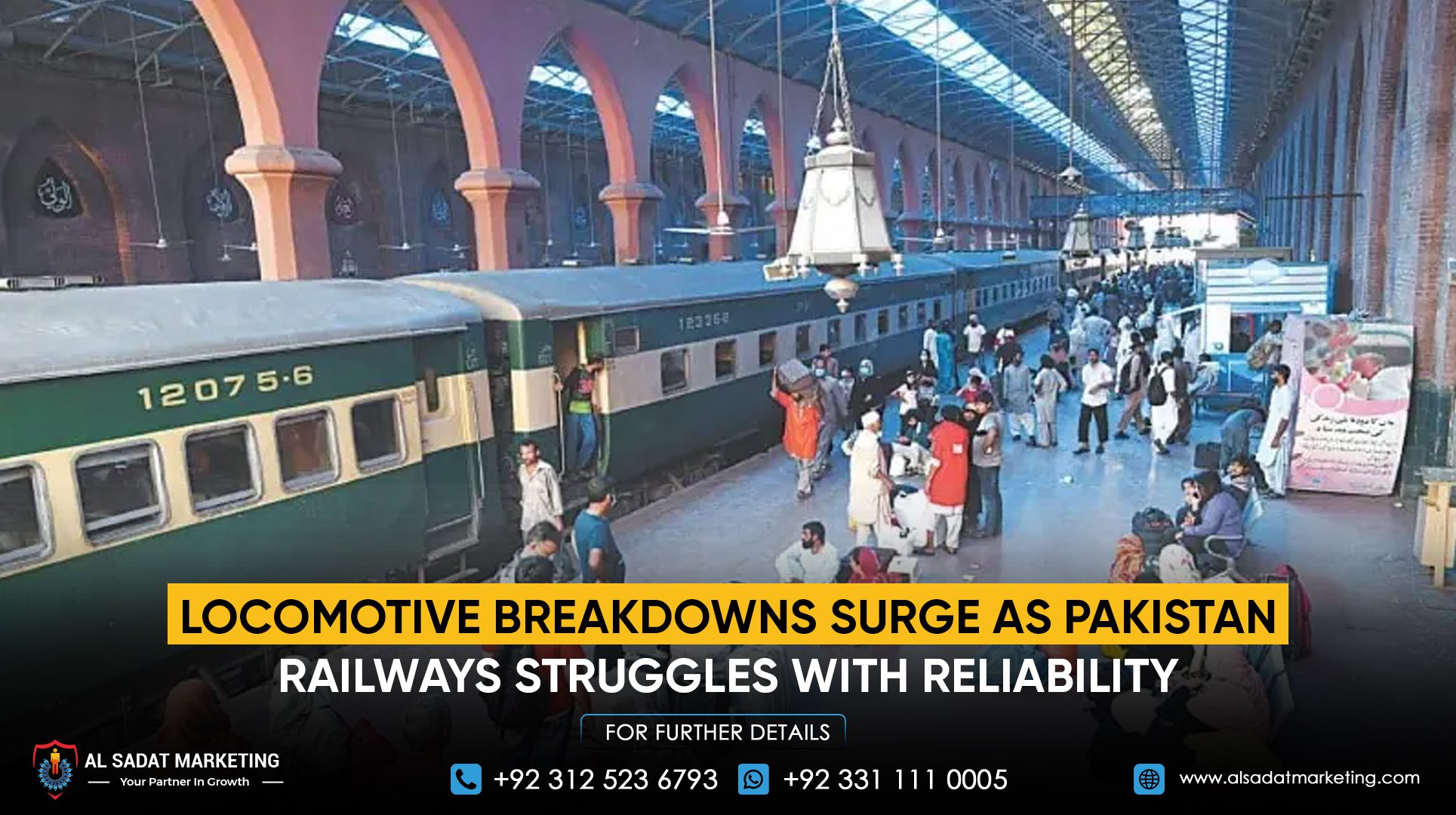
Pakistan Railways is facing a growing number of locomotive failures mainly due to its aging fleet, with officials revealing that more than 63 percent of the engines have been in service for over 20 years. The issue was discussed during a meeting of the National Assembly Standing Committee on Railways held in Islamabad.
Officials from Pakistan Railways informed the committee that the old rolling stock has put increasing pressure on operations. However, they said steps are being taken to address the problem through better maintenance practices, modernization plans, and improved funding aimed at stabilizing services and reducing breakdowns.

The committee was also briefed on plans to overhaul and modernize diesel-electric locomotives as part of long-term efforts to improve reliability and performance. According to officials, these measures are expected to gradually reduce failures and improve overall service quality.
The meeting was chaired by Ramesh Lal, who also reviewed the situation regarding passenger coach availability. Railway officials explained that the shortage of coaches reported since June 2025 has largely been resolved due to improved efficiency at workshops and the restoration of coaches that were previously under repair.
They shared that the number of available passenger coaches has increased from 1,016 in September 2025 to 1,105, exceeding the current requirement of 1,100. The total requirement is expected to rise to 1,150 by June 2026.
The committee was further informed that Pakistan Railways achieved record passenger earnings of Rs48.832 billion during the fiscal year 2024–25. Earnings during the first six months of the current fiscal year have also increased by 7 percent compared to the same period last year, reflecting improved passenger demand and operational performance.
The Secretary of Pakistan Railways also briefed the committee on plans for restructuring and outsourcing different sections of the railway system to improve efficiency and passenger services. After the briefing, the committee decided to form a sub-committee to examine these proposals in more detail.
Service quality issues were also discussed, including complaints about non-functional air-conditioning units in passenger coaches. Officials explained that failures have increased mainly because many AC units are overaged, but the replacement process is currently underway to improve passenger comfort.