
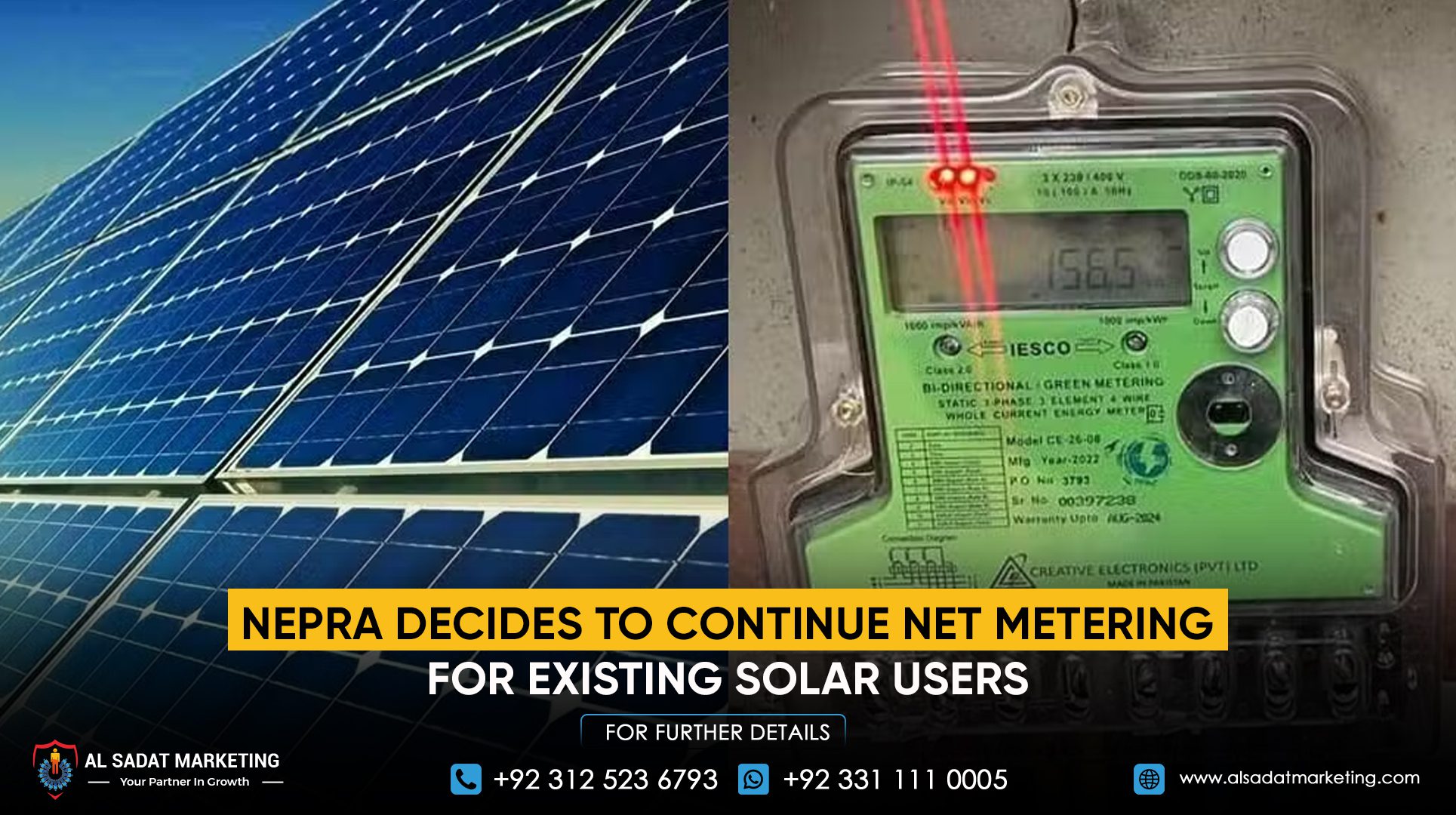
The National Electric Power Regulatory Authority (NEPRA) on Monday decided to retain the existing net metering policy for current solar consumers, offering clarity after recent reforms sparked widespread debate.
In a formal notification, the regulator amended the solar policy while ensuring that the rights of existing net metering users remain protected. NEPRA has also opened the proposed amendments to public consultation, giving stakeholders 30 days to submit feedback and suggestions.

According to the notification, the amendments take effect from February 9, 2026. NEPRA said it has published the draft changes to the National Electric Power Regulatory Authority (Prosumer) Regulations, 2026, on its official website and invited comments to be submitted to the registrar within the prescribed timeframe.
NEPRA clarified that current solar net metering consumers will not be impacted by the revised framework. All existing approvals, licenses, agreements, and concurrences granted under the previous regulations will remain valid until the expiry of their contractual terms. Distributed generators operating under valid agreements will continue to be billed under the earlier rates and mechanism until those contracts expire. The relevant sub-regulation is deemed effective from February 9, 2026.
The move follows criticism after NEPRA introduced reforms that changed the compensation mechanism for surplus solar electricity. Under the proposed framework, power distribution companies will purchase excess electricity from prosumers — including households, commercial users, and industries generating up to one megawatt — at the national average energy purchase price. Meanwhile, electricity supplied to prosumers from the grid will be billed at the applicable consumer tariff.
This marks a shift away from the previous one-to-one offset model, which allowed exported solar units to directly offset imported units, helping consumers significantly reduce or even eliminate their electricity bills.
Another key revision is the reduction of the standard net metering agreement term from seven years to five years, renewable by mutual consent. While existing prosumers will continue under their current agreements, all new connections and future renewals will fall under the revised five-year net billing model, potentially affecting long-term return calculations for new solar investments.
Under the updated billing mechanism, if electricity supplied by a prosumer exceeds grid consumption, the surplus will either be adjusted in the next billing cycle or paid out every three months.
The draft regulations remain open for consultation before final approval, allowing stakeholders an opportunity to shape the final policy framework.