
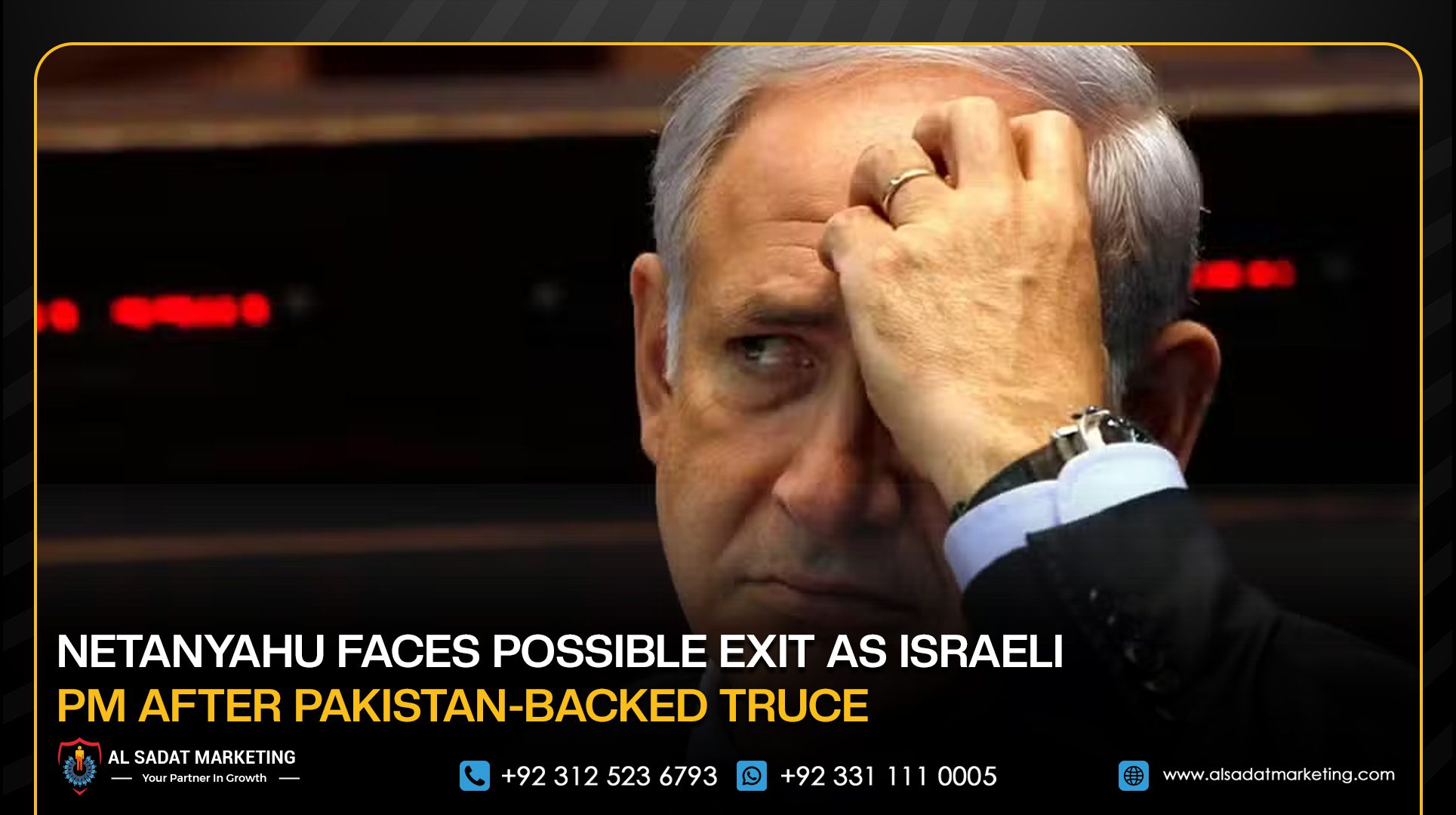
Benjamin Netanyahu is reportedly facing increasing domestic pressure and growing international scrutiny following the Pakistan-mediated US-Iran ceasefire agreement, according to international media reports.
The Israeli leader is said to be under political strain as he attempts to maintain stability after what critics describe as a poorly managed escalation during the Gulf conflict involving Iran.

Recent opinion surveys reported in Israeli media suggest deep divisions within the country. Around 58% of respondents are reportedly uncertain about the outcomes of the war and question the effectiveness of the current ceasefire arrangement.
At the same time, public sentiment appears more supportive of continued military action on another front. Data indicates that nearly 79% of Israelis favor ongoing operations against Hezbollah in Lebanon, while a smaller portion supports a complete end to hostilities.
This split in public opinion is creating a political challenge for Netanyahu, with sources close to him suggesting he is struggling to balance domestic demands for military pressure with international calls for restraint.
Meanwhile, countries including the United States, Canada, and Germany have urged Israel to fully respect the ceasefire and avoid actions that could further escalate regional tensions.
Western allies have also expressed concern that renewed conflict could destabilize the broader region and damage Israel’s international standing.
On social media platforms, particularly X (formerly Twitter), users have debated the political impact of the ceasefire, with some suggesting it could weaken Netanyahu’s support base, while others argue that rejecting international pressure could lead to diplomatic isolation.