
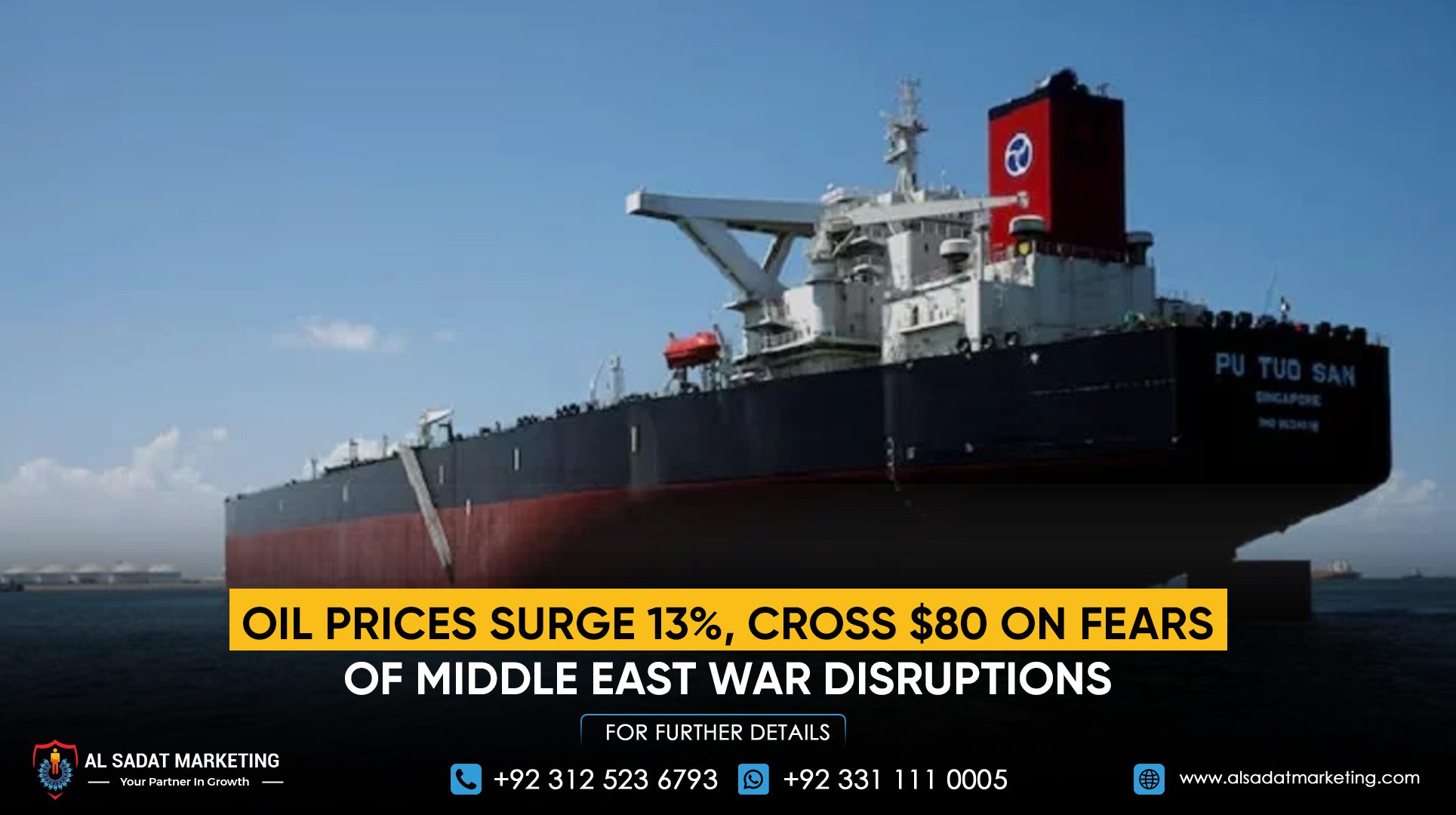
Crude oil prices surged sharply in Asian trading on Monday as tensions in the Middle East intensified following joint US and Israeli military strikes on Iran.
Futures for Brent crude jumped by 13 percent in early trading, rising above 82 dollars per barrel from Friday’s close of 72 dollars. US benchmark West Texas Intermediate also climbed nearly 10 percent, crossing 70 dollars per barrel.

Brent prices had already been rising last week amid growing fears of military action. The fresh escalation has heightened concerns over disruptions to oil supply, especially through the Strait of Hormuz, a critical shipping route through which around 20 percent of global oil supplies pass.
Reports indicate that while the strait is not fully closed, maritime traffic has been severely affected. Some Chinese and Iranian vessels are said to have managed passage, but most major shipping companies have confirmed suspension of their routes through the area. Analysts warn that insurance costs for ships operating in the region have become extremely high.
Amena Bakr, head of Middle East and OPEC+ research at Kpler, said oil prices could climb to 90 dollars per barrel if the disruption continues. Jorge Leon of Rystad Energy noted that a prolonged closure of the Strait of Hormuz could remove between 8 to 10 million barrels per day from global supply.
Although oil-importing countries maintain strategic reserves, with OECD members required to hold 90 days of stocks, experts caution that reserves alone may not fully offset a large supply shock. Bakr said the potential supply gap would be too large to cover if the blockade continues for an extended period.
Another Kpler analyst, Michelle Brouhard, described high oil prices as a major challenge for US President Donald Trump, noting that he had promised lower energy prices to voters ahead of upcoming mid-term elections. She suggested Iran may attempt to keep prices elevated as a form of pressure.
Gas prices are also expected to rise, as Qatar is one of the world’s leading exporters of liquefied natural gas. Higher hydrocarbon prices could increase inflation risks globally.
The last time crude oil exceeded 100 dollars per barrel was at the beginning of the Ukraine war, which triggered a prolonged period of inflation worldwide. Economists warn that sustained high energy prices can raise fuel and transport costs, increase shipping expenses, and hurt air travel revenues.
Eric Dor, an economist at IESEG School of Management in Paris, said a short disruption lasting a few days may not have serious consequences. However, if the crisis continues for a longer period, it could negatively impact global economic growth and increase recession risks.