
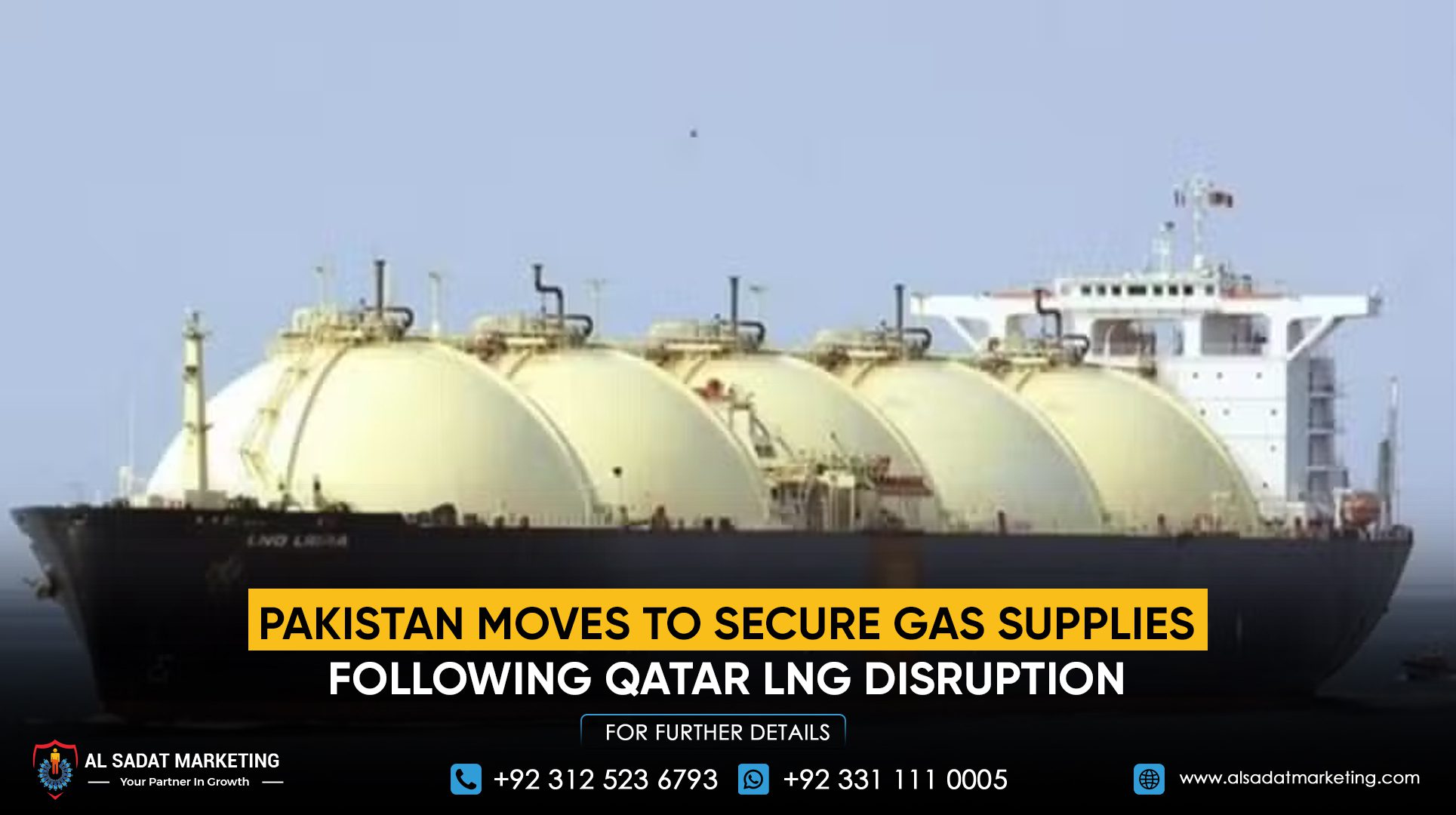
Pakistan is scrambling to secure energy supplies after Qatar Energy halted LNG production following missile attacks linked to Iran, exposing the country’s heavy reliance on imported gas.
Officials said emergency options are being reviewed to manage a possible shortfall. These include restoring previously curtailed domestic gas production and arranging alternative LNG cargoes, as shipping routes through the Strait of Hormuz face renewed security risks.

Pakistan depends heavily on Qatari LNG under long-term agreements. The country typically receives nine LNG cargoes per month from Qatar, along with one monthly cargo from Italy’s Eni. Officials warned that any prolonged disruption could put pressure on pipeline systems and fuel availability in the coming months.
To ease the situation, authorities plan to restore around 350 million cubic feet per day of domestic gas output that had earlier been reduced to manage pipeline pressure. Additional measures under consideration include increasing local oil and gas production and approaching Azerbaijan’s SOCAR Trading Company for 200 to 250 million cubic feet per day of LNG if required.
Pakistan LNG Limited signed a one-year framework agreement with SOCAR in July 2023, with the option to extend it for another year. The agreement allows Pakistan to request cargoes with 45 days’ notice. However, officials cautioned that SOCAR’s commitments to buyers in China, Japan, and India may limit immediate availability. LNG volumes that were previously diverted from Eni to the spot market also cannot be restored.
Earlier this year, Pakistan requested Qatar to defer two LNG cargoes per month scheduled for 2026 delivery, as domestic gas demand was projected to decline by around 300 million cubic feet per day. The Power Division later described nine LNG cargoes per year as additional supply due to reduced use of gas for electricity generation. Current domestic gas consumption stands at roughly 400 million cubic feet per day.
Seasonal factors may provide short-term relief. With lower heating and cooling demand in March, overall gas consumption is expected to remain manageable. Officials indicated that if demand rises unexpectedly, industrial and commercial users may face extended load-shedding, while residential consumers would be protected.
The situation comes amid broader instability in global energy markets following tensions between the United States, Israel, and Iran. Disruptions near the Strait of Hormuz have unsettled tanker movements and pushed up global energy prices.
Energy analysts say the crisis once again highlights Pakistan’s structural vulnerability to external shocks. They warn that repeated Gulf crises reveal the risks of relying heavily on imported LNG and crude oil, especially when key shipping routes face uncertainty.