
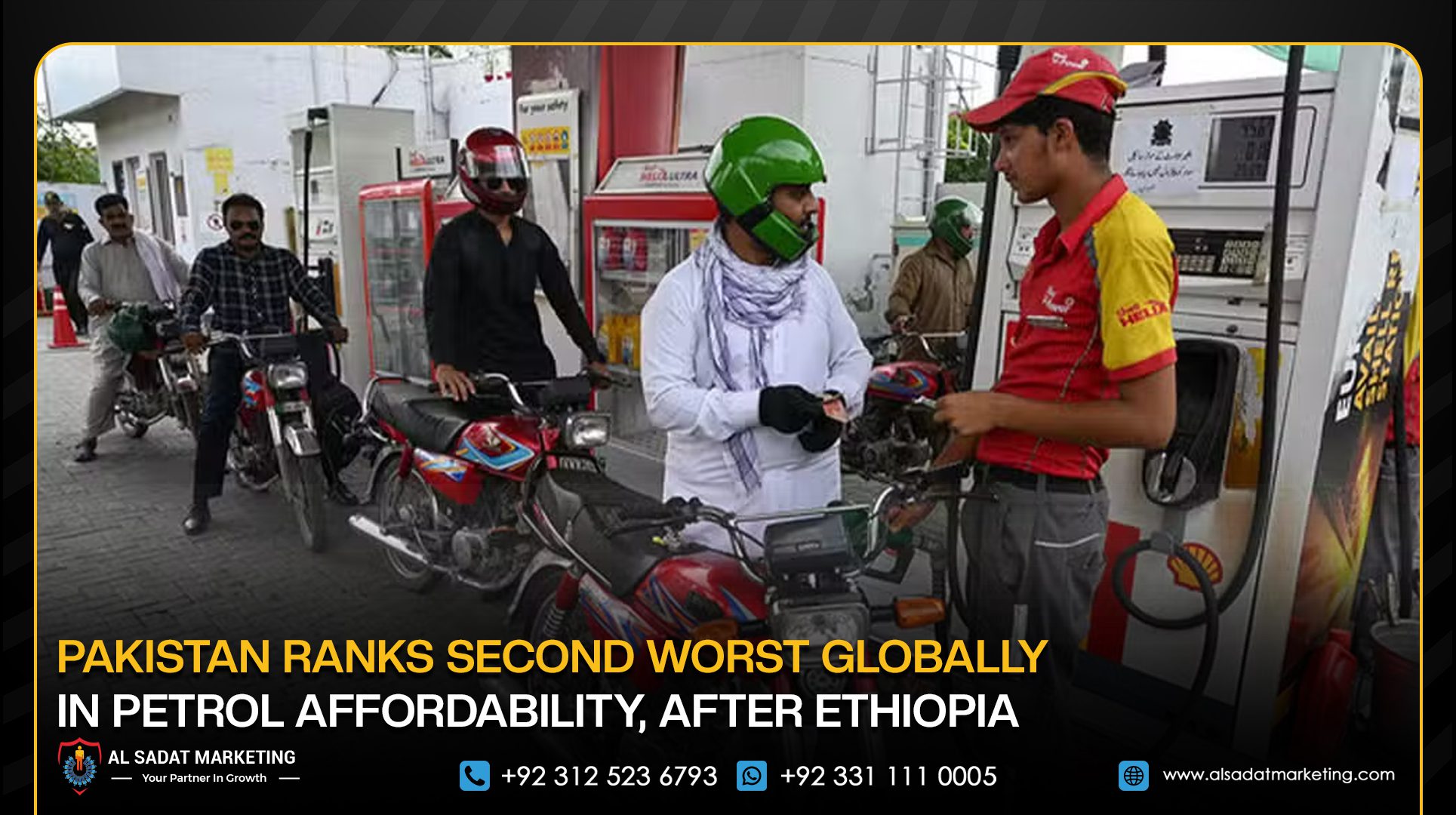
Pakistan has become the world’s second most fuel-unaffordable country when measured against income levels, following a sharp rise in petrol prices to around Rs. 458.40 per litre.
According to comparisons, only Ethiopia ranks worse, where average daily wages are about $1.50 while petrol prices range between $1.40 and $1.80 per litre. Despite being a landlocked country dependent entirely on imported oil, Ethiopia’s situation is now comparable to Pakistan’s in terms of affordability pressure.

In Pakistan, the recent price surge came after the Government of Pakistan raised petrol prices by Rs. 137.23 per litre and high-speed diesel by Rs. 184.49 per litre. As a result, petrol reached approximately Rs. 458 per litre, while diesel climbed to Rs. 520.35 per litre.
Officials, including Petroleum Minister Ali Pervaiz Malik, stated that the increase was unavoidable due to fiscal constraints, noting that the government can no longer sustain large-scale fuel subsidies.
Analysts and public commentary suggest that the issue goes beyond fuel prices alone and is closely tied to purchasing power. While energy and essential goods have become more expensive, income levels have not kept pace, making fuel significantly less affordable for the average citizen.
Pakistan produces around 18 percent of its petroleum needs domestically and has access to seaports for imports, advantages that typically reduce logistical costs. However, despite these factors, affordability pressures remain higher than in many comparable economies.
Fuel prices have also shown a consistent upward trend, with increases recorded in four out of the last six official price reviews, further adding to the financial strain on households and businesses.