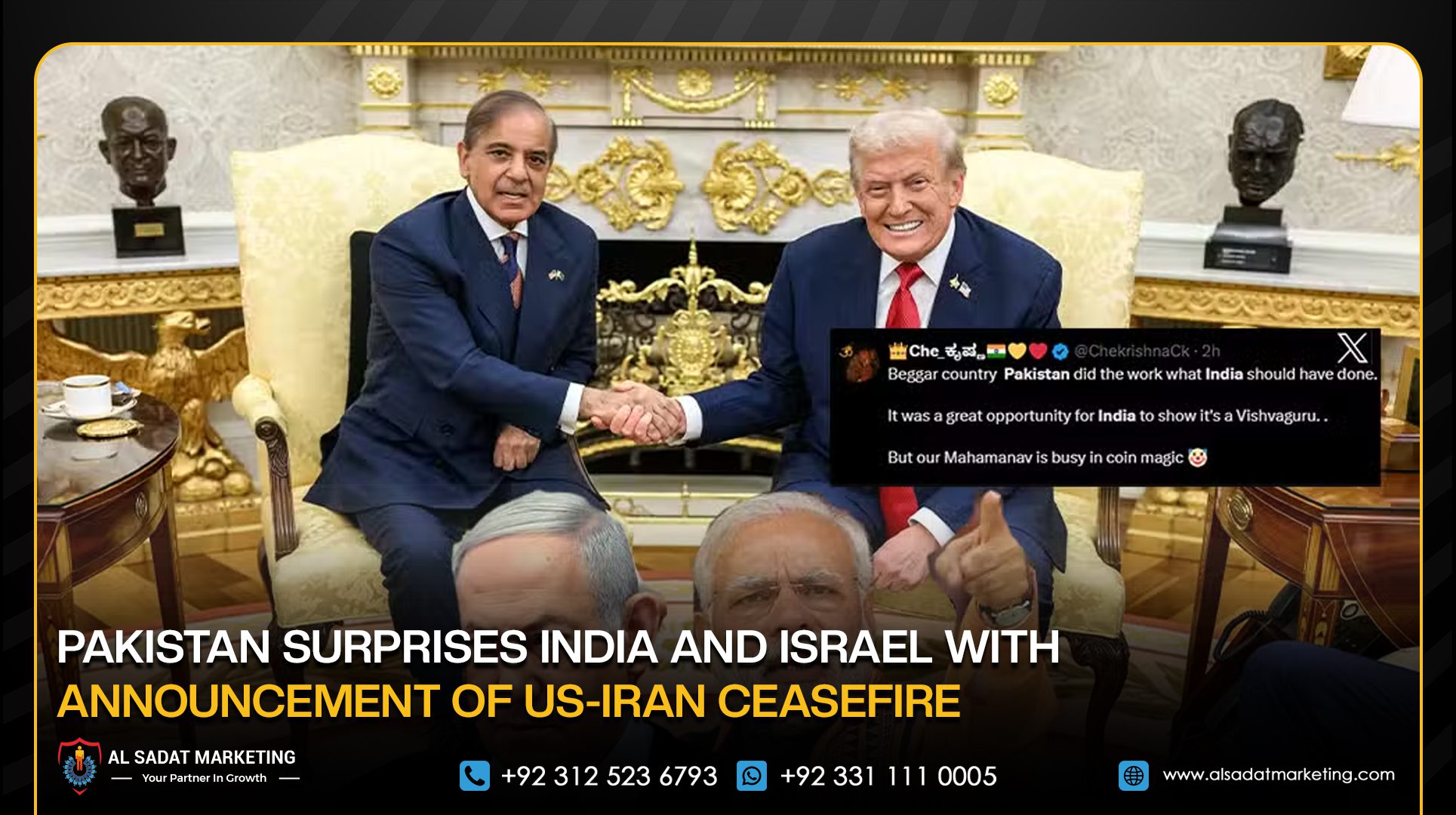
Pakistan has emerged as a key diplomatic bridge between Washington and Tehran, reshaping regional dynamics and drawing strong reactions from global stakeholders, particularly India and Israel.
A two-week pause in hostilities between the United States and Iran followed intense backchannel diplomacy facilitated by Islamabad. Officials from Pakistan played a central role in urging both sides to slow escalation and test diplomatic options before the conflict intensified further.

The development quickly gained attention across social and political circles, with many observers noting how rapidly Pakistan positioned itself at the center of high-stakes negotiations. Reactions online reflected both surprise and debate over Islamabad’s growing diplomatic visibility.
Israeli officials have reportedly remained cautious about any arrangement that reduces pressure on Iran, while analysts suggest Pakistan’s role challenges existing regional influence, particularly for countries that have long projected themselves as global mediators.
For India, the optics are sensitive. New Delhi has consistently aimed to position itself as a rising diplomatic power, but Pakistan’s sudden central role in Middle East negotiations has sparked discussion among Indian strategic circles and media voices.
Pakistan’s involvement did not emerge overnight. Over recent weeks, Prime Minister Shehbaz Sharif and Foreign Minister Ishaq Dar maintained communication channels with both Tehran and Washington, consistently advocating restraint.
The country’s relationships with Gulf states, its working ties with Iran, and its security cooperation history with the United States positioned it uniquely to act as an intermediary during a critical moment.
Markets responded quickly to the de-escalation, with oil prices dropping below $100 shortly after news of the pause, signaling improved investor sentiment.
While the current ceasefire remains fragile and uncertainty persists, Pakistan’s role has clearly shifted. It is no longer just a regional stakeholder but has re-emerged as an active diplomatic player in one of the world’s most sensitive geopolitical crises.