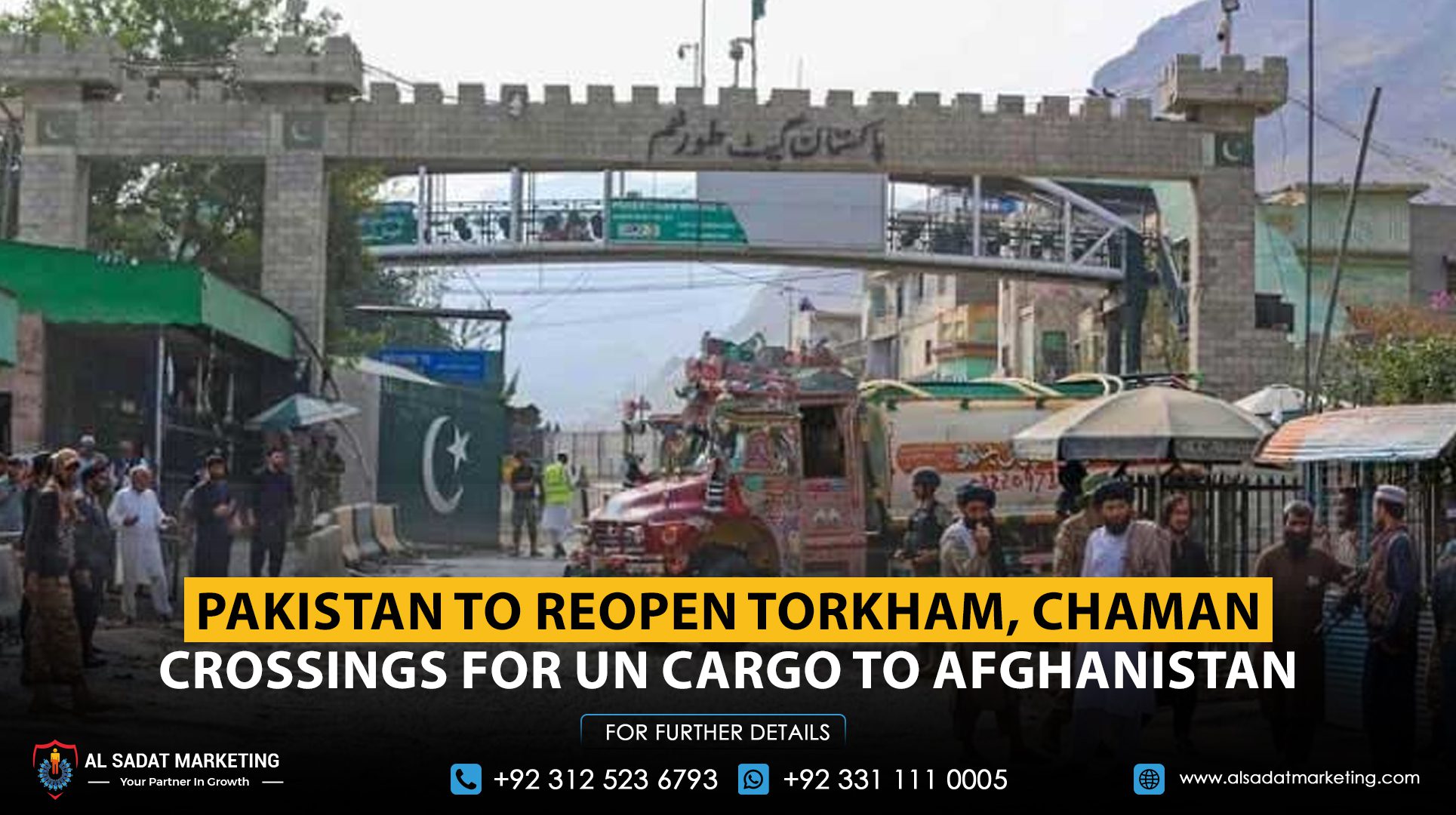
Pakistan has decided to reopen the Torkham and Chaman border crossings for United Nations humanitarian cargo after nearly 50 days of closure, allowing essential food and medical supplies to enter Afghanistan. The move comes amid growing shortages across the border following the suspension of trade and transit.
According to The News, the Ministry of Commerce made the decision in consultation with the Ministry of Foreign Affairs. A formal letter has been sent to the Federal Board of Revenue’s Member Customs (Operations) in Islamabad and the Director General Transit Trade in Karachi, instructing them to take all necessary steps to ensure the smooth movement of UN containers.

The reopening will take place in phases. In the first phase, food supplies for Afghanistan will be allowed to pass through Torkham and Chaman. The second phase will permit the transport of medicines and medical equipment. The third phase will include other essential items such as educational kits for teachers and students. UNICEF, the World Food Programme (WFP), and the United Nations Population Fund (UNFPA) are among the agencies whose shipments will be cleared.
Authorities have been told to speed up clearance and transit procedures so humanitarian aid can reach Afghanistan without delay.
Pakistan closed both border points on October 12 after the Afghan Taliban and affiliated militants launched unprovoked attacks on multiple Pakistani military posts. The clashes, which began overnight on October 11–12, resulted in the deaths of more than 200 Taliban fighters and affiliated militants, while 23 Pakistani soldiers were martyred.
In response to the attacks, Pakistan carried out precision strikes inside Afghanistan targeting militant hideouts in Kandahar and Kabul. A temporary 48-hour ceasefire was announced on October 15 at Afghanistan’s request, later extended as delegations from both countries traveled to Doha for negotiations.
Through Qatar-mediated talks, Pakistan and Afghanistan agreed to an immediate ceasefire on October 19, with both sides committing to preventing terrorism and working toward long-term stability. Later talks in Turkiye briefly stalled after Pakistan rejected what it described as “illogical” arguments by the Taliban delegation, but mediators encouraged both sides to continue discussions, which eventually led to the decision to uphold the ceasefire.
The phased reopening of the border for UN aid marks a cautious step toward humanitarian relief while broader security and political issues remain unresolved.