
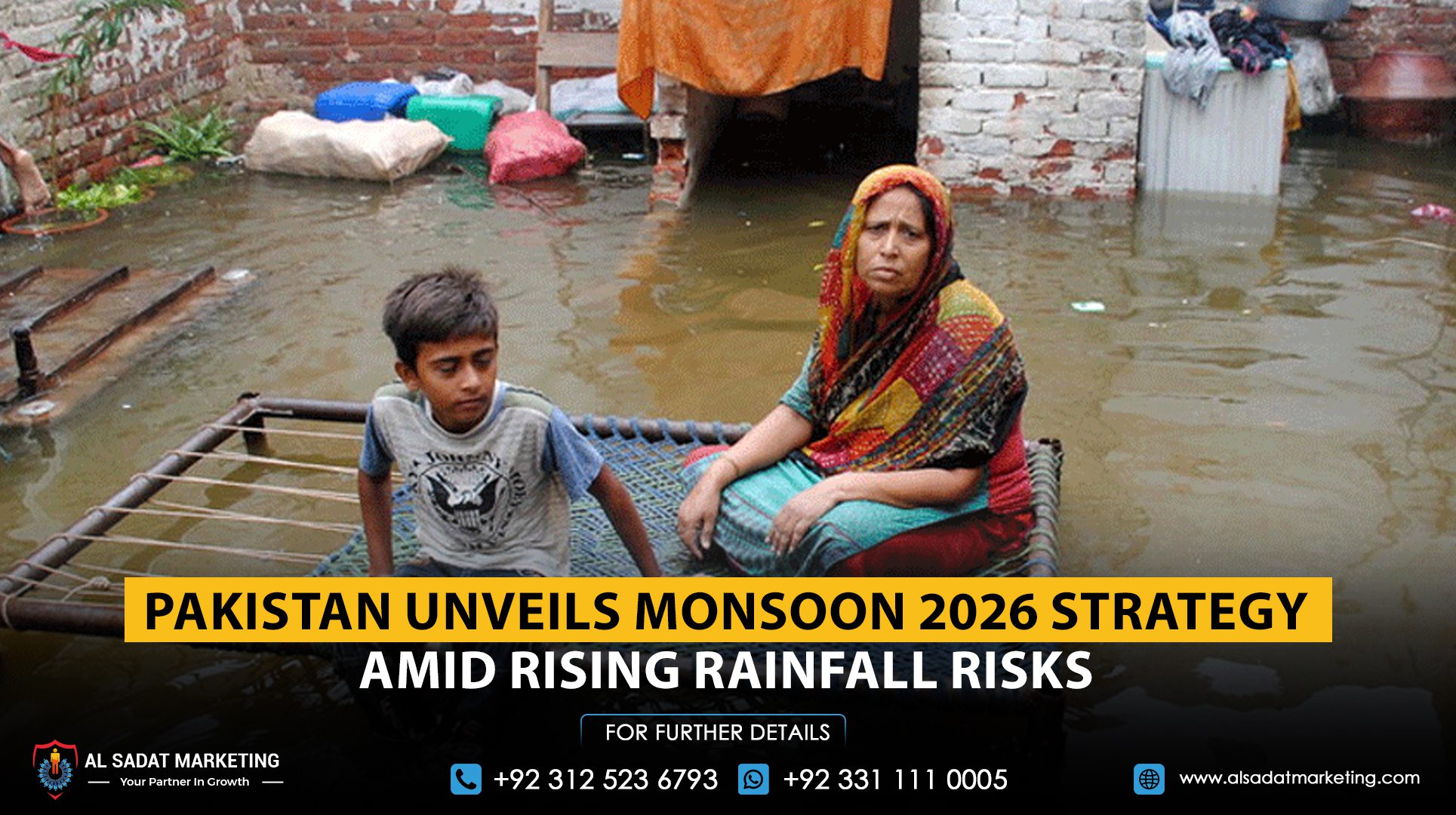
In response to the widespread destruction caused by this year’s floods, the government has unveiled the Monsoon 2026 Strategic Plan, designed to minimize both human and economic losses in the upcoming season.
The announcement comes after a deadly monsoon that claimed 1,037 lives across Pakistan and destroyed over 229,000 homes, in addition to causing massive damage to agriculture, livestock, and critical infrastructure.

With the approval of the Prime Minister, the Ministry of Climate Change has finalized a comprehensive three-part strategy aimed at preparing the country for the next monsoon. Meteorologists have warned that rainfall in 2026 could exceed normal levels by 26%, heightening the urgency for robust preparedness measures.
The recent floods have once again exposed vulnerabilities in the country’s disaster management systems, increasing pressure on national and provincial authorities to act before the next monsoon cycle.
Three-Part Strategy
1. Rebuilding Damaged Infrastructure
The first phase focuses on the immediate rehabilitation of infrastructure affected in 2025. This includes repairing canals, flood gates, and urban drainage systems, many of which failed during the recent heavy rainfall.
2. Strengthening and Expanding Existing Systems
The second phase aims to enhance and expand current flood management infrastructure to better withstand future climate pressures, particularly in vulnerable districts.
3. Developing New Climate-Resilient Structures
The long-term component of the plan involves the construction of new, climate-resilient infrastructure nationwide. Projects will be developed in collaboration with provincial authorities to ensure they meet regional needs effectively.
Experts, however, caution that the success of the plan will depend on adequate funding, strong inter-provincial coordination, and public cooperation.
Meteorologist Saliha Qureshi emphasized the importance of financial readiness, stating, “Coordination and stable cash flow are crucial. If the government cannot sustain funding, implementation will fail.”
Dr. Kashif Salik added that the plan requires a long-term, committed approach, with active participation from both national and local communities. “Without serious, sustained efforts and community involvement, this strategy cannot succeed,” he said.