Pakistan has warned the United Nations Security Council (UNSC) that the US-Israeli attack on Iran and the retaliatory strikes that followed could destabilize the entire region with serious and long-term consequences.
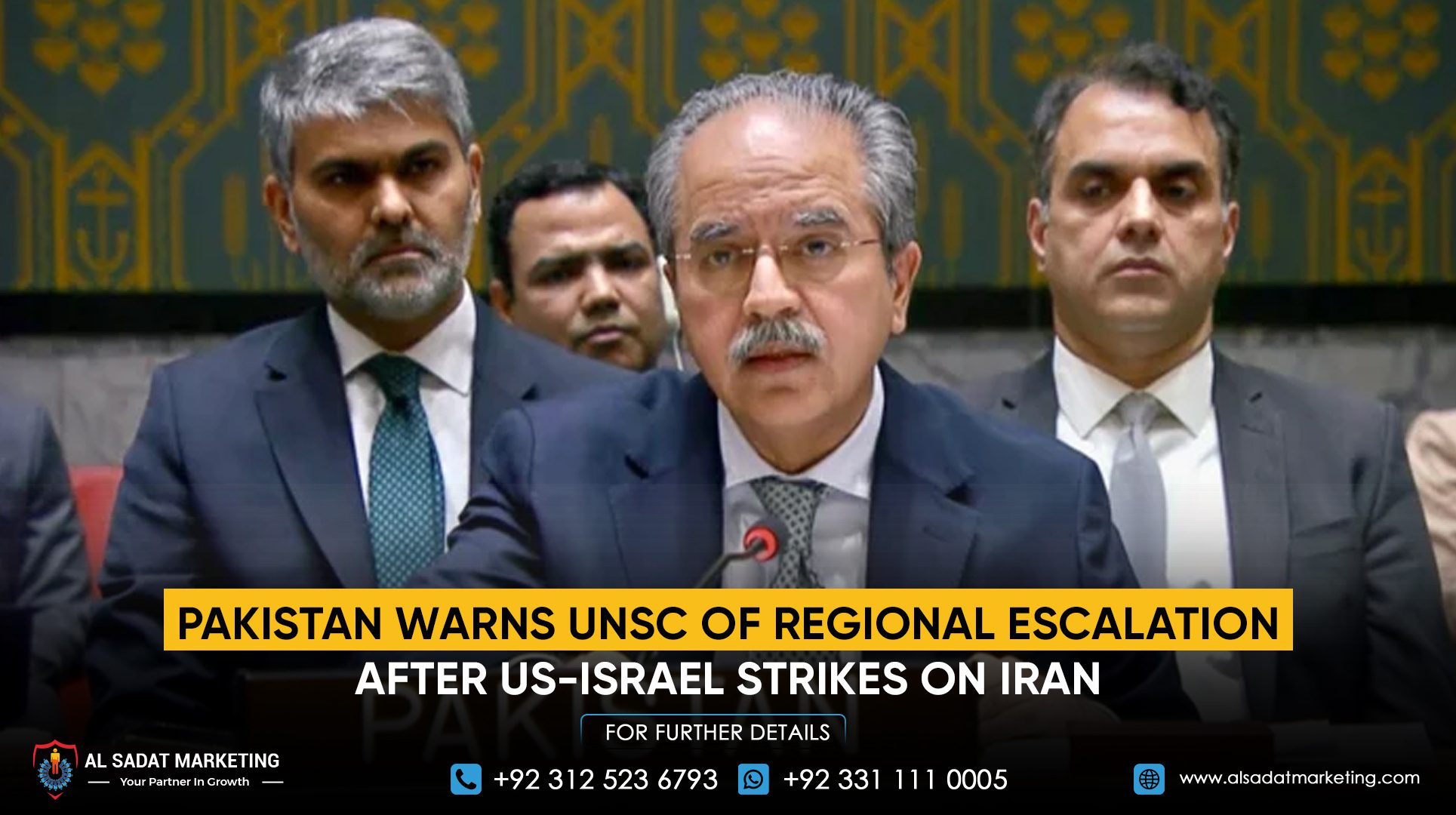
Speaking during an emergency UNSC session, Ambassador Asim Iftikhar Ahmad, Pakistan’s Permanent Representative to the United Nations, said the country was deeply alarmed by the risk of a wider regional conflict. The meeting was convened at the request of several member states, including France, China and Russia.

The emergency session followed military strikes launched by Israel and the United States on Iran, which led to retaliatory missile attacks by Tehran targeting several Gulf countries and Israel. The escalation has significantly increased tensions across the Middle East.
Addressing the Council, Ambassador Ahmad said the joint attacks violated international law and regretted that they occurred at a time when diplomatic efforts were underway to find a peaceful solution. He also condemned Iran’s retaliatory strikes on Saudi Arabia, Bahrain, Jordan, Kuwait, Qatar and the United Arab Emirates, expressing Pakistan’s solidarity with those countries and urging all sides to exercise maximum restraint.
He highlighted Oman’s role in facilitating dialogue between Washington and Tehran and described it as unfortunate that diplomatic progress had been disrupted. He also condemned the death of a Pakistani national in the UAE during the attacks.
The Pakistani envoy urged all parties to avoid actions that could threaten the security and territorial integrity of other states. He stressed that diplomacy had once again been derailed and called for an immediate halt to hostilities and a return to negotiations.
Referring to the principles of the UN Charter, he emphasized that the threat or use of force against the territorial integrity or political independence of any state is prohibited under international law. He said Pakistan remains in close contact with regional countries and stands ready to support peaceful efforts to resolve the crisis.
Opening the debate, António Guterres, Secretary-General of the United Nations, warned that the situation poses a grave threat to international peace and security. He condemned the large-scale strikes by the United States and Israel on Iran, as well as the subsequent Iranian attacks affecting several regional states.
Guterres said international law and humanitarian law must always be respected and stressed that there is no alternative to peaceful dispute resolution. He described the situation as fluid, noting reports of strikes in multiple Iranian cities and retaliatory attacks across the region.
The UN chief expressed regret that a recent round of indirect talks between Washington and Tehran, mediated by Oman, had failed to prevent escalation. He called for immediate de-escalation, cessation of hostilities and a swift return to negotiations, including discussions related to Iran’s nuclear programme.
As tensions continue to rise, global leaders are urging restraint to prevent a broader conflict that could further destabilize the Middle East and impact international security.