
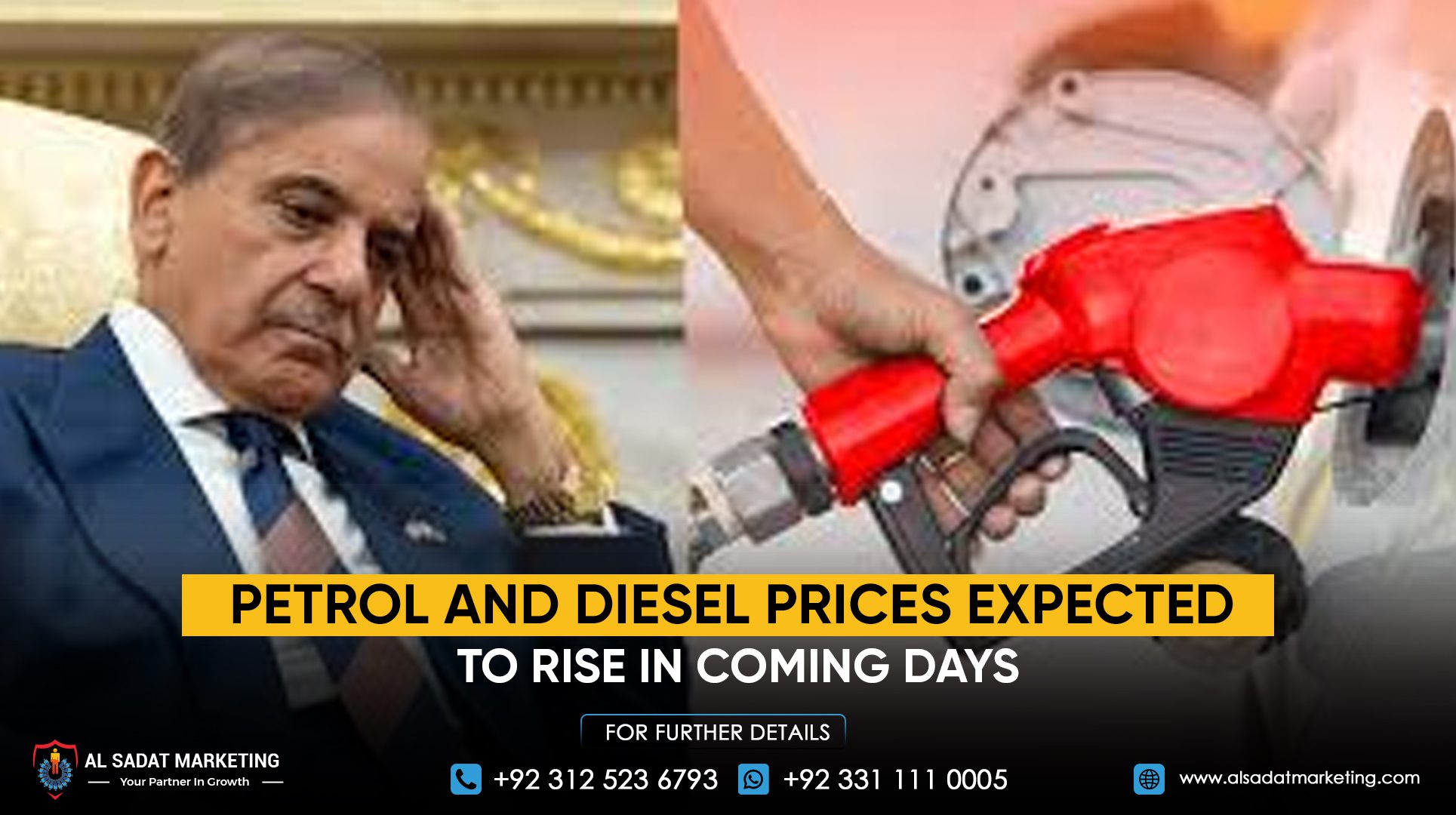
The Government of Pakistan is set to increase petrol and diesel prices in the coming days as it moves to pass on rising import costs while working with provinces to share the subsidy burden.
The decision comes after a high-level meeting led by Finance Minister Muhammad Aurangzeb with all four chief ministers and senior federal officials. The discussions focused on designing a targeted subsidy framework to protect vulnerable groups, particularly motorcyclists and farmers.

Officials indicate that fuel prices will rise soon, with the exact increase depending on global oil market trends. Authorities are considering passing the full increase for petrol, while absorbing part of the diesel cost to reduce inflationary pressure.
Currently, the price gap stands at around Rs. 100 per litre for petrol and over Rs. 200 per litre for diesel compared to import-adjusted costs. Final pricing adjustments are being worked out by the Petroleum Division and the Oil and Gas Regulatory Authority.
Over the past three weeks, the government has already absorbed about Rs. 129 billion in subsidies and plans to cap total support at around Rs. 158 billion. This has led to discussions with provinces to share future subsidy costs.
Following consultations between Asif Ali Zardari and Prime Minister Shehbaz Sharif, provinces have agreed in principle to contribute. Punjab and Sindh are expected to share the burden based on population, while Khyber Pakhtunkhwa and Balochistan will contribute based on fuel consumption.
Provincial governments have also agreed to introduce targeted relief measures. Petrol subsidies for motorcyclists will be implemented through a rationing system, while Sindh plans to support farmers using its Hari Card database. Punjab and Khyber Pakhtunkhwa are expected to roll out similar initiatives.
Officials remain concerned about the impact of diesel price hikes on transport costs and food inflation. Provinces have agreed not to increase fares for Bus Rapid Transit systems, though this could create pricing gaps outside major cities.
Targeted subsidies are estimated to cost between Rs. 15 billion and Rs. 18 billion per week, potentially rising to Rs. 30 billion depending on global oil prices. Authorities believe the shared financial burden can be managed until the end of the fiscal year, although uncertainty in global energy markets remains a key challenge.
The government plans to finalize a coordinated subsidy framework as part of broader fuel pricing reforms aimed at reducing fiscal pressure while containing inflation.