
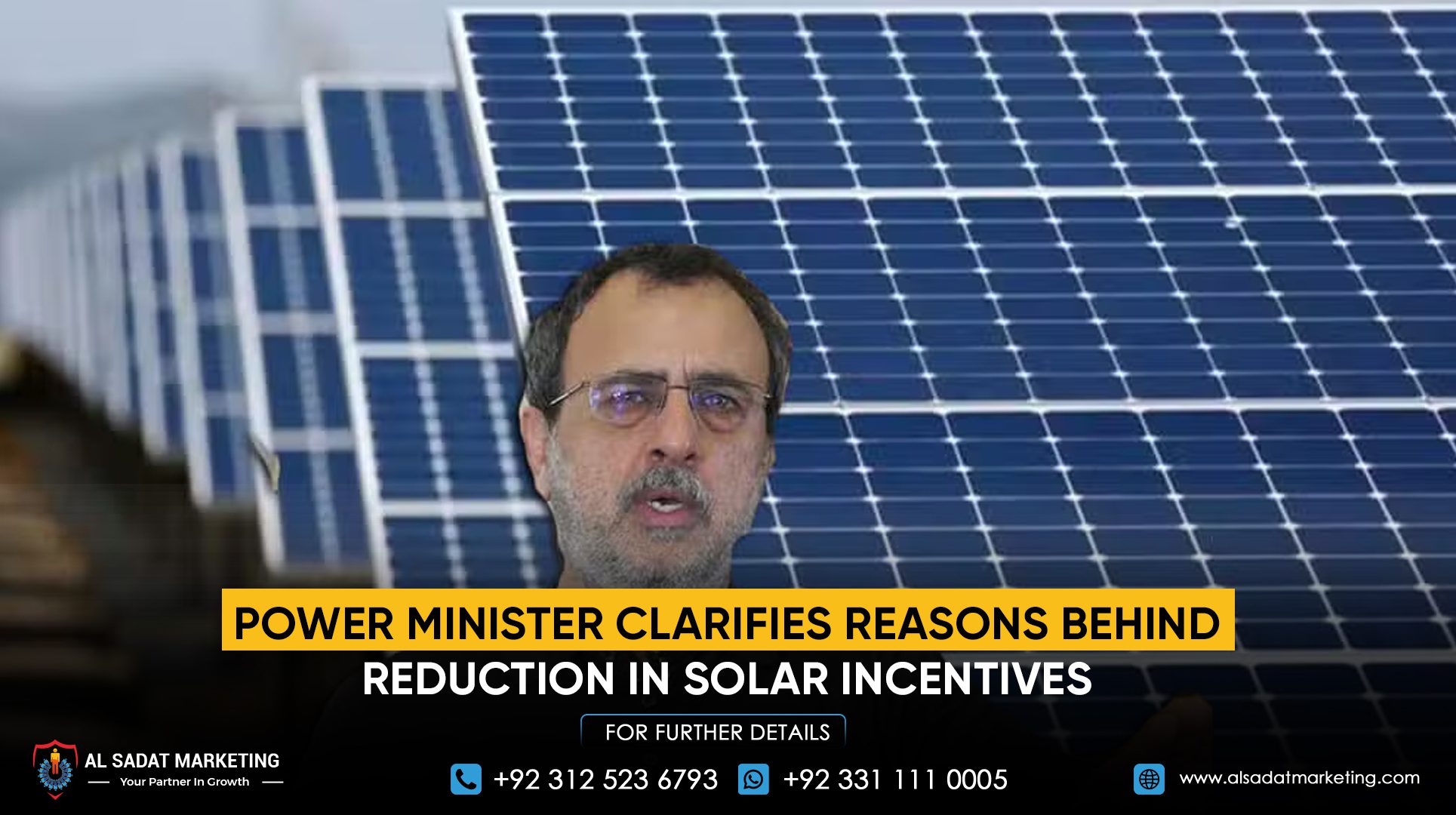
Federal Minister for Power Awais Leghari on Tuesday defended the recent amendments to solar net metering regulations while speaking in the Senate, stating that the changes are regulatory in nature and aimed at protecting electricity consumers from additional financial strain.
He explained that the National Electric Power Regulatory Authority (NEPRA) is mandated to safeguard consumer interests and prevent unnecessary increases in electricity tariffs. According to the minister, NEPRA has not modified any clauses previously agreed upon with consumers, and all existing seven-year net metering contracts remain valid and unaffected.

Leghari said the Pakistan Solar Association has endorsed the government’s measures, adding that solar power generation is still projected to increase by 8,000 megawatts despite the regulatory adjustments.
Addressing concerns about electricity pricing, the minister attributed the high tariffs during the 2018–2022 period to significant rupee depreciation, which created financial pressures that the current government is working to manage. He noted that the revised net metering framework was approved by the federal cabinet and highlighted that Pakistan has achieved a 55 percent share of clean energy in its power mix.
He also pointed to the near elimination of furnace oil from the national grid and said international institutions have recognized the government’s reforms in the power sector.
On independent power producers (IPPs), Leghari said the government has reviewed contracts and made appointments on merit, without yielding to pressure from influential quarters.
Providing figures, he stated that out of 34.5 million electricity consumers nationwide, only around 466,000 are net metering users. He argued that if NEPRA had continued purchasing electricity at Rs. 26 per unit, it would have imposed an annual burden of Rs. 550 billion on ordinary consumers.
The minister added that under NEPRA’s approved rates, new solar consumers can recover their investment within three years. He concluded that failing to revise the regulations would have increased electricity costs for the wider public by approximately Rs. 5 per unit.