
Pakistan’s stock market rebounded sharply on Tuesday after suffering one of its steepest declines a day earlier, as improving global sentiment restored investor confidence.
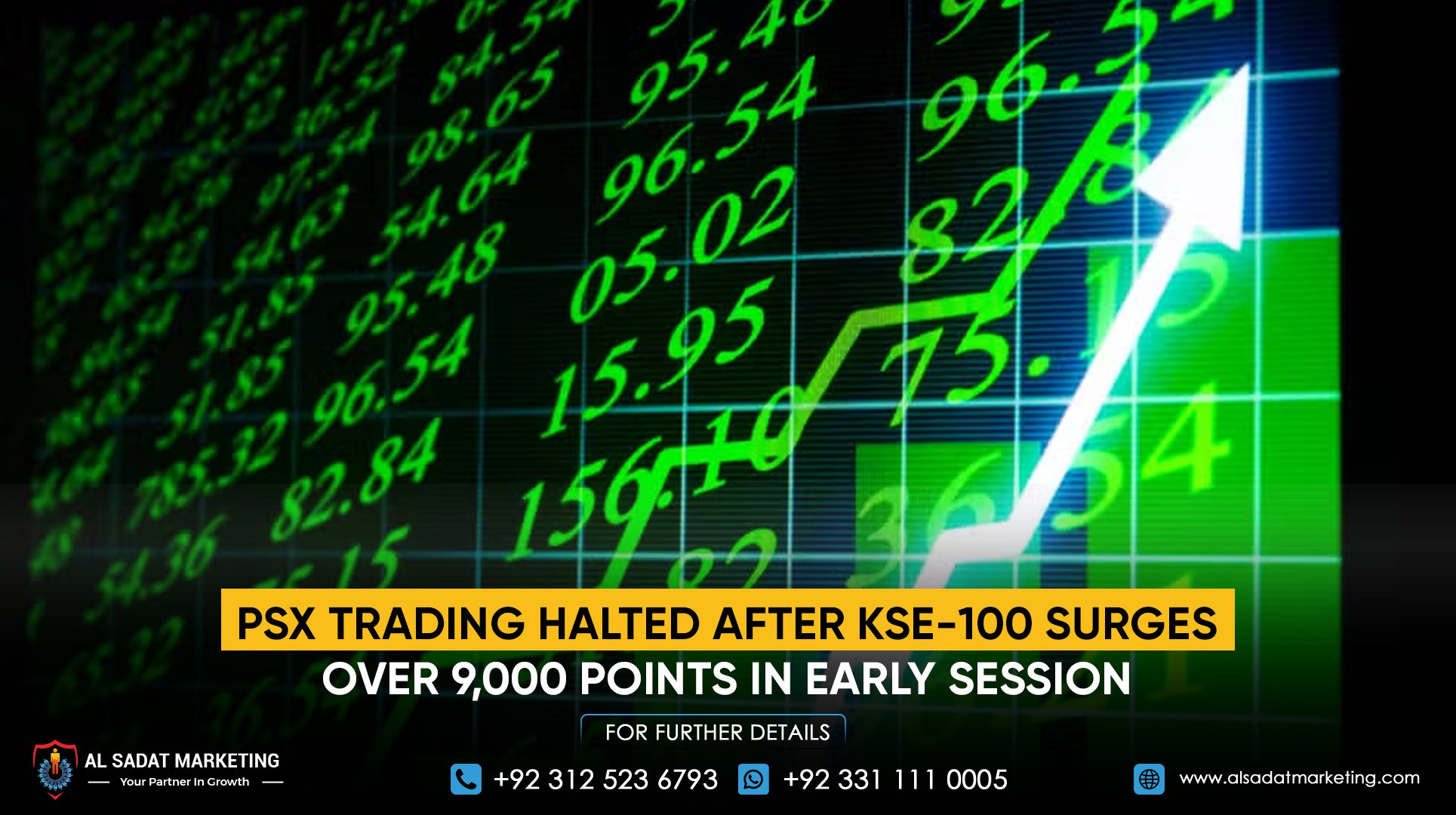
The benchmark KSE-100 Index surged more than 9,000 points in early trading on the Pakistan Stock Exchange following comments by Donald Trump suggesting that the conflict in the Middle East could end soon.

By 9:22 a.m. in Karachi, the index had climbed to 155,783.89 points, up 9,303.75 points, or 6.35 percent, recovering a large portion of the losses recorded during Monday’s selloff.
The strong rally also triggered an automatic market halt after the KSE-30 Index jumped 5 percent from the previous trading day’s close. Under exchange regulations, this movement activated the circuit breaker mechanism, temporarily suspending trading across all equity-based markets.
According to a notice issued by the exchange, the halt was triggered at 9:22 a.m., and all outstanding orders in the trading system were automatically cancelled. Trading was scheduled to resume in phases, with the pre-open session starting at 10:22 a.m. and the market reopening fully at 10:27 a.m.
Buying interest was seen across several major sectors, including automobile assemblers, cement companies, commercial banks, oil and gas exploration firms, oil marketing companies, and power producers.
Index-heavy stocks such as Attock Refinery Limited, Hub Power Company, Mari Energies, Oil and Gas Development Company, Pakistan Oilfields Limited, Pakistan Petroleum Limited, Habib Bank Limited, National Bank of Pakistan, and United Bank Limited all traded higher during the early session.
The rebound followed Monday’s dramatic selloff, when the KSE-100 Index plunged 11,015.95 points, or 6.99 percent, to close at 146,480.15, marking one of the most severe declines in the market’s history. The drop was largely driven by escalating geopolitical tensions in the Middle East and sharp fluctuations in global oil prices.
Global markets also showed signs of recovery on Tuesday. Asian stocks rose while oil prices eased after Trump indicated that the conflict in the Middle East might be resolved soon, easing fears of prolonged disruptions to global energy supplies.