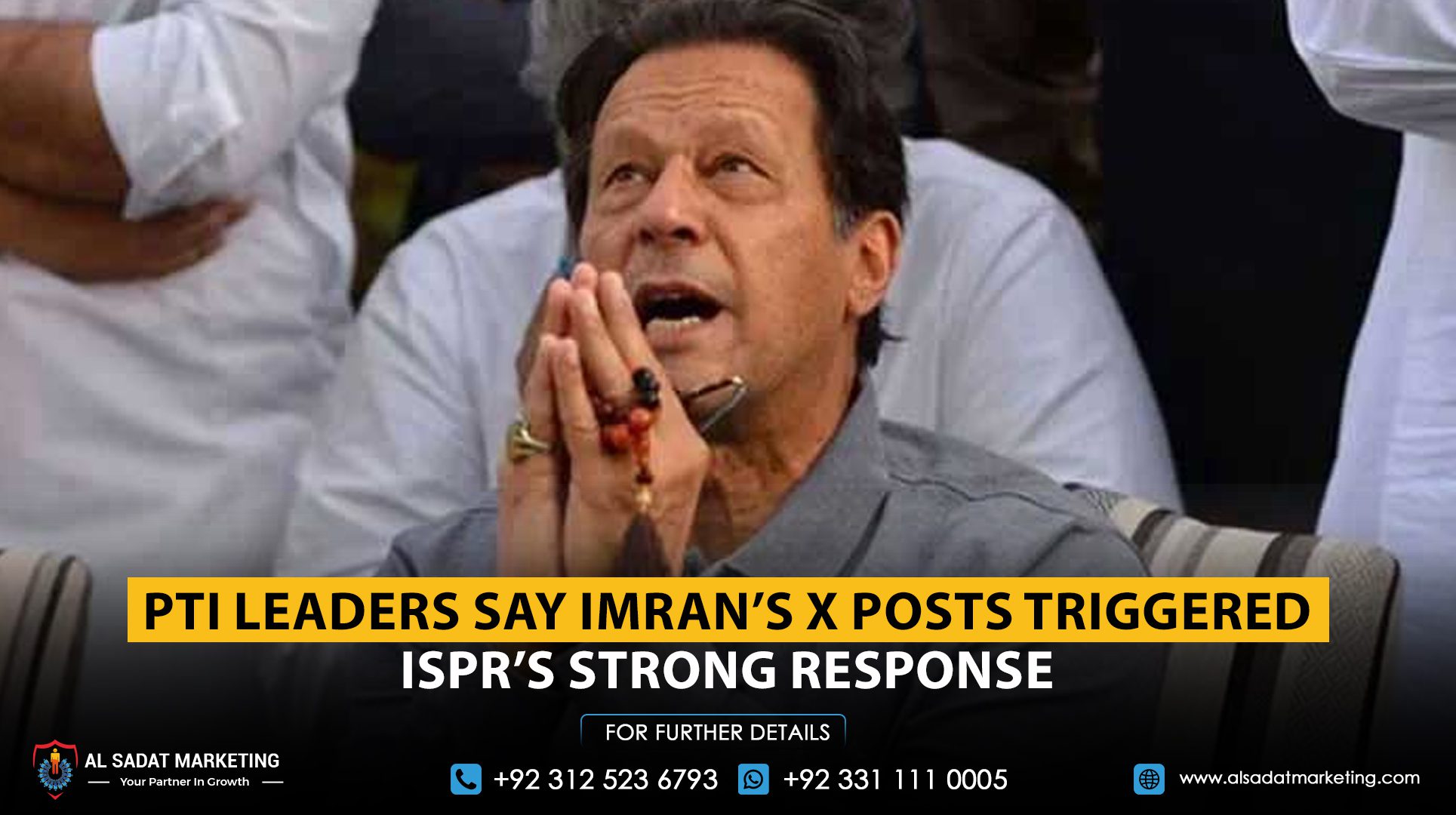
Senior figures inside the Pakistan Tehreek-e-Insaf (PTI) privately acknowledge that Imran Khan’s repeated use of harsh and derogatory language against the military leadership on X played a major role in provoking the strong response issued by the Inter-Services Public Relations (ISPR) on Friday.
According to party insiders, the issue was discussed within PTI’s top circles, where some leaders admitted that the jailed former prime minister had frequently used extremely demeaning expressions for the army’s top command over the past two years.

One senior PTI member, speaking on condition of anonymity, said: “If we do this again and again with such consistency, then what reaction should we expect from the other side?” He added that Khan’s posts containing aggressive language may number in the hundreds during this period.
Sources say the party is facing an internal dilemma. Many senior PTI leaders do not agree with Imran’s confrontational messaging, especially his personal attacks on the military. However, they have little influence over decision-making, and the party’s tone continues to be dictated directly from Adiala jail.
Insiders reveal that most senior leaders neither repost nor publicly endorse such statements, yet they remain unable to change the party’s communication strategy. Several PTI lawmakers believe tensions should be reduced, but their concerns, as in the past, are not heeded by the founder.
The divide widened after ISPR Director General Lt Gen Ahmed Sharif Chaudhry issued one of the strongest institutional responses yet, calling Imran Khan a “mentally ill person” and a “serious national security threat”.
Although the ISPR chief did not name Imran directly during his press conference, his remarks clearly targeted the imprisoned former premier and the party’s leadership. He accused PTI of promoting an anti-state narrative and claimed that Khan’s messaging was being amplified by foreign media outlets whose militaries had “previously suffered defeat at the hands of the Pakistan Army”.
The developments highlight the deep disconnect between PTI and the military establishment, while exposing growing frustration within the party over how to manage its relationship with the state’s powerful institutions.