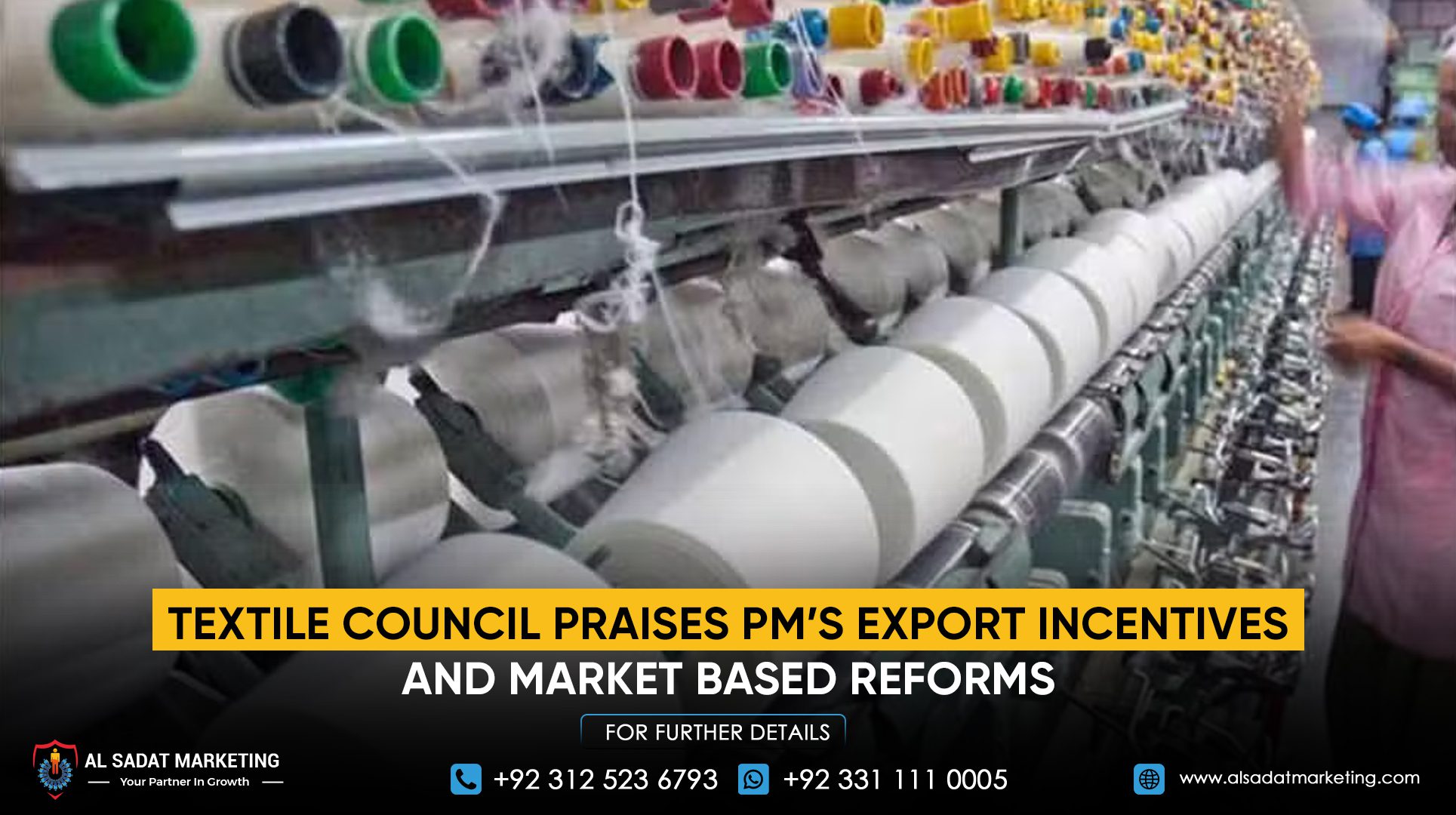
The Pakistan Textile Council (PTC) on Saturday welcomed Prime Minister’s decision to recognize top exporters and introduce market-based support measures, calling it a strong sign of the government’s commitment to export-led growth despite limited fiscal space.
In a statement from Islamabad, the council said acknowledging leading exporters shows confidence in industries that continue to operate under difficult economic conditions. It also reinforces the importance of performance, compliance, and global competitiveness.

PTC Chairman Fawad Anwar said the government’s strategy of supporting exports without adding fiscal pressure is timely and economically sensible, especially as Pakistan operates under an IMF program.
The council particularly praised the reduction in Export Refinance Facility (ERF) rates, describing it as a result of careful macroeconomic coordination rather than additional government spending. Anwar highlighted the role of State Bank Governor Jameel Ahmad and his team in implementing the framework.
He explained that a 1 percent reduction in the Cash Reserve Requirement released over Rs. 300 billion into the banking system, allowing banks to absorb a 300 basis point cut in ERF rates while maintaining financial sector stability. According to the PTC, this move has lowered financing costs for exporters while preserving confidence in the banking system through strong coordination between fiscal and monetary authorities.
The council also welcomed the government’s decision to remove cross-subsidies from industrial power tariffs, calling it a long-overdue correction of structural distortions that had disproportionately affected export-oriented sectors.
Addressing concerns about the India-EU Free Trade Agreement, Anwar said fears of its impact on Pakistan’s exports are overstated. He stressed that competitiveness, not panic, should guide policy, noting that the agreement will only take effect next year. He added that Pakistan’s value-added textile and apparel exporters remain well-positioned due to strengths in quality, compliance, sustainability standards, and long-standing buyer relationships.
Looking ahead, the PTC called for a comprehensive, long-term reform agenda to sustain export growth. Key priorities include continuing the GSP Plus regime through credible compliance, regionally competitive taxation, investment-linked tax incentives, a stable and market-aligned real effective exchange rate, duty-free access to export inputs, and the removal of bureaucratic barriers.
The council reaffirmed its commitment to working closely with the government to turn macroeconomic stability into higher exports, job creation, and improved foreign exchange earnings.