
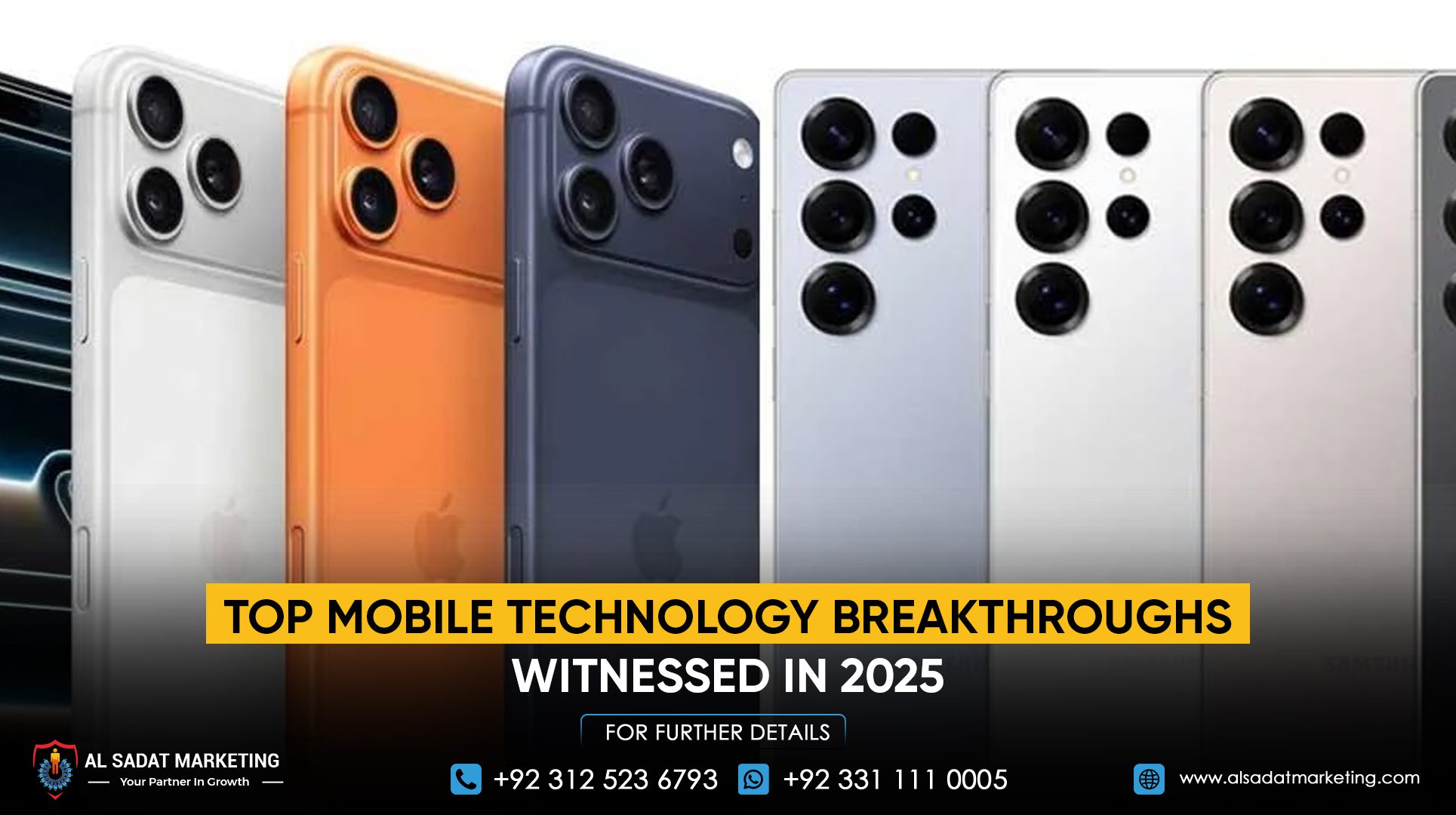
Smartphone innovation reached a high point in 2025 as the industry moved beyond small upgrades and fully embraced artificial intelligence at the hardware level. From advanced foldable designs to processors capable of handling complex tasks independently, the gap between smartphones and professional workstations narrowed significantly during the year.
One of the most talked-about devices was the Samsung Galaxy S25 Ultra, which showed how deeply AI is now built into modern phones. Powered by the Snapdragon 8 Gen 4 processor, the device runs Galaxy Intelligence 2.0, a system designed to learn user routines and manage tasks automatically. Its M14 OLED display delivers high brightness and sharp visuals, remaining clearly visible even in direct sunlight. In photography, the 200-megapixel camera uses AI-based Deep Fusion processing to reduce noise and restore fine details, especially in low-light conditions.

Apple also made a strong impact in 2025 with the iPhone 17 Pro Max, focusing on efficiency and design refinement. The device introduced a thinner and lighter titanium body while maintaining strength and durability. Apple further enhanced the viewing experience by placing Face ID sensors under the display, reducing screen interruptions. At the core of the phone is the A19 Pro chip, the world’s first 2-nanometre mobile processor, which improved battery life by nearly 40 per cent compared to earlier models.
Also read: Why Lakeshore City Is Emerging as Pakistan’s Next Tourism-Driven Commercial Hub in 2026
Foldable technology advanced further with the Huawei Mate XT, one of the first tri-fold smartphones to reach consumers. When fully opened, the device expands into a 10.2-inch tablet, while folding down into a standard phone shape. Its dual titanium-alloy hinges are built to withstand up to 500,000 folds and are designed to keep screen creases minimal over long-term use. AI-based software automatically reorganises apps into multiple windows, making effective use of the extended screen space.
Google continued its AI-first approach with the Pixel 10. The device is powered by Google’s custom Tensor G5 chip, allowing advanced AI video processing to run entirely on the phone without relying on cloud services. Magic Editor 2.0 enables users to remove unwanted objects or adjust backgrounds in 4K video with a single tap. The phone also supports satellite-based emergency video communication, allowing users to send high-definition SOS signals in areas without mobile coverage.
Xiaomi also stood out in 2025 with the Xiaomi 15 Ultra, particularly for users interested in professional-level photography and fast charging. The phone features a one-inch Sony camera sensor tuned by Leica, with a variable aperture that delivers natural depth-of-field effects. To handle demanding tasks such as 8K video recording, Xiaomi introduced advanced liquid cooling technology. The device also led the industry in charging speeds, offering 120W wireless charging that can fully recharge the battery in under 20 minutes.
Overall, 2025 marked a year when smartphones evolved into powerful, intelligent devices capable of handling complex tasks with ease. With artificial intelligence deeply integrated into processors, cameras, displays, and connectivity, the industry moved closer to a future where smartphones function as complete personal computing platforms rather than simple communication tools.