
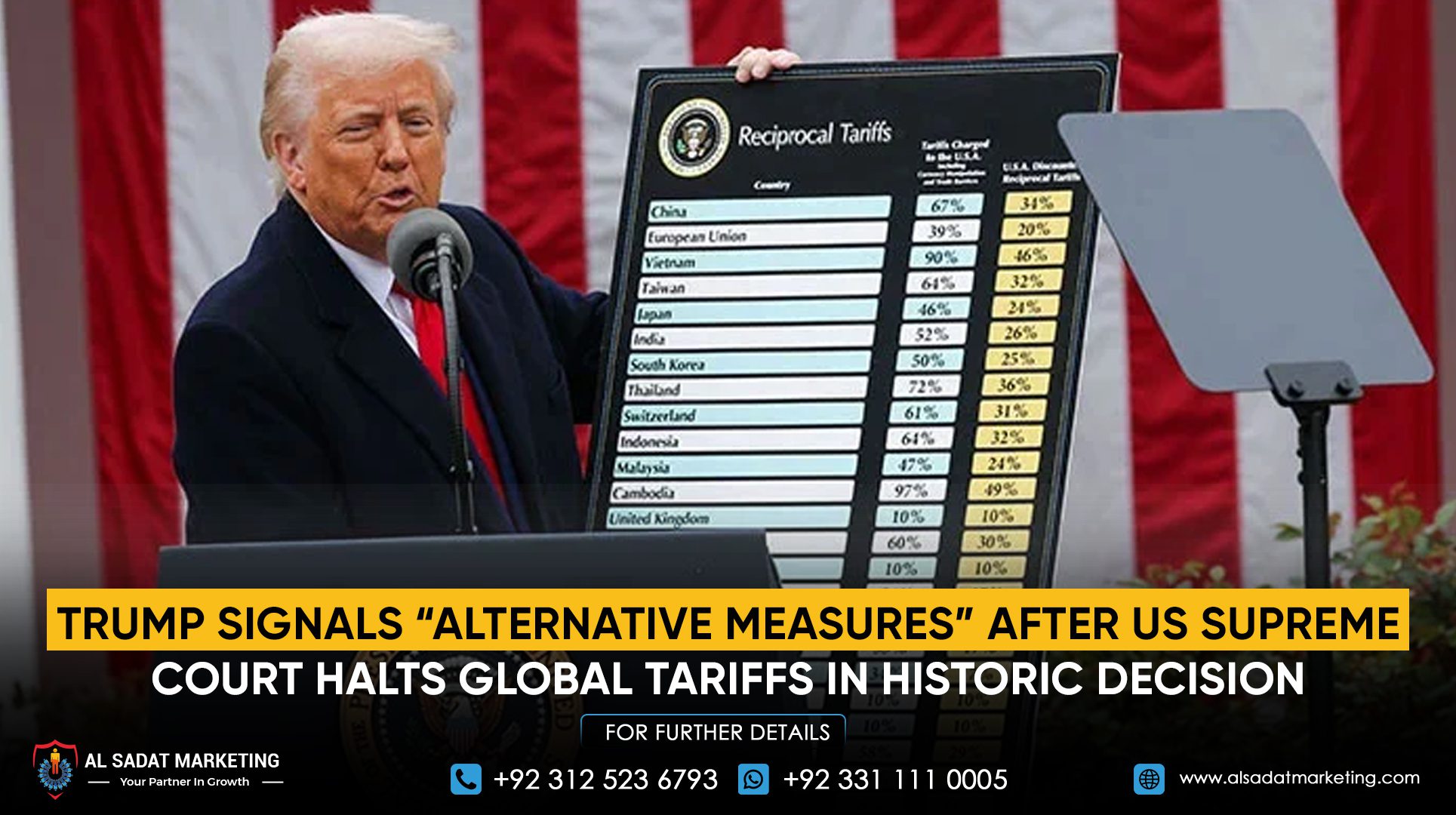
The US Supreme Court has struck down former President Donald Trump’s sweeping tariffs that were imposed under a law meant for national emergencies, delivering a major legal setback with wide economic implications.
In a 6-3 decision written by Chief Justice John Roberts, the court ruled that the International Emergency Economic Powers Act of 1977 does not give the president authority to impose tariffs. The justices upheld a lower court’s finding that Trump had exceeded his powers by using the law to introduce broad import duties.

Roberts wrote that the president must point to clear congressional authorization to justify such significant actions. He said the power to regulate importation under the law does not include the authority to impose tariffs. The US Constitution grants Congress, not the president, the power to levy taxes and tariffs.
Reacting strongly to the decision, Trump called the ruling “terrible” and criticized the justices who ruled against him. He said he was ashamed of certain members of the court and claimed the decision would benefit foreign countries. He also argued that tariffs are essential for protecting US economic interests.
Despite the setback, Trump said he has other legal options available. He announced plans to impose a 10 percent global tariff for 150 days under Section 122 of the Trade Act of 1974. This provision allows the president to apply duties of up to 15 percent for a limited period in cases involving serious balance of payments issues. However, such tariffs can only remain in effect for 150 days.
Trump’s use of tariffs has been central to a global trade strategy that triggered tensions with key trading partners and affected financial markets. His administration had argued that the emergency law allowed him to regulate imports broadly, including through tariffs. The court disagreed, saying no previous president had used the law in this way.
The ruling marks one of the biggest legal setbacks for Trump since returning to office in January 2025. While the Supreme Court has previously supported some of his executive actions, this decision limits the scope of presidential power in trade matters.
The judgment was welcomed by Democrats and several business groups, who argued that the tariffs increased costs for consumers and created economic uncertainty. Some industry representatives, however, warned that the ruling could lead to further instability as the administration seeks alternative legal tools to maintain tariffs.
US Treasury Secretary Scott Bessent said the decision removes one form of leverage but noted that other trade tools remain available. He suggested the administration could use different legal authorities, including those related to national security or unfair trade practices.
The ruling does not immediately clarify how the government will handle the billions of dollars already collected under the struck-down tariffs. Legal experts say the refund process could be complicated.
In separate remarks, Trump said there would be no changes to the current trade arrangement with India, describing it as a fair deal in which India pays tariffs while the US does not.
The case was brought by small businesses and 12 US states that challenged the legality of the tariffs. The court’s majority opinion stated that allowing the president to act without clear approval from Congress would upset the balance of power between the executive and legislative branches.
The decision is expected to have lasting implications for US trade policy and the limits of presidential authority in economic matters.