
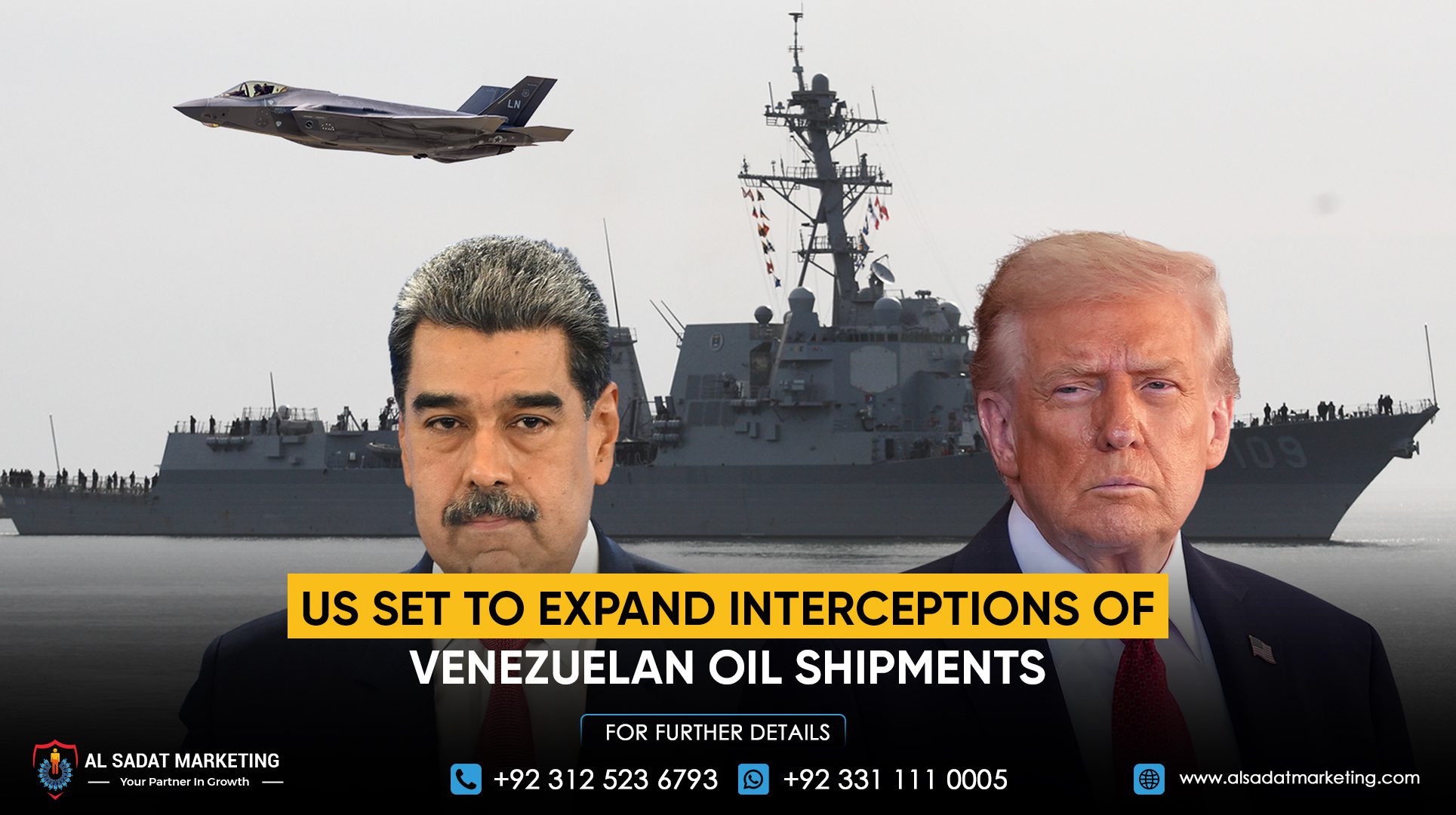
The United States has seized a Venezuelan oil tanker for the first time under its sanctions regime and is preparing to intercept additional vessels, escalating pressure on President Nicolás Maduro’s government and disrupting Venezuela’s crude oil exports.
The tanker, identified as Skipper, was intercepted off Venezuela’s coast earlier this week. US authorities plan to escort the vessel to an American port to formally seize its cargo of crude oil. White House spokesperson Karoline Leavitt said the action was taken against “sanctioned vessels transporting black market oil,” adding that such shipments help fund illicit activities.

Following the seizure, shipments of nearly six million barrels of Venezuela’s key export grade, Merey crude, have been temporarily halted. Trading sources said several tankers bound for Asian markets were placed on hold amid uncertainty caused by the US action.
Sources familiar with the matter revealed that Washington has compiled a list of additional sanctioned tankers that could be targeted next. These vessels are often part of a so-called shadow fleet used to transport oil from Venezuela, Iran, and Russia while evading international sanctions.
The US Treasury recently imposed sanctions on six supertankers and four Venezuelan nationals, including three relatives of First Lady Cilia Flores. Meanwhile, the Justice Department and the Department of Homeland Security have reportedly been planning vessel interdictions for several months as part of a broader sanctions enforcement strategy.
Venezuela strongly condemned the tanker seizure, calling it an act of “international piracy.” President Maduro accused the United States of attempting to overthrow his government and seize control of Venezuela’s oil resources, vowing that the country would never become an “oil colony.”
However, maritime law experts rejected the piracy claim, noting that the seizure was carried out under US legal authority. Laurence Atkin-Teillet, a piracy law specialist at Nottingham Law School, described Caracas’ accusations as political rhetoric rather than a valid legal argument.
The move comes amid heightened US military activity in the southern Caribbean, where Washington has carried out more than 20 strikes on vessels allegedly linked to drug trafficking in recent months. Shipowners and operators are now reassessing routes involving Venezuelan waters, as many shadow fleet vessels are aging, poorly insured, and operate under unclear ownership structures, making them increasingly risky for international ports.
US officials say the action reflects Washington’s continued commitment to enforcing sanctions, curbing illegal oil trade, and countering what it describes as rogue and illegitimate regimes.