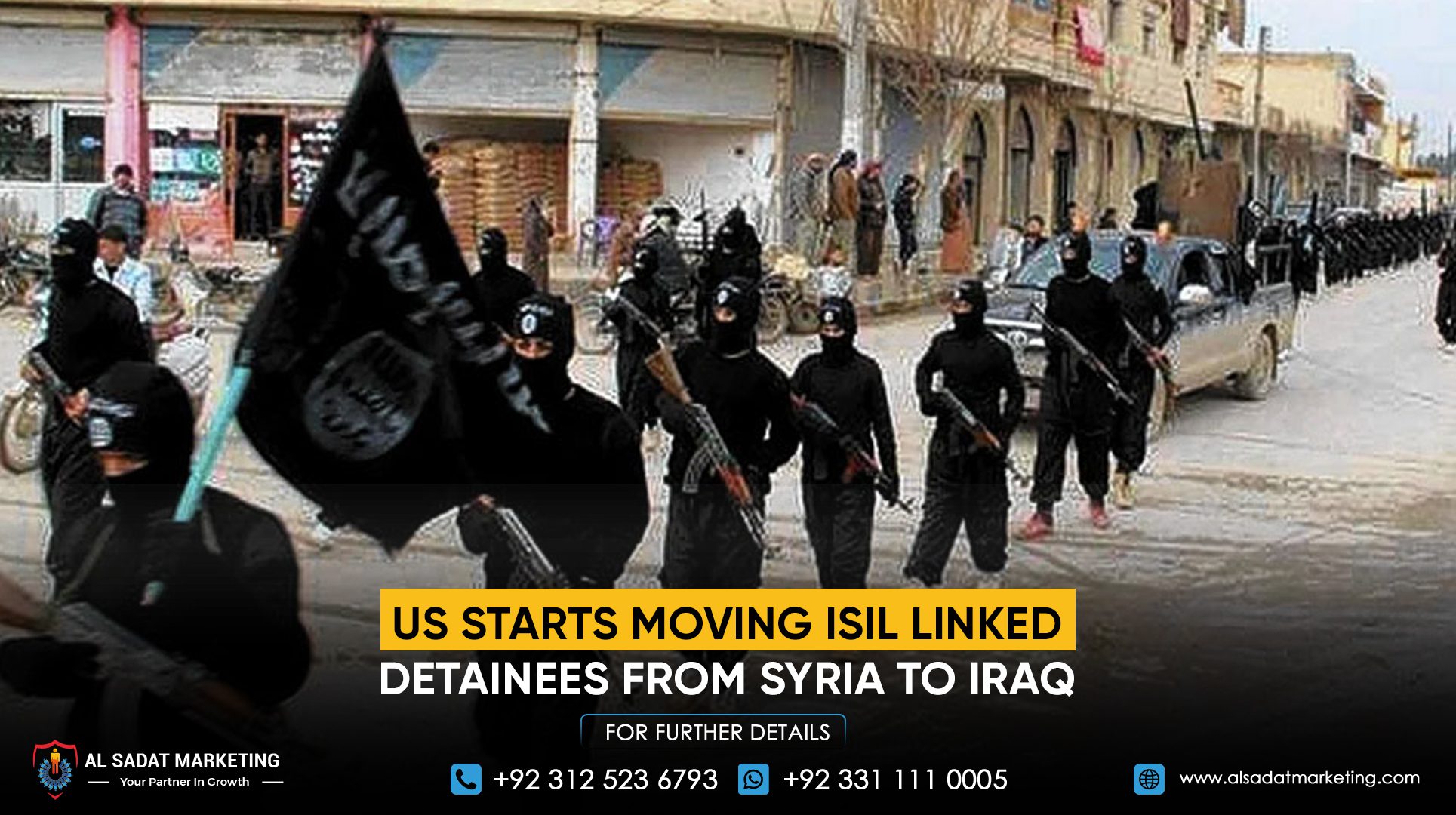
The United States has begun transferring detainees linked to ISIL from northeastern Syria to Iraq, as the Syrian government expands its control over areas that were previously held by Kurdish forces.
US officials confirmed that the first group of around 150 detainees was moved from a detention facility in Hasakah to secure Iraqi prisons. The transfers are expected to continue and could eventually involve as many as 7,000 detainees currently held in camps and prisons that were earlier under the control of the Kurdish-led Syrian Democratic Forces.

The move follows recent territorial changes in northeastern Syria, where the SDF has withdrawn from several key locations, including al-Hol camp, which is the country’s largest facility housing family members of ISIL fighters. As Syrian government forces advanced, a ceasefire agreement between Damascus and the SDF was announced earlier this week, clearing the way for the transfer of detainees.
US Admiral Brad Cooper, who heads US forces in the Middle East, said close coordination with Iraq was essential to ensure the safe relocation of detainees. He stressed that the process is aimed at preventing potential mass prison breaks that could pose serious security threats in the region and beyond.
Iraqi authorities have formally approved the reception of both Iraqi nationals and foreign fighters into government-run correctional facilities. According to Sabah al-Numan, some of the detainees transferred in the first batch were involved in past attacks against Iraqi civilians.
Although ISIL was largely defeated militarily in Iraq in 2017 and in Syria by 2019, the group continues to operate through sleeper cells. The SDF played a central role in dismantling ISIL’s territorial control, but the United States now considers the Syrian government its primary partner in countering ISIL inside Syria, reflecting a shift from its earlier reliance on Kurdish-led forces.
The ongoing transfers highlight changing dynamics in northeastern Syria, as control shifts and regional coordination intensifies to prevent a resurgence of ISIL-linked militancy.