
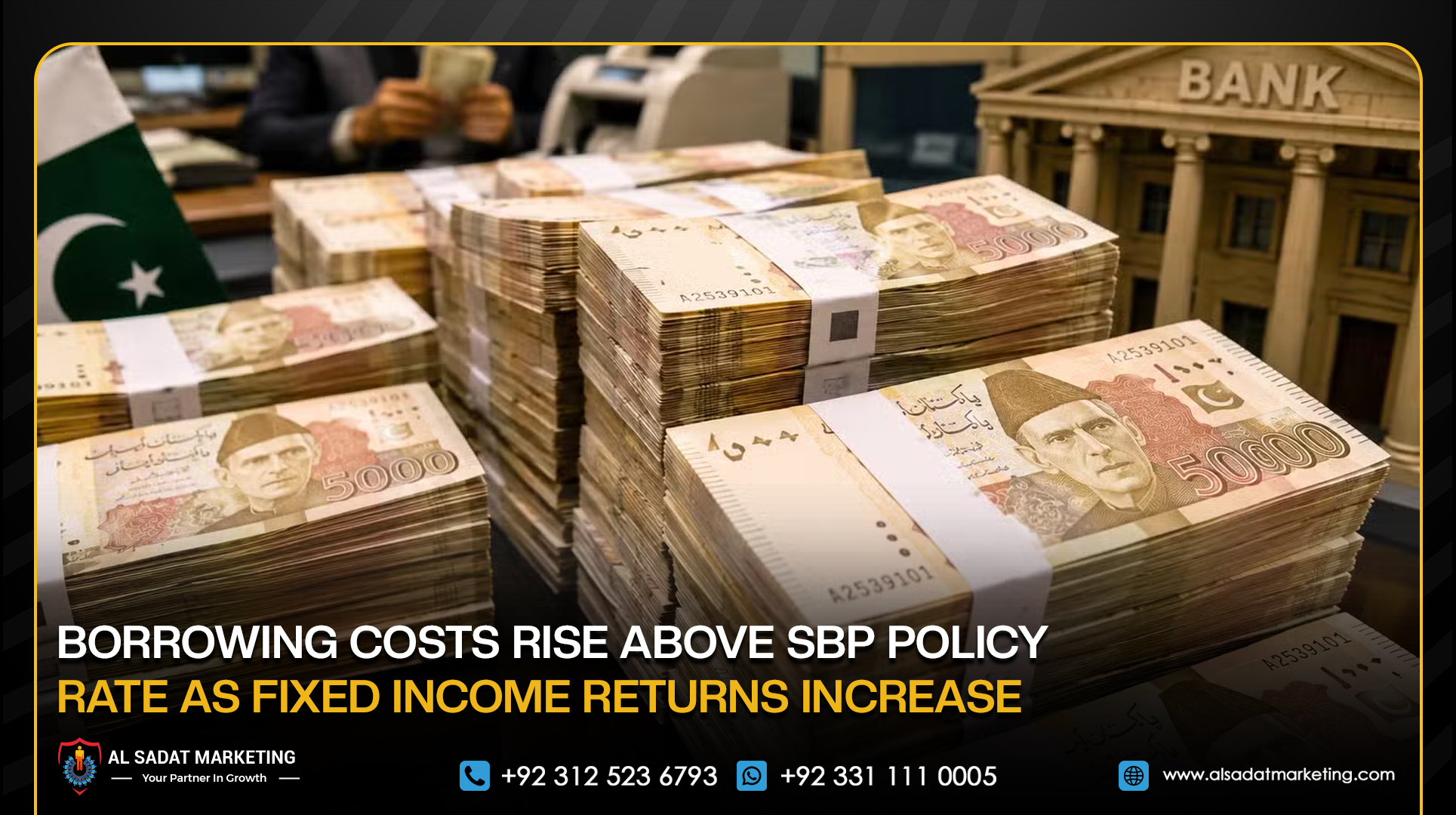
Pakistan’s money market came under renewed pressure as the Karachi Interbank Offered Rate (KIBOR) continued its upward trend, moving significantly above the State Bank of Pakistan’s (SBP) policy rate of 11.5%.
Borrowing costs have increased due to tighter liquidity conditions, persistent inflation, and market expectations that the central bank will maintain a relatively restrictive policy stance for an extended period.
As a result, financing is becoming more expensive for businesses, including exporters and industrial borrowers. However, the rising rate environment is expected to benefit savers, with fixed-deposit holders likely to see improved returns in the coming weeks.
As of May 20, KIBOR rates across all tenors—from 1-week to 6-month and up to 1-year—ranged between 11.84% and 12.79%, exceeding the latest policy rate set at 11.5%.
The trend suggests that financial markets are pricing credit risk higher than the central bank’s current policy stance, putting additional pressure on borrowing costs across the economy.
In the latest Treasury Bill auction, investor participation reached Rs. 1,733 billion, while the government raised Rs. 688 billion against a target of Rs. 450 billion and maturities of Rs. 479 billion. Despite strong demand, yields increased by 9 to 86 basis points, reflecting rising rate expectations.
Overall, the increase in both KIBOR and T-bill yields indicates continued liquidity strain in the banking system. If this environment persists, investors are expected to demand higher returns, while fixed-income savers may gradually benefit from improved yields.