
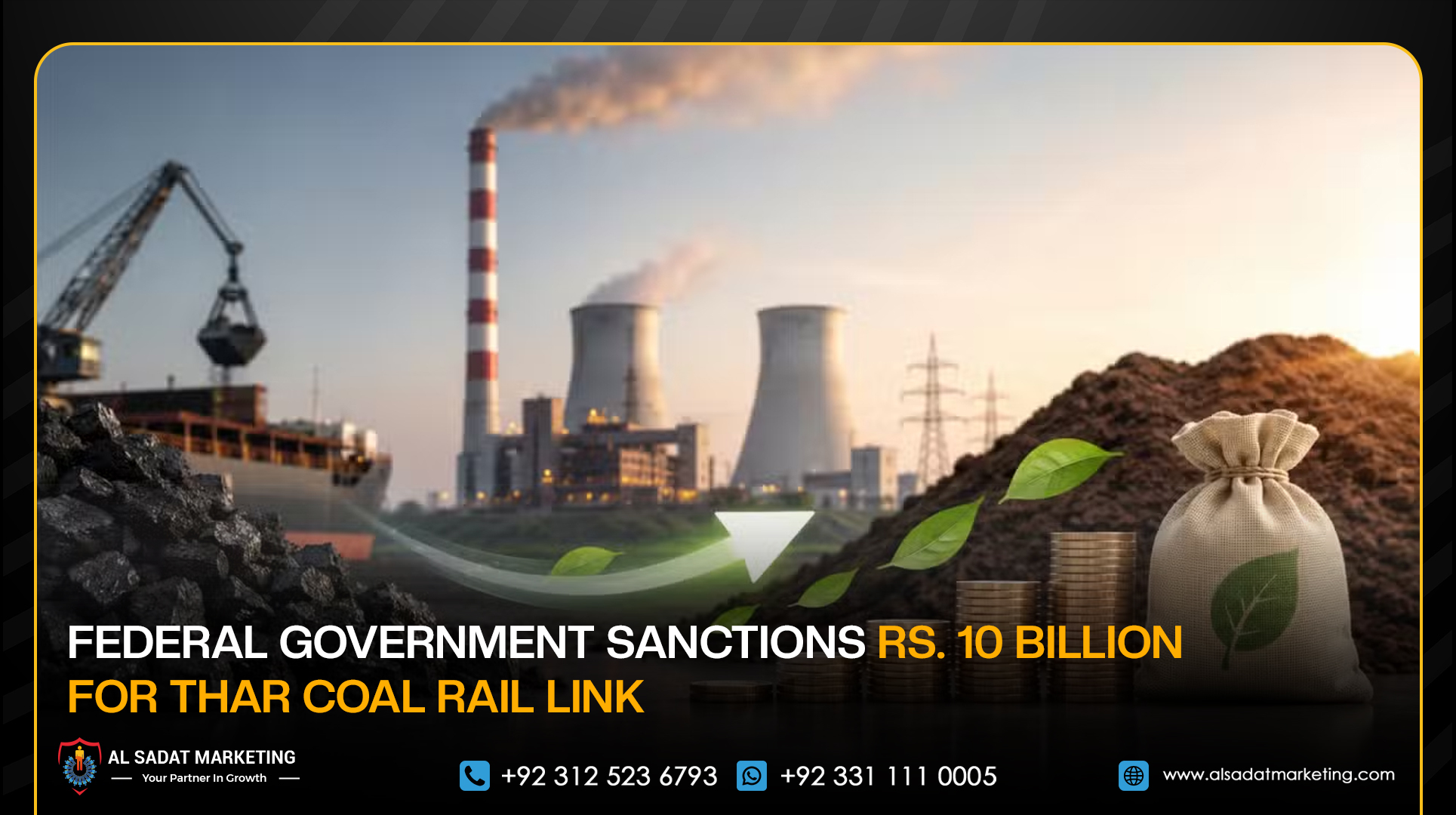
The federal government has approved a Technical Supplementary Grant (TSG) of Rs. 10 billion to support the Thar Coal Rail Connectivity Project, a major infrastructure initiative designed to improve the transportation of locally mined coal to power plants and key industrial sectors across Pakistan.
The project is being implemented by the Ministry of Railways in partnership with the Government of Sindh under a joint venture agreement. Previously approved by the Executive Committee of the National Economic Council (ECNEC), the rail network will connect the Thar coalfields with Pakistan’s existing railway system, including last-mile connectivity to Port Qasim.
Boosting the Use of Indigenous Coal
The rail connectivity project aims to increase the use of Thar’s vast coal reserves by supplying locally mined coal to independent power producers that currently rely on imported coal. It will also support major industries, including:
- Cement
- Fertilizer
- Steel
The initiative is expected to reduce dependence on imported fuel while improving energy security and lowering transportation costs.
Shared Funding Between Federal and Sindh Governments
Under the financing arrangement, the federal government and the Government of Sindh will each contribute 50 percent of the total project cost.
- The federal government’s share will be financed through the Public Sector Development Programme (PSDP).
- Sindh will fund its portion through its Annual Development Plan (ADP).
The Ministry of Railways stated that Rs. 7 billion has already been allocated under the current fiscal year’s PSDP, while the Sindh government has transferred Rs. 10 billion to the federal government for the project.
No Additional Fiscal Burden
Officials informed the Economic Coordination Committee (ECC) that the Technical Supplementary Grant serves only as a budgetary mechanism to utilize Sindh’s financial contribution and does not create any additional fiscal burden on the federal government.
The proposal was approved by the ECC and has since been formally ratified by the federal cabinet, allowing work on the strategic rail connectivity project to move forward.