GILGIT-BALTISTAN: The Government of Gilgit-Baltistan has launched a €54.24 million rural development and climate resilience project. The programme is being supported by the European Union, Agence Française de Développement (AFD) and the Aga Khan Foundation.
The project is valued at around Rs. 17.2 billion. It aims to support more than 325,600 people across Gilgit-Baltistan. The programme will focus on housing, water supply, sanitation, clean energy and climate resilience.
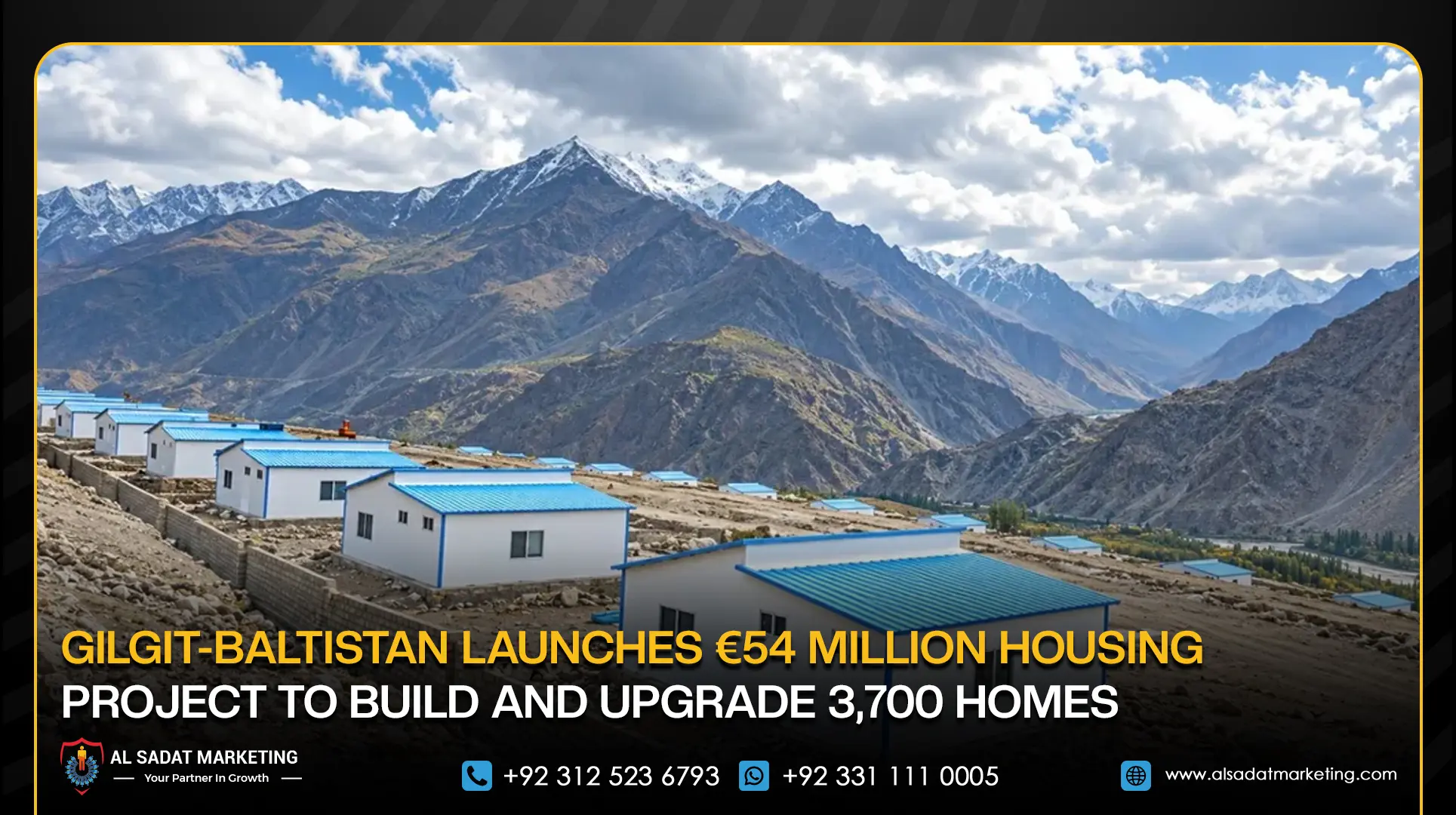
A major part of the project focuses on housing. It includes the construction of 700 new climate-resilient homes. Another 3,000 existing houses will receive green retrofitting. These upgrades will focus on improving energy efficiency and resilience.

The programme also includes 216 water supply and sanitation schemes. These projects are planned across different areas of the region. The initiative will also conduct climate vulnerability assessments across all 110 union councils in Gilgit-Baltistan.
Clean energy is another key part of the programme. Micro-hydropower and other clean energy systems will be developed under the project. These systems are expected to provide around 1.2 to 1.3 megawatts of capacity.
The project builds on earlier cooperation between Pakistan and France. AFD had signed a €35.6 million financing agreement for the Gilgit-Baltistan rural development project before its formal launch.
The housing component will cover both new construction and existing homes. The 700 new houses will follow climate-resilient and energy-efficient standards. The 3,000 retrofitted homes will receive improvements to make them more efficient and better prepared for climate-related risks.

The wider programme will also support basic infrastructure in rural communities. Water and sanitation schemes will form an important part of the planned development. Climate assessments will help identify areas facing greater environmental risks.
The project is expected to support development across Gilgit-Baltistan over its implementation period. Its housing and infrastructure components will also create demand for construction work, materials and related services.
The latest launch marks a major development programme for the region. Its progress will depend on implementation, project delivery and coordination among the participating institutions.