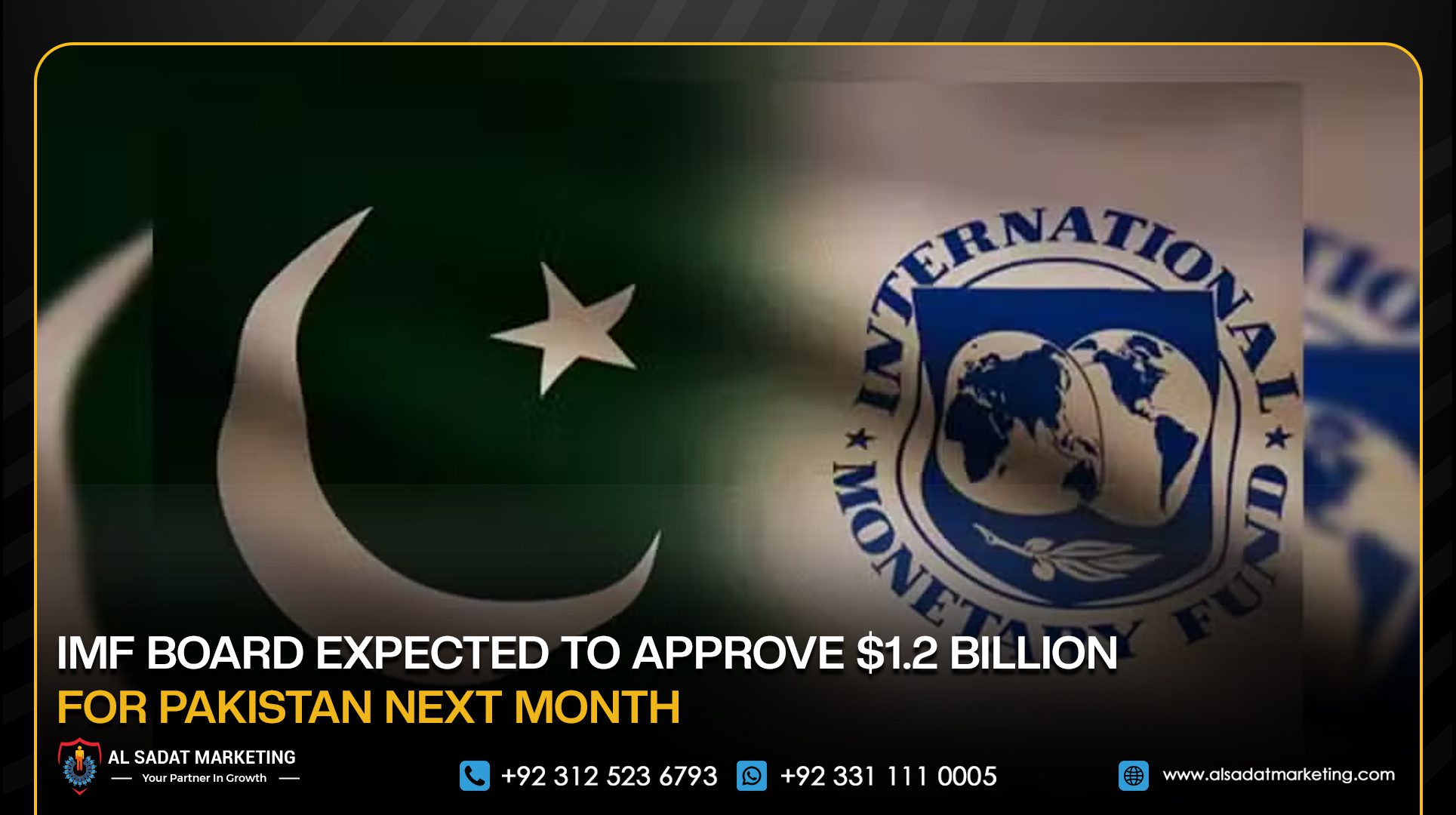
The International Monetary Fund (IMF) Executive Board is expected to consider Pakistan’s Staff-Level Agreement (SLA) next month, a step that could unlock around $1.2 billion in fresh funding under the ongoing financial assistance programme, according to sources.
Sources said the IMF Executive Board’s calendar is expected to include Pakistan’s loan agenda in May 2026 within the next two weeks.
The Staff-Level Agreement was reached on March 28 after Pakistan completed the third review under the Extended Fund Facility (EFF) and the second review under the Resilience and Sustainability Facility (RSF).
Finance Minister Muhammad Aurangzeb is currently in Washington for the Spring Meetings of the Bretton Woods institutions, where he has held discussions with IMF, World Bank, and other global financial officials. Talks focused on Pakistan’s economic stabilisation efforts, ongoing reforms, and external financing needs.
The finance minister had earlier indicated that the IMF Board may meet in mid-May to review and approve the agreement, which would clear the next funding tranche for Pakistan.
An IMF mission initially visited Islamabad on February 25 but later continued engagements virtually due to regional tensions, finalizing the agreement in late March. Another IMF team is expected to return to Pakistan in May for pre-budget consultations as part of routine programme monitoring.
Disbursements under IMF programmes are released in phases, subject to successful reviews and Board approval. The current EFF programme is scheduled to continue through 2027, depending on the completion of remaining reviews.
Officials also noted that Pakistan has not yet finalized a decision on whether it will pursue a new IMF programme after the current one ends, with internal discussions still ongoing.
During his Washington visit, the finance minister also met senior officials from the United States, United Kingdom, Japan, multilateral institutions, and credit rating agencies.
Discussions with a senior US Treasury official covered macroeconomic stability, external account management, and reforms aimed at improving investment conditions, regulatory frameworks, and cooperation in energy, minerals, and financial integrity systems.