
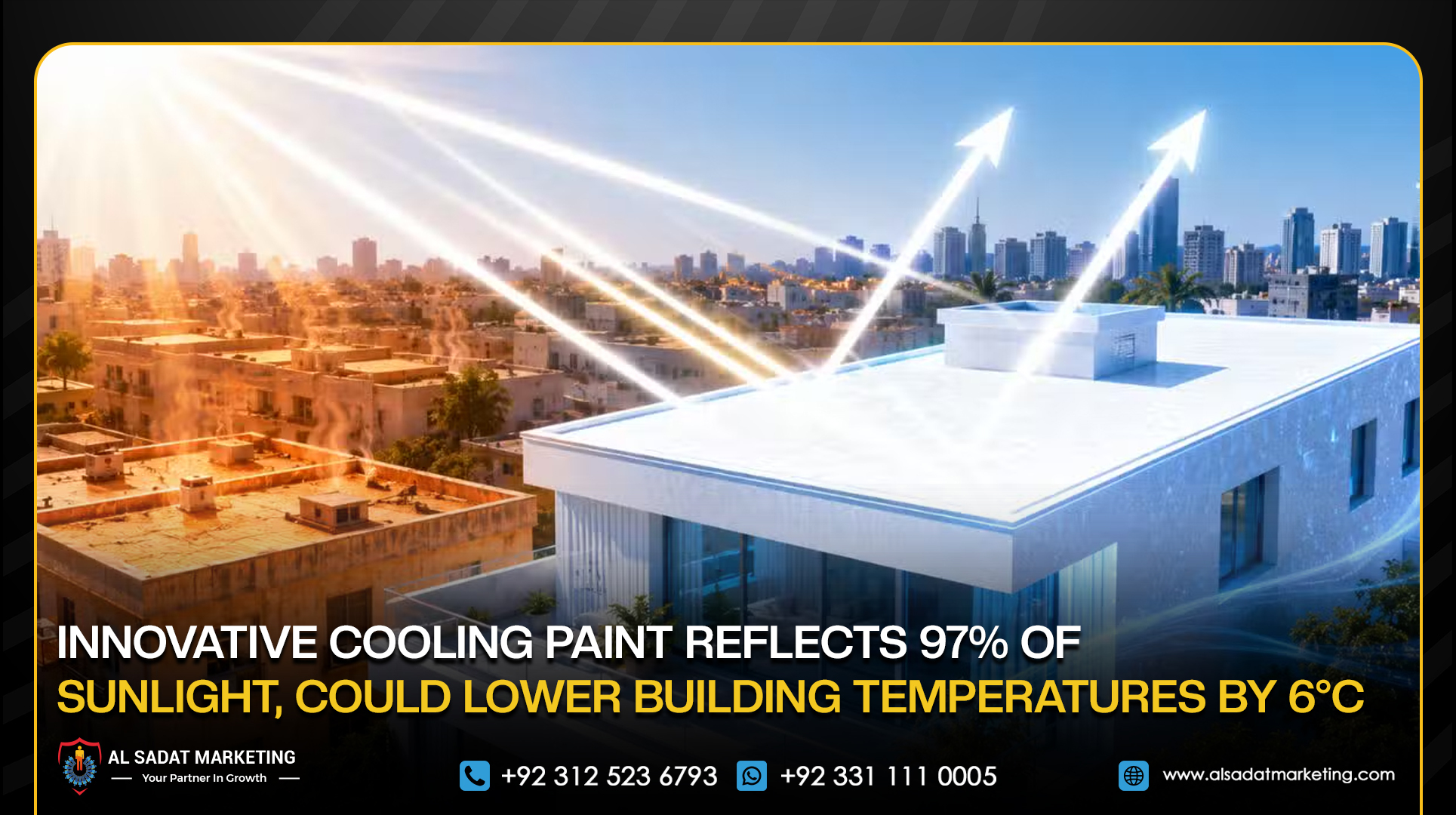
Researchers at the University of Sydney, in collaboration with startup Dewpoint Innovations, have developed an innovative paint-like coating that can cool buildings and extract water from the atmosphere without requiring electricity.
The nano-engineered coating reflects up to 97 percent of incoming sunlight while simultaneously releasing heat into the sky through a process known as passive radiative cooling. As a result, surfaces coated with the material remain significantly cooler than their surroundings, even under direct sunlight.
How the Technology Works
Unlike conventional building materials that absorb and retain heat, the new coating reflects most solar radiation and emits thermal energy away from the surface.
Researchers found that coated surfaces can remain up to 6°C cooler than the surrounding air during hot weather. This cooling effect not only helps reduce building temperatures but also creates ideal conditions for moisture in the air to condense into water droplets.
The process is similar to the natural formation of dew on grass, leaves, or car roofs during cooler periods of the day.
Turning Air Into Water
One of the most promising features of the coating is its ability to harvest water directly from the atmosphere.
When the coated surface cools below the ambient air temperature, water vapor condenses into liquid droplets that can be collected and stored. During testing, the material produced up to 390 milliliters of water per square meter per day under favorable environmental conditions.
Researchers estimate that a roof measuring 200 square meters could potentially collect as much as 70 liters of water on suitable days, although actual yields depend on factors such as humidity, temperature, weather conditions, and available surface area.
Successful Six-Month Field Testing
The technology underwent six months of outdoor testing on the roof of the Sydney Nanoscience Hub, allowing researchers to evaluate its performance under real-world conditions.
Results showed that the coating not only maintained lower surface temperatures but also extended dew formation periods, enabling longer water collection times compared to conventional surfaces.
These findings suggest the technology could prove valuable in regions facing both extreme heat and water scarcity.
Potential Benefits for Energy and Water Security
As temperatures rise globally, buildings are consuming increasing amounts of electricity for cooling. Air conditioning already represents a major share of energy demand in many countries, and that demand is expected to grow further in the coming decades.
A passive cooling solution that requires no electricity could help reduce energy consumption, lower cooling costs, and ease pressure on power grids during heatwaves.
The coating’s ability to collect water from the air provides an additional benefit, particularly for communities in remote, arid, or water-stressed regions.
Not a Replacement for Traditional Water Supplies
While the technology offers significant promise, researchers caution that it is not intended to replace conventional water infrastructure.
Its effectiveness depends on environmental conditions, especially humidity levels. Water collection rates may be lower in extremely dry climates, and overall output is limited by the size of the coated surface.
As a result, the coating is best viewed as a supplementary solution that can provide cooling benefits while generating additional water resources.
Path Toward Commercial Deployment
Designed to be applied like conventional paint, the coating could offer a practical and cost-effective alternative to more complex cooling technologies.
If commercialized successfully, it could be used on homes, schools, factories, warehouses, and public buildings.
The innovation may be particularly relevant for countries experiencing rising temperatures and increasing water stress, including Pakistan, where sustainable cooling and water management solutions are becoming increasingly important.