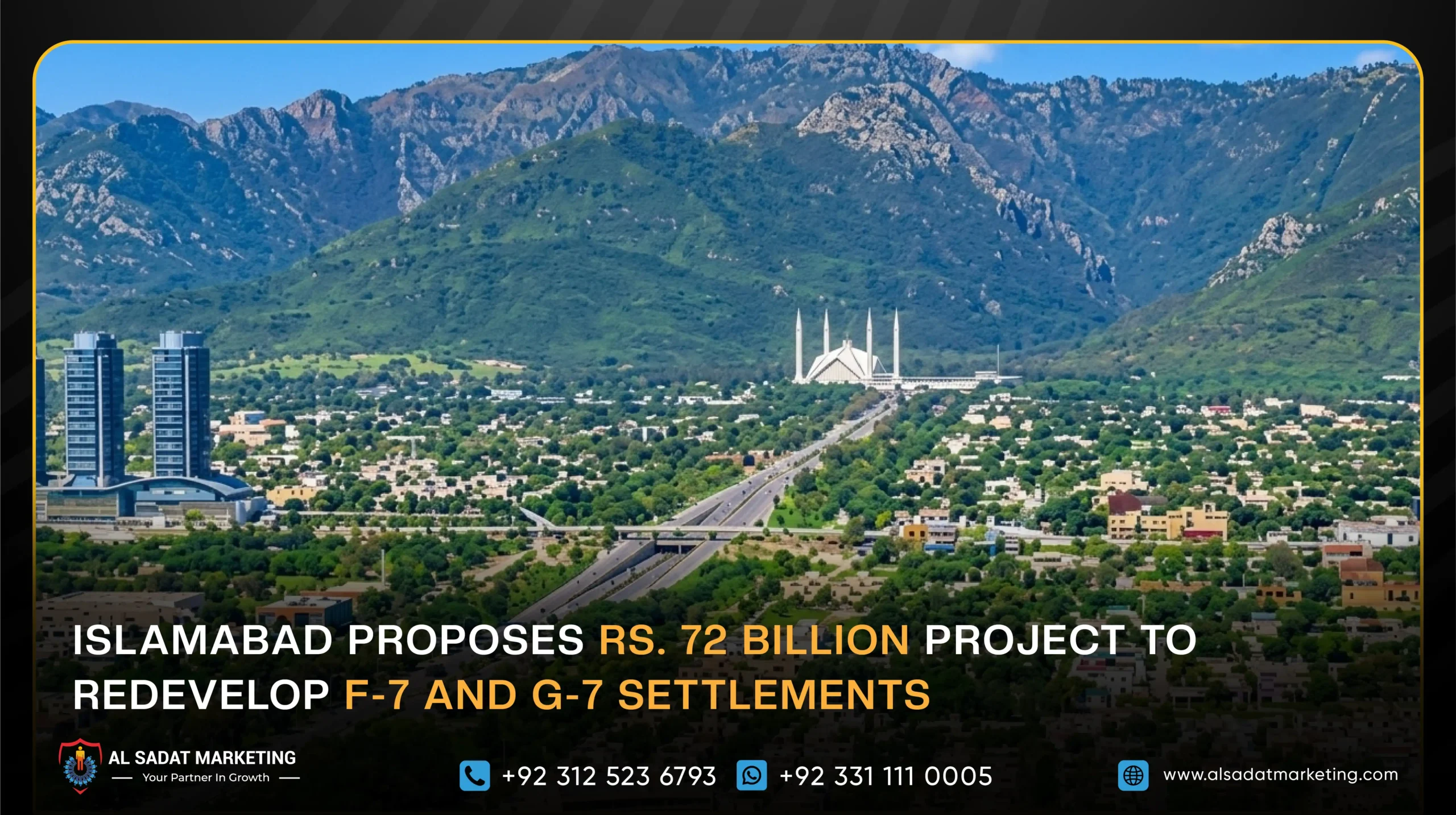
ISLAMABAD: Islamabad’s proposed redevelopment plans for informal settlements in sectors F-7 and G-7 could introduce a mix of residential and commercial buildings, with the F-7 redevelopment model estimating potential net revenue of around Rs. 72 billion.
The proposals, outlined in a recently published report under the national housing framework, aim to reorganise existing settlements while creating additional housing opportunities. However, the figures represent planning proposals and estimates rather than confirmed construction budgets or approved development commitments.
F-7 Plan Includes Mixed-Use Development
The proposed F-7 project covers approximately 67,000 square yards of land occupied by around 900 informal houses. Under the redevelopment model, the area could be transformed into mixed-use buildings combining residential and commercial spaces.
The estimated Rs. 72 billion represents potential net revenue from the proposed model. The available information does not specify the detailed financial assumptions, construction costs, expected sale prices or commercial space allocation behind the estimate.

G-7 Proposal Targets 4,500 Apartments
A separate redevelopment proposal covers approximately 145,000 square yards across G-7/1, G-7/2 and G-7/3. The plan envisages around 4,500 apartments, each measuring approximately 800 square feet.
Of these units, about 3,000 apartments would be allocated to existing residents through a subsidised housing arrangement, while the remaining 1,500 could be offered for public sale.
Details concerning apartment prices, subsidy conditions, eligibility requirements and construction timelines have not been specified in the reported information.
Resident Rehabilitation Remains a Key Consideration
Redeveloping established settlements requires clear arrangements for existing residents, including eligibility verification, housing allocation and any relocation needed during construction. The implementation process will also depend on land ownership records, planning permissions and the applicable regulatory framework.
For residents, the terms of rehabilitation will be particularly important in determining how the proposals affect their housing security and access to services.

Next Steps for Islamabad’s Housing Plans
If approved and implemented, the proposals could reshape parts of F-7 and G-7 while adding residential supply and introducing new commercial space. However, the scale and timing of any development will depend on formal approvals, financial planning and decisions about private-sector participation.
For now, the Rs. 72 billion figure should be understood as an estimated revenue outcome associated with the F-7 model, not the total cost of redeveloping both sectors. Residents, developers and prospective buyers should wait for official announcements from the Capital Development Authority (CDA) regarding approval status, rehabilitation arrangements and the availability of any apartments for public sale.