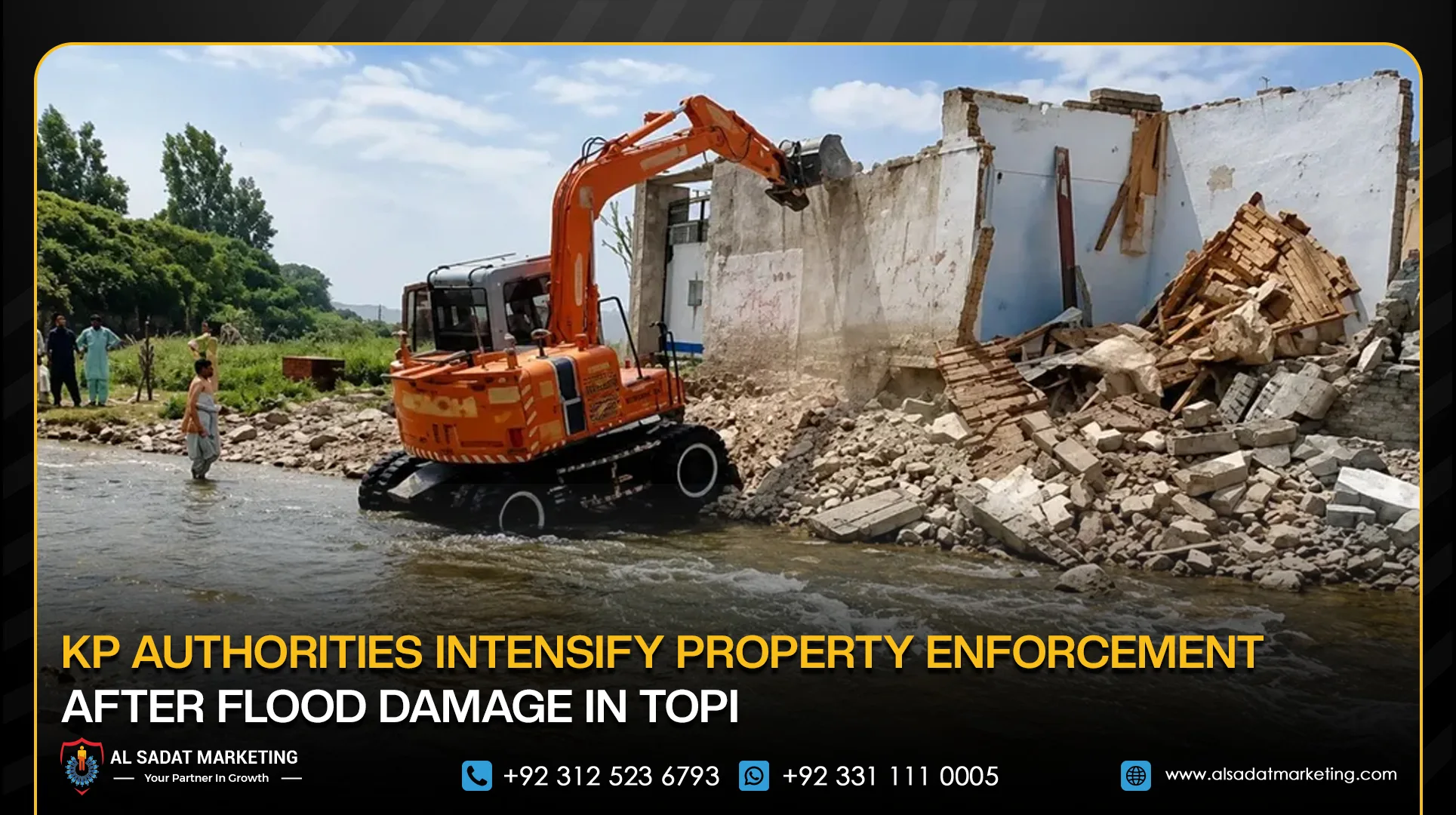
PESHAWAR: Authorities in Topi, Swabi, have launched an enforcement operation against illegal construction along the Badri Nullah, demolishing structures built on government land and areas identified as obstructing the natural flow of stormwater.
Officials said the action is aimed at removing encroachments that have restricted the watercourse and contributed to drainage problems during periods of heavy rainfall. The operation is expected to continue against unauthorised structures along the nullah.
The enforcement comes amid concerns over the vulnerability of parts of Swabi district to flash flooding and heavy rain. Previous flooding incidents in the area have caused damage to homes and other structures, increasing attention on the condition and capacity of natural drainage channels.

According to officials, construction along the Badri Nullah has affected its natural passage. Clearing these obstructions is intended to restore the watercourse and improve the movement of rainwater, particularly during periods of intense rainfall.
The ongoing operation also highlights the risks associated with unauthorised construction near natural waterways. Structures built within drainage channels or their designated rights of way can face both legal enforcement and physical flood risks, particularly where development reduces the available path for stormwater.
Authorities have not yet disclosed the complete extent of the operation or the total number of structures targeted. However, officials have indicated that enforcement will continue in areas where illegal construction has taken place on government land along the nullah.

For property owners and prospective buyers in Topi and other flood-prone areas of Khyber Pakhtunkhwa, the development underlines the importance of checking land ownership, approved building status, drainage channels and right-of-way boundaries before purchasing or developing property.
The action in Topi reflects a broader focus on controlling encroachments around natural drainage routes, particularly as authorities face increasing pressure to reduce flood-related risks and protect communities during extreme weather events.