
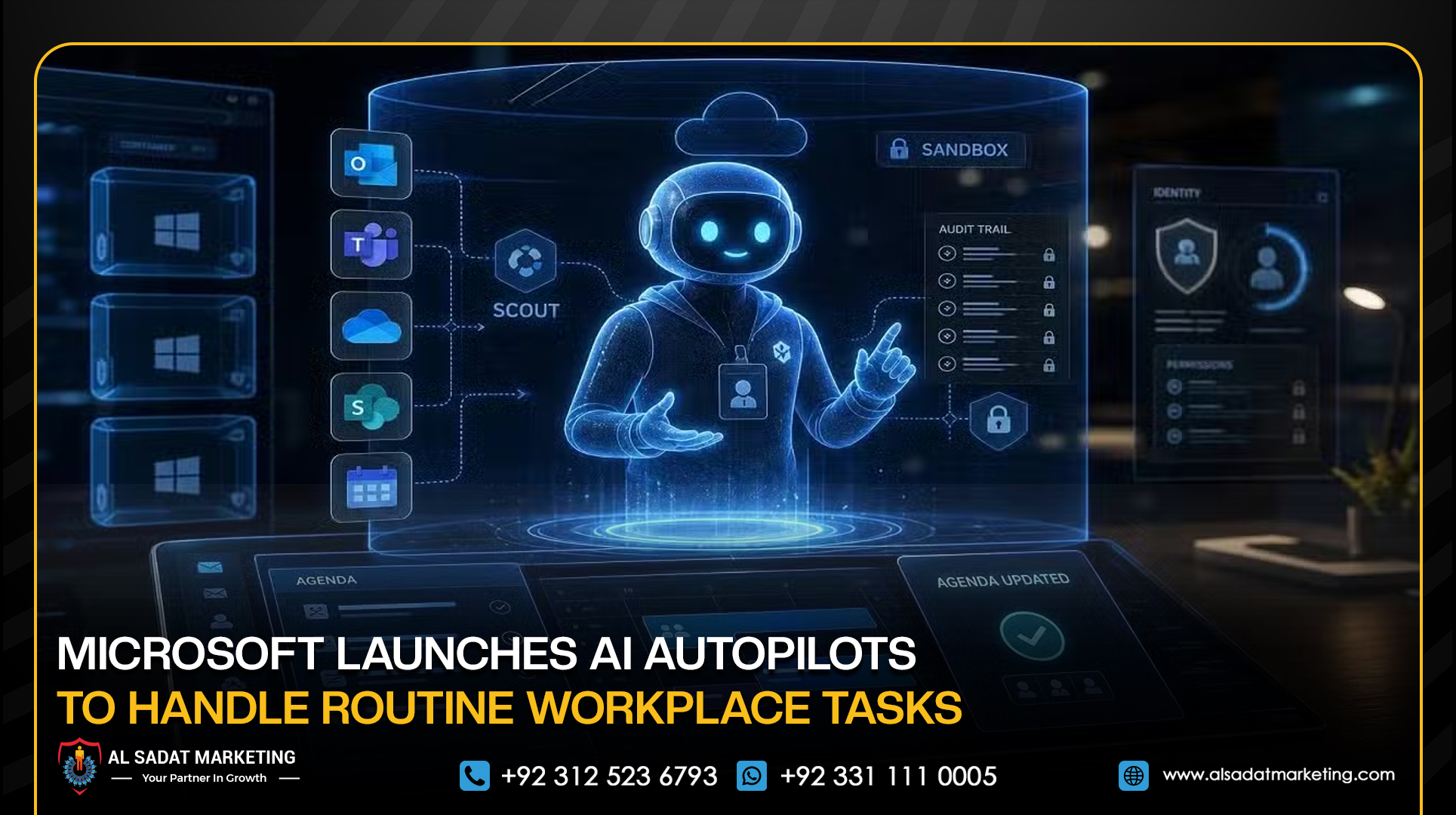
Microsoft has introduced a new category of AI assistants called Autopilots, designed to work independently in the background and complete routine tasks for users across Microsoft 365 applications.
The company announced the technology at its Build 2026 developer conference, where CEO Satya Nadella unveiled Scout, Microsoft’s first Autopilot agent.
What Are Microsoft Autopilots?
Unlike traditional AI assistants that require users to enter prompts for every task, Autopilots can continuously monitor work activities and take action on behalf of users.
Microsoft says these AI agents are designed to understand how people work across different apps and systems, then assist with tasks while following company policies, security rules, and user permissions.
The company is positioning Autopilots as enterprise-focused AI tools that can operate within corporate environments while meeting compliance, governance, and security requirements.
Meet Scout: Microsoft’s First Autopilot
Scout is the first AI agent built under the Autopilot framework and is integrated into Microsoft 365 and Copilot.
The assistant connects with services such as Teams, Outlook, OneDrive, and SharePoint, allowing it to access work-related information including emails, calendars, chats, contacts, and documents.
Users can interact with Scout through Microsoft Teams, while a desktop application extends its capabilities to web browsers, local resources, and connected systems.
Tasks Scout Can Perform
Scout is designed to reduce time spent on routine coordination and administrative work.
The AI can:
- Prepare users for upcoming meetings
- Highlight important emails and messages
- Coordinate meetings across different time zones
- Track deadlines and upcoming deliverables
- Schedule focused work time on calendars
- Identify stalled projects or pending decisions
- Flag potential workflow issues before they become larger problems
Microsoft says the goal is to help employees focus on higher-value work while the AI handles repetitive tasks.
Customization and Security Controls
Organizations and users can customize Autopilots by adjusting their name, communication style, memory, and working context.
Microsoft emphasized that companies will retain full control over what the AI can access and which actions it can perform.
Scout operates using its own managed identity through Microsoft’s authentication system rather than shared service accounts. This allows organizations to track AI actions and maintain security oversight.
For sensitive tasks, companies can require human approval before the AI proceeds. Existing data protection measures, including compliance and privacy controls, remain in place.
Built on Open-Source Technology
Scout is powered by OpenClaw, an open-source AI framework that supports autonomous agents.
Microsoft said it is contributing security and compliance tools back to the OpenClaw project, helping organizations verify whether their environments meet governance requirements before deploying autonomous AI agents.
Availability
Microsoft employees have already been testing Scout internally, and the company has now launched an experimental version for selected organizations through a private preview program.
Access is currently limited to Frontier participants and approved customers who meet specific deployment requirements.
Microsoft plans to expand Scout’s availability in the coming months and eventually allow users and organizations to create their own custom Autopilot agents.
The launch marks Microsoft’s latest step toward AI systems that can move beyond answering questions and begin carrying out real work tasks with minimal human involvement.