
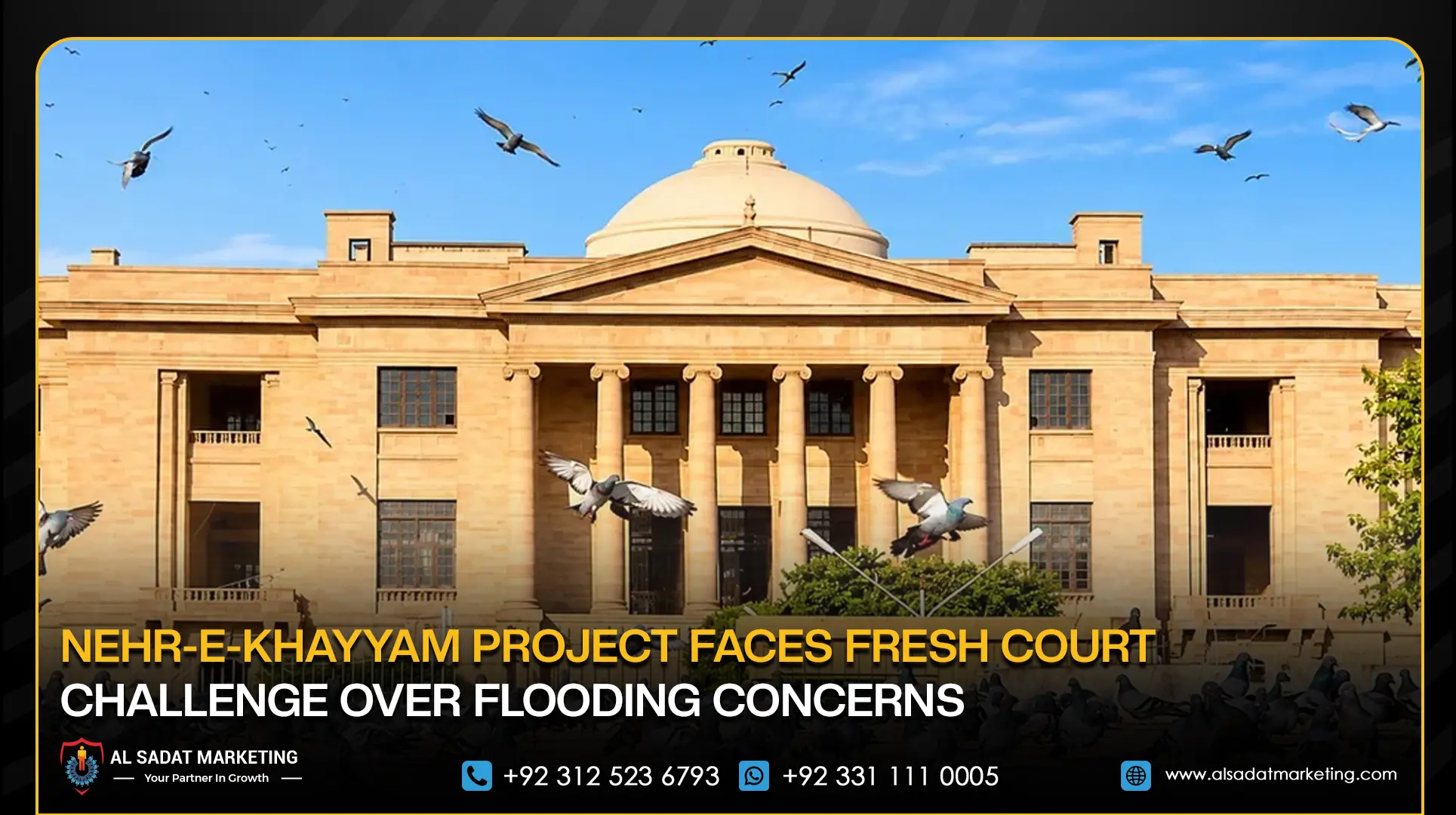
KARACHI: Construction work at Nehr-e-Khayyam has come under renewed legal scrutiny after representatives of Jamaat-e-Islami and residents of Clifton filed a fresh petition in the Sindh High Court. The petition, reported on October 31, 2026, raises concerns about the project’s potential impact on the waterway’s stormwater drainage function and the risk of flooding in surrounding areas.
The petitioners have alleged that changes to Nehr-e-Khayyam could affect its ability to carry rainwater and increase flooding risks in nearby neighbourhoods. They have asked the court to stop the construction and direct the removal of structures they believe are obstructing the drainage channel.

The legal challenge also questions the environmental assessments associated with the project and raises concerns about the possible commercial use of land connected to the waterway. However, these claims represent the petitioners’ position and have not been established as findings by the court.
The latest filing adds another legal challenge to the ongoing controversy surrounding Nehr-e-Khayyam. Previous reports have also covered litigation involving the waterway, making this a further development rather than the first court case concerning the project.
No new court order halting construction has been confirmed in the available reports. Details about a hearing date, directions to the relevant authorities or responses from the project administration have also not been provided.

The case has implications for residents and property owners in Clifton and nearby areas, where effective stormwater drainage is important for managing heavy rainfall. Any future court decision could affect how the project proceeds, particularly if concerns about drainage capacity and environmental compliance require further examination.
The next developments to watch include the court’s response to the petition, submissions from the relevant authorities and the availability of engineering and environmental assessments. Until the court issues further directions, the construction challenge remains under legal consideration.