
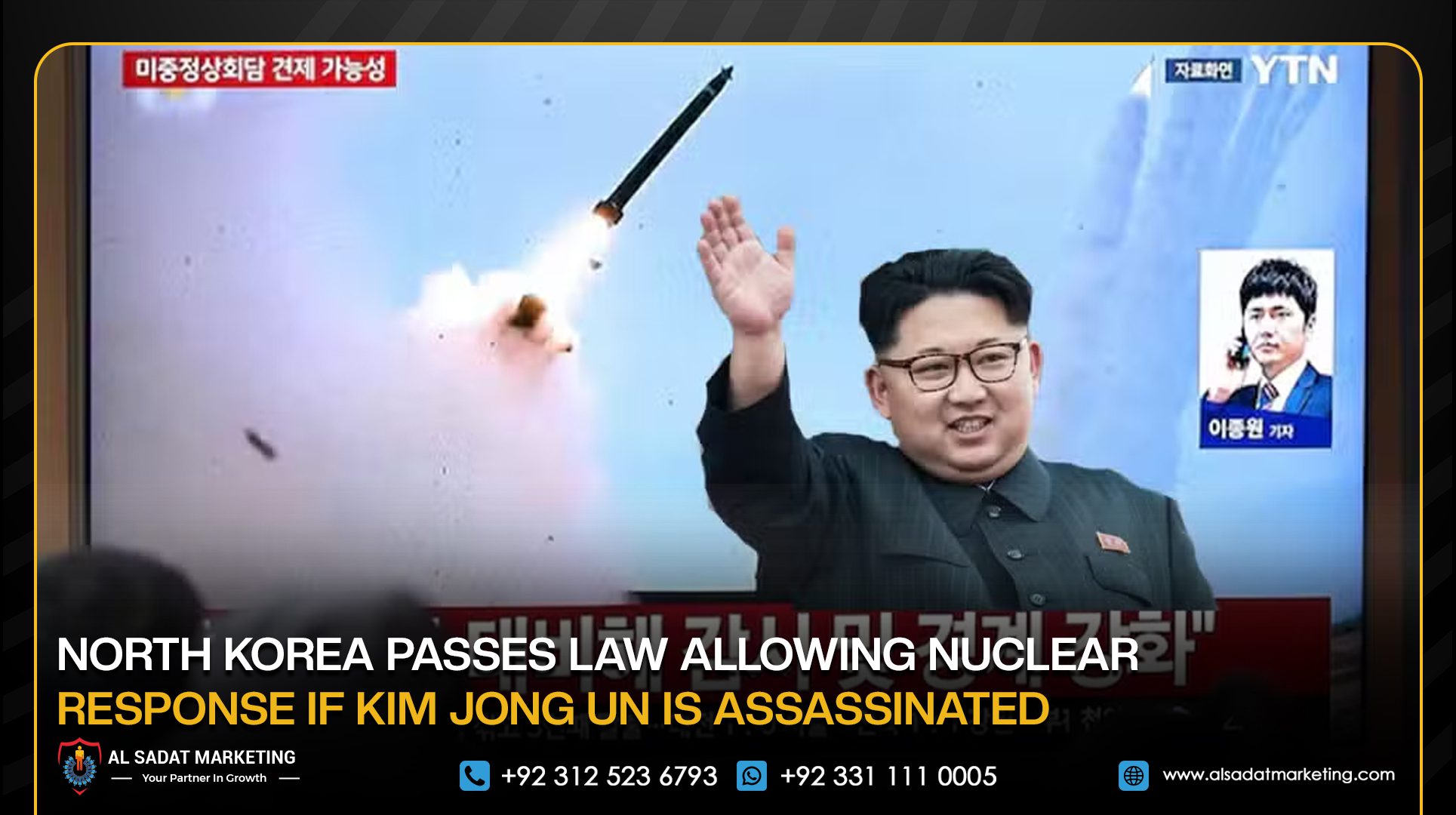
North Korea has reportedly revised its constitution to include provisions for an automatic nuclear response in the event that its leader, Kim Jong Un, is assassinated or incapacitated by a foreign attack, according to international media reports.
The amendment formalizes a retaliatory nuclear doctrine under which the country’s nuclear arsenal could be launched even if the top leadership is eliminated, effectively removing discretionary decision-making in such scenarios.
The change was reportedly adopted during the first session of the 15th Supreme People’s Assembly, held in Pyongyang on March 22. Details of the revision were later shared with South Korean officials by the National Intelligence Service (NIS).
Under the updated framework, Kim Jong Un remains the supreme commander of North Korea’s nuclear forces. The revised policy establishes pre-defined launch procedures intended to ensure immediate retaliation if the country’s nuclear command-and-control system is threatened or disabled.
According to the amended Article 3 of the nuclear policy law, any hostile action targeting the nuclear command structure would trigger an automatic and immediate nuclear strike.
Analysts suggest the move strengthens North Korea’s deterrence strategy by reducing ambiguity around nuclear retaliation. However, it has also raised international concern, as critics warn that removing human decision-making in crisis situations could increase the risk of rapid escalation or miscalculation during conflict scenarios.