
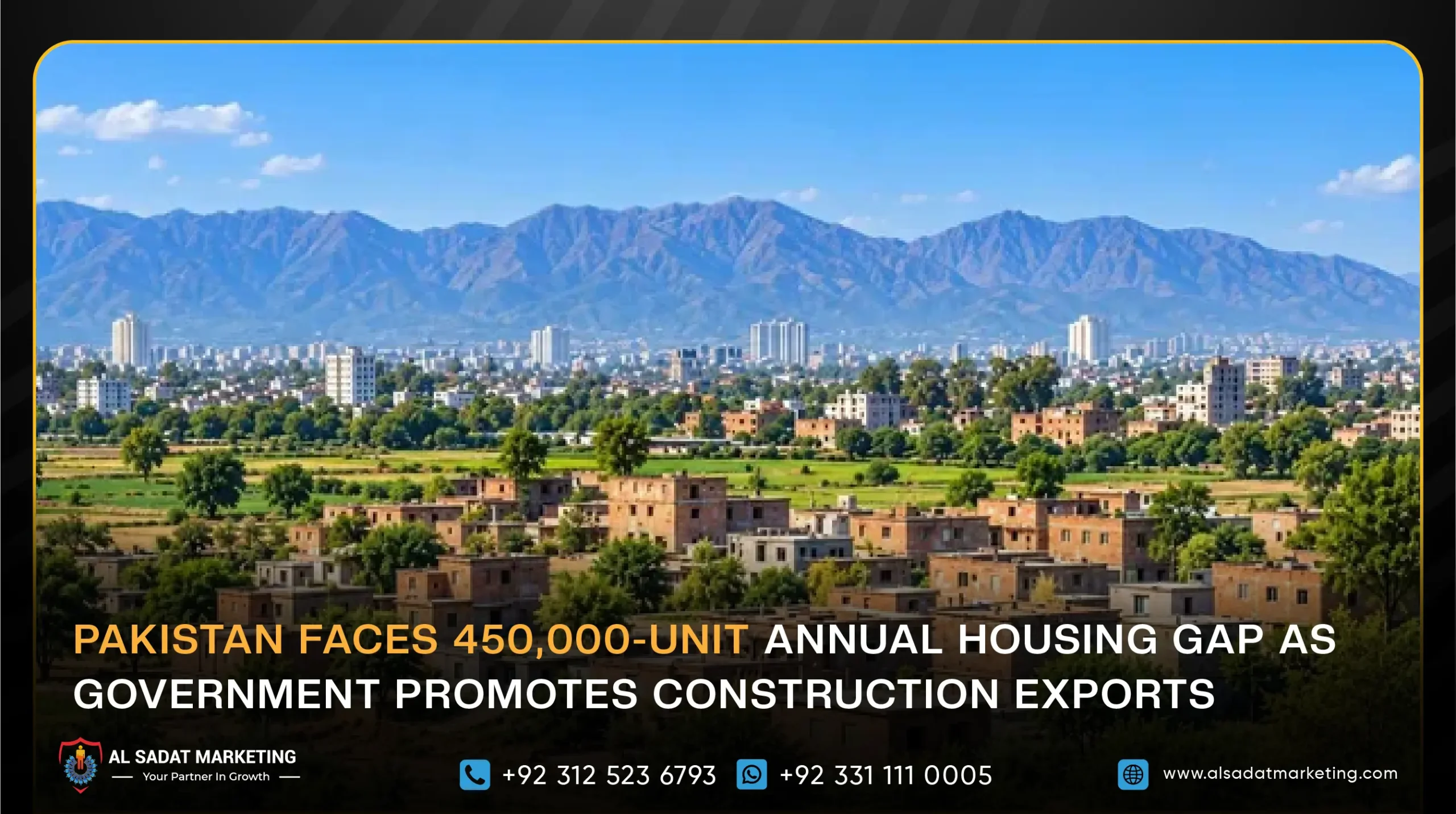
ISLAMABAD: Pakistan faces an estimated annual housing shortfall of 450,000 units, as demand for approximately 700,000 new homes exceeds the estimated supply of 250,000 units. Planning Minister Ahsan Iqbal has urged the country’s construction sector to expand its focus beyond the domestic market and attract greater international investment.
The figures highlight the challenge of meeting Pakistan’s growing housing requirements. Based on the estimates, current supply covers only around 36 percent of annual demand, leaving a substantial number of households without access to newly available housing.
The housing gap also points to the importance of increasing construction activity, improving access to financing and encouraging investment in residential development. However, expanding supply alone may not resolve affordability challenges if households cannot secure financing or afford the cost of completed homes.

Ahsan Iqbal has called on the construction industry to explore opportunities in international markets rather than relying exclusively on domestic demand. The approach could create opportunities for construction businesses to attract overseas investment and develop a stronger presence in export-oriented activities.
The minister’s remarks also bring attention to the potential role of Pakistan’s construction-related industries in international trade. Building-material manufacturers, contractors and other businesses may be able to explore opportunities abroad, although specific export targets, priority markets and implementation measures have not been detailed in the reported announcement.
The annual housing deficit is also different from Pakistan’s estimated accumulated housing shortage of around 13 million units. The annual figure measures the difference between new housing demand and supply over a year, while the larger estimate reflects a longer-term shortage built up over time.
Addressing the deficit will require coordinated efforts across the public and private sectors. Housing finance, land availability, construction costs, infrastructure development and effective planning will all influence how quickly additional homes can be delivered.

For developers and construction businesses, the government’s emphasis on international investment could create opportunities if it is followed by practical export support and clear investment policies. For homebuyers, however, the immediate benefit will depend on whether new construction translates into affordable homes and accessible financing.
Further details from the Ministry of Planning, Development and Special Initiatives will be important in determining how the government’s wider construction and investment ambitions develop into specific programmes and measurable housing outcomes.