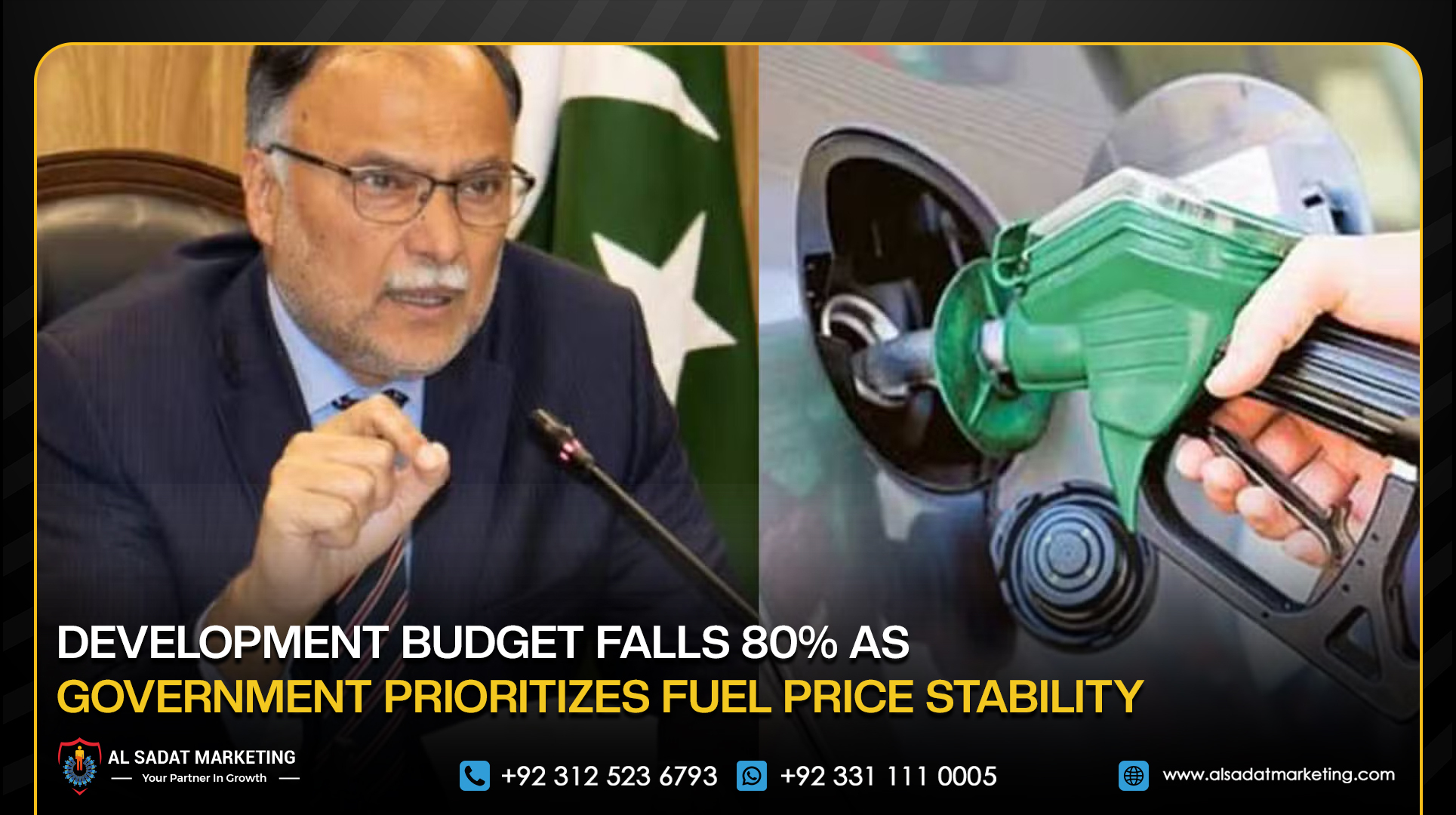
ISLAMABAD: Pakistan is facing very limited fiscal space for launching new development schemes in the upcoming financial year, Planning Minister Ahsan Iqbal said on Monday, warning that budget constraints will force authorities to turn down nearly Rs3 trillion ($10.7 billion) worth of project proposals despite pressing infrastructure and growth needs.
He said the tight situation highlights the fiscal challenges shaping the federal budget for 2026–27, expected later this week. While Pakistan has managed to stabilize its economy under a $7 billion International Monetary Fund (IMF) program after narrowly avoiding default in 2023, officials say debt servicing pressures and deficit reduction targets continue to squeeze public spending.
The Public Sector Development Program (PSDP)—the government’s main funding vehicle for infrastructure projects such as roads, dams, schools, hospitals, and energy schemes—has been set at Rs1.126 trillion ($4.0 billion) for the next fiscal year.
Iqbal said that once existing commitments and obligations are deducted, only around Rs165 billion ($589 million) remains available for new development work. After accounting for a Rs180 billion reduction carried over from the previous year, he added, the PSDP effectively falls into a negative balance.
“In effect, if you deduct the carried-over cut, the PSDP goes into a deficit of Rs15 billion,” he said during a meeting of the Annual Plan Coordination Committee, which finalizes development priorities ahead of the budget.
“There is hardly anything left for new projects.”
According to the minister, ministries submitted around Rs4.097 trillion ($14.6 billion) in development funding requests, including Rs3.377 trillion for ongoing schemes and Rs720 billion for new projects. In addition, proposals worth another Rs5.5 trillion were also submitted for future consideration.
“This means we will have to reject nearly Rs3 trillion in demands and selectively allocate only Rs1.126 trillion out of Rs4 trillion,” he said, calling the exercise “very unpleasant.”
Iqbal acknowledged that many proposed projects are important for national development but said they could not be accommodated within the constrained fiscal envelope.
He said much of the PSDP is already tied to existing obligations, including Rs125 billion for the N-25 highway project in Balochistan, along with development spending in Balochistan, Azad Jammu and Kashmir, Gilgit-Baltistan, and former tribal districts along the Afghan border.
He added that the government must also provide local-currency financing for foreign-funded projects supported by institutions such as the World Bank and the Asian Development Bank, further limiting available funds.
After excluding certain allocations, the effective development budget stands near Rs1 trillion, roughly the same level as in 2018, he said—despite inflation, population growth, and rising infrastructure needs.
“This is not a satisfactory situation for any country, as development investment needs to increase, not stagnate,” he added.