
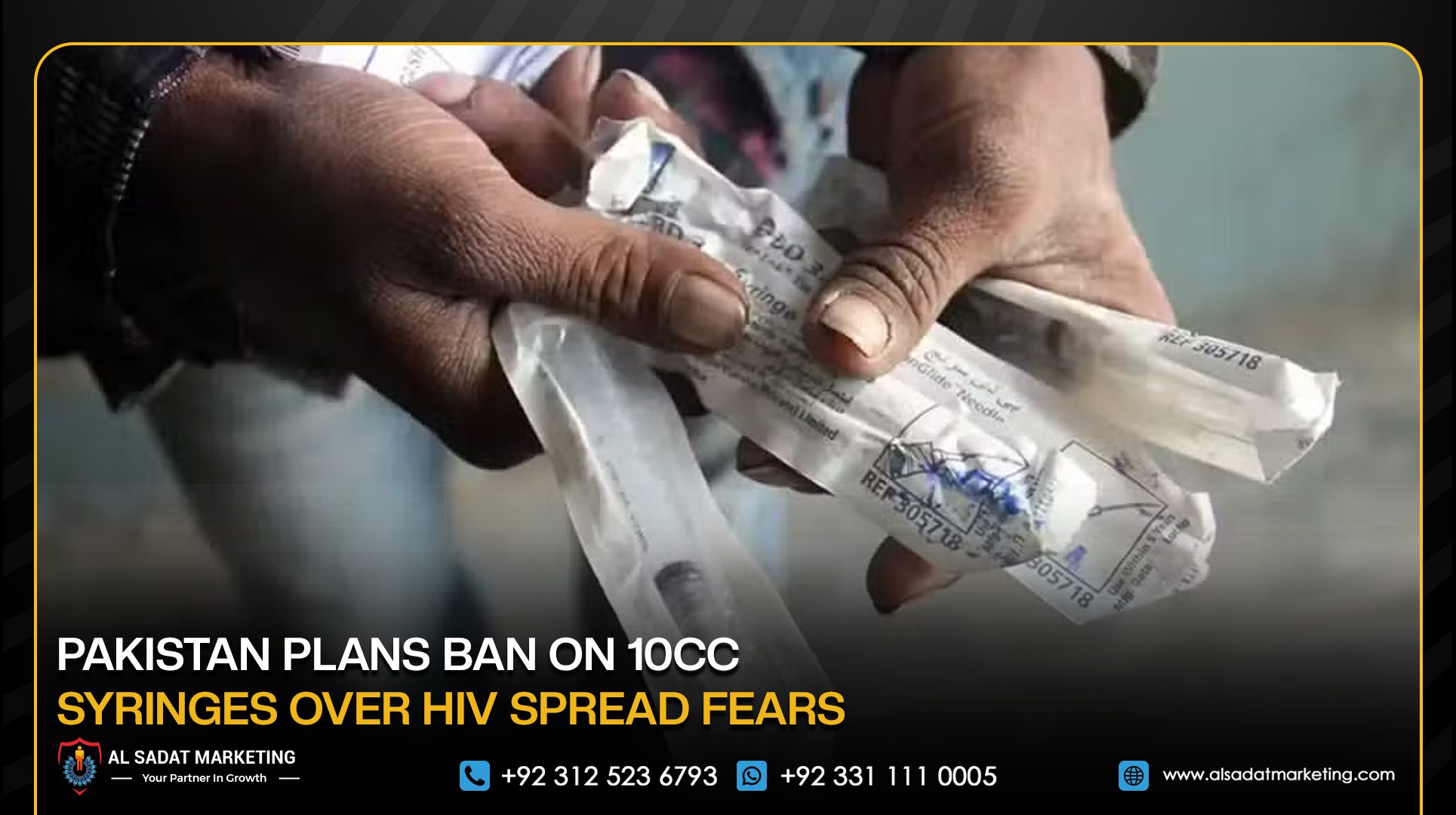
Federal Health Minister Syed Mustafa Kamal has announced that the government is preparing to ban 10cc syringes nationwide as part of efforts to curb unsafe medical practices and prevent the spread of infections.
Speaking at a press conference in Islamabad, the minister said authorities are working to ensure that syringes used once cannot be reused. He said the move follows evidence connecting several HIV infections, especially among children in Islamabad, Taunsa, and Karachi, to the repeated use of syringes.
Kamal added that 3cc syringes have already been banned, while 10cc syringes will also be gradually removed under the new health safety measures.
The minister dismissed reports claiming Pakistan is facing an HIV epidemic. He said the increase in reported cases is mainly due to wider screening efforts rather than any sudden outbreak.
According to official figures shared by Kamal, Pakistan had 49 HIV screening centers in 2020, where 37,944 people were tested and 6,910 cases were detected. By 2025, the number of centers had increased to 97, with 374,126 screenings conducted and 14,182 cases identified.
He said there are currently around 84,000 registered HIV patients in Pakistan, of whom nearly 61,000 are receiving treatment.
Kamal noted that HIV is now a manageable condition and no longer considered untreatable. However, he said HIV medicines are not sold openly in markets and are only available through designated government treatment centers.
He added that patients who consistently follow treatment plans do not pass the virus on to others.
The minister also said newer treatment methods are being introduced that may require medication only once every six months or once a year, compared to older treatments that needed daily use for life.
Rejecting claims of fresh outbreaks in Islamabad and Taunsa, Kamal clarified that no new cases have been reported in either city this year. He said the cases linked to Taunsa were from 2024, not 2026.
He further stated that Islamabad currently has 618 registered HIV cases, including 210 local residents and 408 people from outside the city, with no unusual rise in recent months.