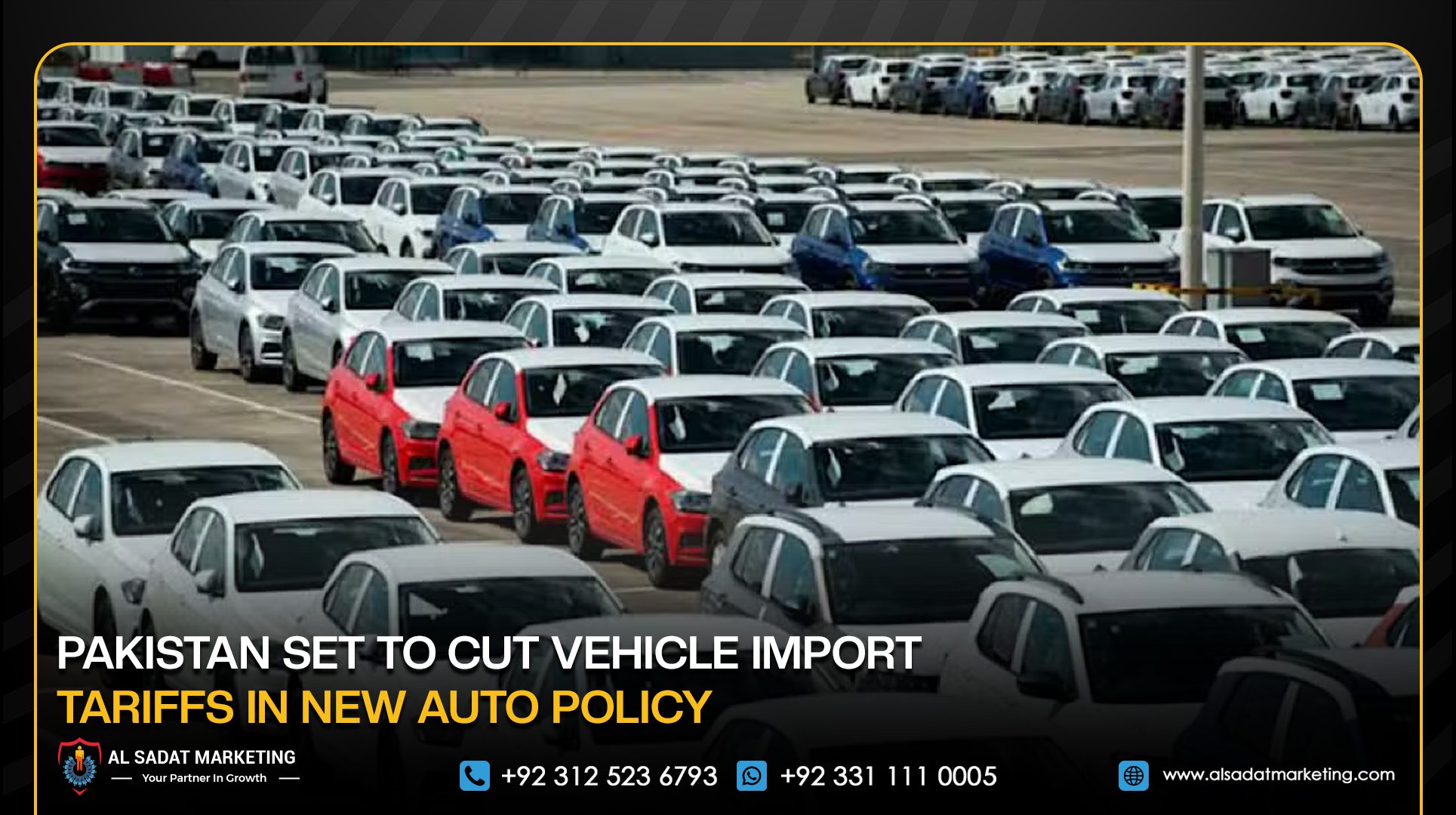
Pakistan has reached an understanding with the International Monetary Fund to introduce a new five-year auto sector policy that will gradually lower tariffs on vehicle imports as part of reforms linked to the country’s $7 billion bailout program.
Key Tariff Changes
Under the proposed plan:
- Weighted average tariff on vehicle imports will decline from 10.6% to 7.4% over four years by 2030
- In the 2026-27 budget, the average tariff is expected to drop first to 9.5%
- Customs duty on completely built-up (CBU) vehicles may be capped at 15% over the next five years
New Tariff Slabs Proposed
The current system is expected to be replaced with four tariff slabs:
- 0%
- 5%
- 10%
- 15%
Policy Launch Timeline
The new auto policy is expected to begin on July 1, 2026. It will first be shared with the IMF, then presented to the prime minister and federal cabinet for final approval.
Goals of the Reform
Officials say the policy aims to:
- Encourage local vehicle manufacturing
- Increase localization of auto parts
- Lower car prices for consumers
- Simplify Pakistan’s tariff structure
- Meet IMF reform commitments
Duties on Used Cars Also to Fall
Pakistan and the IMF have also agreed to gradually remove additional customs duties and regulatory duties in the auto sector by 2030.
A current 40% regulatory duty on used car imports is expected to be reduced step by step until it reaches zero.
Regulatory Changes
The government is also updating sector laws through the proposed Motor Vehicle Development Act, which would empower the Engineering Development Board to enforce:
- Environmental standards
- Vehicle safety rules
- Industry compliance measures
Other Import Rules Tightened
Authorities have also:
- Ended the personal baggage scheme for vehicle imports
- Tightened gift and transfer-of-residence schemes for used vehicles
- Taken steps to reduce misuse after commercial imports were allowed
Why It Matters
If implemented well, the policy could make vehicles more affordable, increase competition, and modernize Pakistan’s auto sector over the next five years.