
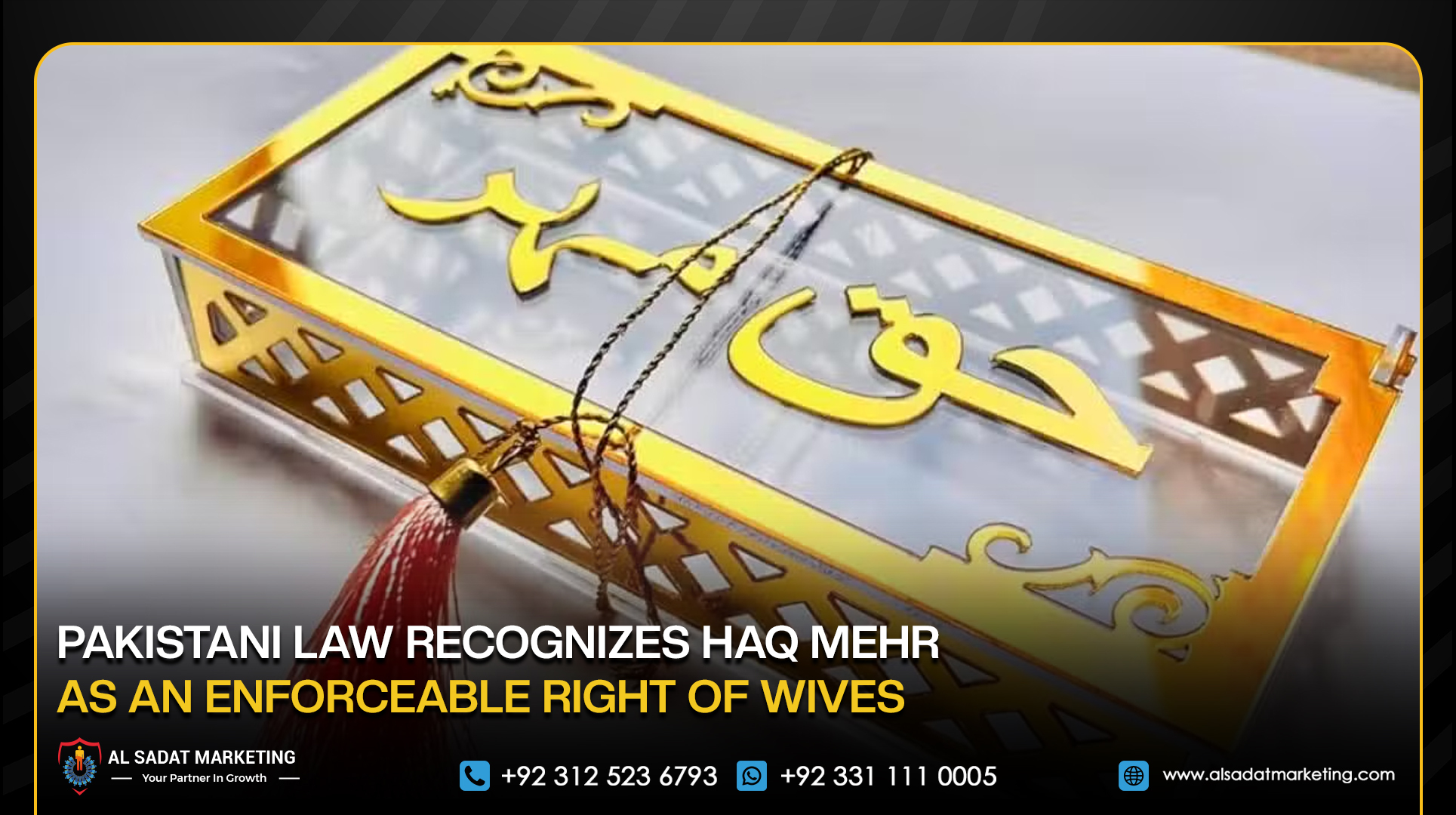
The Lahore High Court has ruled that Haq Mehr is a legally enforceable obligation of a husband and not a voluntary gift or favor to his wife.
In its judgment, the court emphasized that Haq Mehr is both a religious and legal right of a woman. It further clarified that, under the law, Haq Mehr is treated as a debt owed by the husband and must be fulfilled accordingly.
The court stated that any amount, property, or commitment agreed upon at the time of marriage is legally binding. This includes written agreements made alongside or separate from the Nikah Nama.
Dispute Over Property Promise
The case involved a woman who approached a family court seeking enforcement of a written agreement signed by her husband on the day of their marriage. According to the agreement, the husband had promised to transfer ownership of a five-marla house to her. She also sought maintenance for the iddat period.
The family court ruled in her favor, recognizing the agreement as valid and enforceable.
The husband later challenged the decision before the Lahore High Court, arguing that the document was fabricated and had been prepared after the marriage ceremony.
Court Upholds Family Court Decision
After reviewing witness testimonies and documentary evidence, the Lahore High Court dismissed the husband’s appeal and upheld the family court’s ruling.
The court noted that witnesses had verified the authenticity of the agreement during the proceedings and that the evidence clearly supported its legal validity.
Haq Mehr Rights Remain Intact
The judgment also addressed the common social reality that many women do not demand Haq Mehr during marriage due to family or societal pressures.
The court clarified that a woman’s failure to claim Haq Mehr during marriage does not mean she has surrendered or waived her legal right. The entitlement remains fully enforceable regardless of when it is claimed.
Haq Mehr Can Be Agreed in Different Forms
The court further explained that under Islamic principles, Haq Mehr may be determined verbally, documented in writing, or even fixed after the marriage has taken place. It can also be increased later if both spouses mutually agree.
The judgment stressed that family courts should consider social circumstances while resolving such disputes and apply legal provisions in a manner that promotes fairness and justice.
Legal experts believe the ruling will serve as an important precedent for future cases involving Haq Mehr, marital agreements, and the financial rights of women in marriage.