Pakistani Workers Struggle as Inflation in Construction Industry
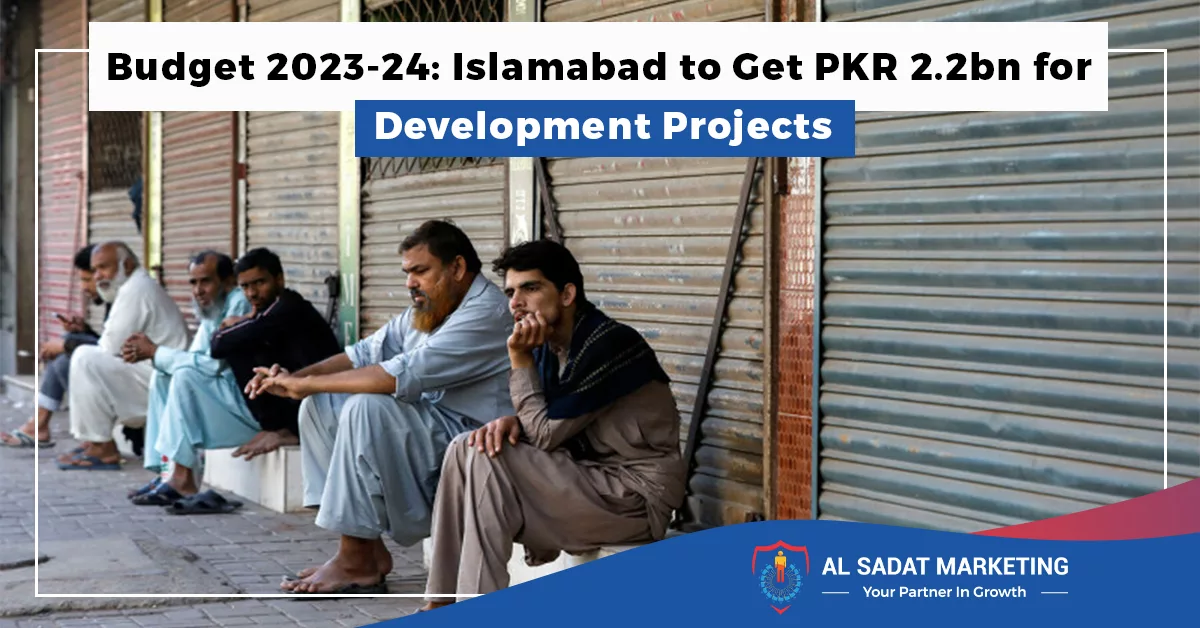
KARACHI: Every morning, construction worker Jamal Shah travels to Karachi’s bustling Burns Road, where he and numerous other workers wait by the roadside for a job on one of the city’s massive construction projects.
The 35-year-old claimed he had been sitting in the same place starting at 8am for several months. It becomes late, yet nobody shows up to offer employment.
- According to the builders organisation, 50 percent of Pakistani construction projects have been put on hold due to the country’s high operating costs.
- There are 25 million construction industry workers in Pakistan, and roughly 10 million of them are currently unemployed.
Shah is one of maybe hundreds of thousands of Pakistani daily wage workers who have lost their jobs as a result of the country’s many businesses, notably construction, scaling back their operations due to the country’s rising cost of doing business.
According to the statistics office, Pakistan’s consumer price index (CPI) increased 31.5 percent year over year in February, the highest yearly pace in almost 50 years, as food, beverage, and transportation costs increased by more than 45 percent. In order to prevent an economic collapse, the administration is presently negotiating to secure an IMF bailout arrangement.
We arrive at 8 and stay until 5 PM in this sweltering sun, yet we are not given any work. The cause? The only cause, according to Shah, who must send money to his family in Pakistan’s Bajaur province in the northwest, is inflation. How will we make money?
Noor Hussain, 30, claimed that the Rs200–300 (a little over a dollar) daily income labourers received was hardly enough for him to support himself and left him with nothing to send to his family in Sindh’s Larkana district.
He stated, “I have three children, my mother, and we are quite concerned about inflation. There is work and there isn’t work at times.
The construction industry supports more than 72 affiliated businesses, according to the Pakistan Credit Rating Agency (PACRA) and the Association of Builders and Developers (ABAD). It employs roughly 7.61 percent of Pakistan’s total labour force.
In response to the recent economic crisis, ABAD recently sent a distress signal to the government, pleading for assistance. In particular, ABAD asked that the government permit the creation of letters of credit for the import of steel and other raw materials in order to keep the industrial wheel turning.
The government has banned the import of products, including industrial raw materials, in order to stop dollar outflows because the central bank’s foreign exchange reserves are currently only enough to support a month’s worth of imports.
According to Nadeem Yousuf Jeewa, vice chairman of the ABAD, “at the moment, 50% of construction projects carried out by the industry have stopped, and the rest are likely to face the same fate due to the steel and cement prices.”
“Steel, which was available for Rs160,000 per tonne about a year ago, is now available for Rs 300,000,” the speaker continued. This indicates that the cost per square foot, which was Rs3,000 over a year ago, has increased to Rs6,000 and is now above the projects’ projected costs.
According to Jeewa, the industry employs over 25 million people, and nearly 10 million of them are currently in danger of losing their jobs.
“This means that those who were getting a job daily are now only able to get it two or three times a week,” he explained. “This is how much of an impact they have.”
Vice-Chairman of ABAD stated that the organisation had lobbied the government to allow imports of steel from nearby nations like Iran and India, where prices were
“The cost per tonne is approximately $600 in Iran and $700 or so in India. The cost in Pakistan might reach about $1,100.
According to Shamoon Baker Ali, the head of the Karachi Iron and Steel Merchants Association (KISMA), the cost of steel used in construction, or rebar, has climbed by roughly 50% from the previous year.
“Price reductions and the availability of cheap rebar in Pakistan will be possible if the government permits the import of rebar from China,” he claimed.
According to dealers and manufacturers, Pakistan’s production and sales of cement have also been hurt by the country’s fall in the number of construction projects.
From Rs749 in March 2022, the average price of cement in Pakistan has risen to around Rs1,155 per bag.
The first eight months of the current fiscal year saw a 16.65 percent decrease in total cement dispatches as compared to the same period last year, according to data issued by the All Pakistan Cement Manufacturers Association earlier this month.
According to cement dealer Muhammad Arif, “Earlier, every shopkeeper would sell 200 to 300 bags per day, but the sales today have dropped to just 20 to 25 bags, and the reason for that is inflation.”
You can also invest in other famous and most in demand housing societies, such as , Blue World City, Rudn Enclave, 7 Wonders City Peshawar, Taj Residencia, Kingdom Valley, New Metro City Gujar Khan, Forest Town Rawalpindi, University Town Rawalpindi, ICHS Town, Park View City Islamabad, Multi Gardens B17 Islamabad and Nova City Islamabad.
Al Sadat Marketing please contact 0331 1110005 or visit https://alsadatmarketing.com/
Few more real estate housing schemes which are trending now a days in Islamabad by including: Faisal Town Phase 2, Prism Town Gujar Khan, New City Paradise, Eighteen Islamabad, 7 Wonders City Islamabad, Capital Smart City, Silver City Islamabad, The Life Residencia, Faisal Town Islamabad, Islamabad Golf City, Islamabad Model Town and Marble Arch Enclave.
Al Sadat Marketing is an emerging Real Estate Agency headquartered in Islamabad, Pakistan. With over 10+ Years of experience, Al Sadat Marketing is providing its services and dealing all trending housing societies projects in different cities of Pakistan. Islamabad Projects, Rawalpindi Projects, Gujar Khan Projects, Burhan Projects, and Peshawar Projects etc.
Book Your Plot Now: +92 331 111 0005