
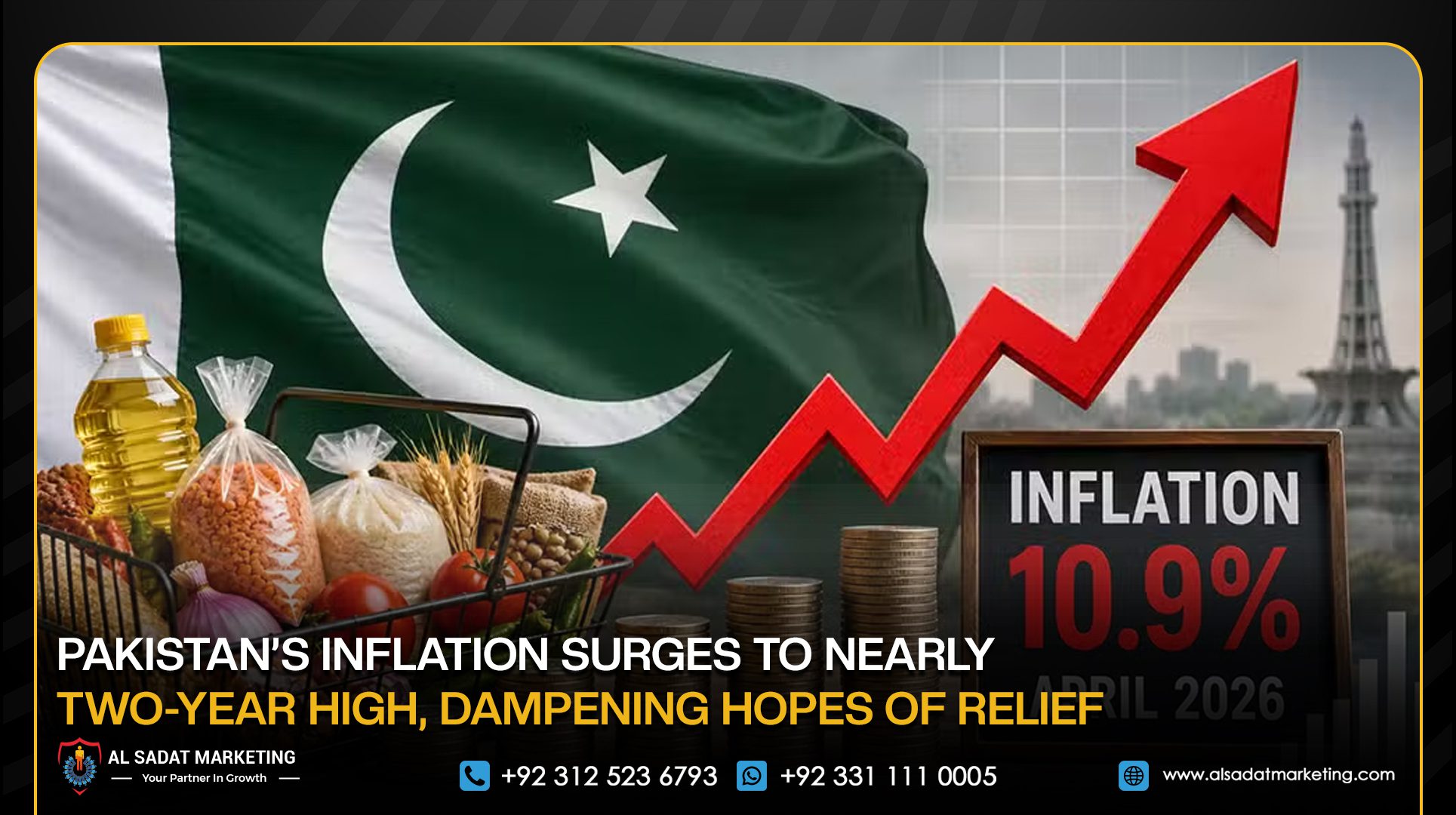
Pakistan’s inflation climbed to 10.9 percent in April 2026, marking its highest level in nearly two years, according to data shared by Arif Habib Limited and confirmed by the Pakistan Bureau of Statistics.
The latest figures show a sharp rise in consumer prices compared to both the previous month and the same period last year, reflecting renewed pressure on household budgets across the country.
The Consumer Price Index (CPI) inflation rose 10.9 percent year-on-year in April 2026, up significantly from 7.3 percent in March 2026 and just 0.3 percent in April 2025. On a month-on-month basis, prices increased by 2.5 percent, compared to a 1.2 percent rise in March, while April last year had recorded a decline of 0.8 percent.
Urban areas experienced slightly higher inflation, with CPI rising 11.1 percent year-on-year, compared to 7.4 percent in March. Monthly urban inflation also increased by 2.7 percent. Rural inflation followed a similar trend, reaching 10.6 percent year-on-year, with a 2.1 percent monthly increase.
Essential goods saw even stronger pressure, as the Sensitive Price Indicator (SPI) rose 10.1 percent year-on-year, reversing the decline seen a year earlier. On a monthly basis, SPI inflation increased by 2.0 percent, showing continued strain on food and daily-use commodities.
Wholesale prices also surged, with the Wholesale Price Index (WPI) climbing 13.6 percent year-on-year, highlighting rising costs across production and supply chains. Monthly wholesale inflation stood at 5.1 percent, indicating sustained input cost pressures for businesses.
Core inflation trends also moved upward. Urban non-food non-energy (NFNE) inflation reached 8.0 percent year-on-year, while rural core inflation stood at 8.5 percent, reflecting persistent underlying price pressures beyond food and fuel.
Trimmed core inflation, which removes volatile items, also showed a notable rise. Urban trimmed inflation jumped to 9.2 percent year-on-year, while rural trimmed inflation increased to 8.9 percent, signaling broad-based inflationary pressure across both urban and rural economies.
Economists suggest the surge reflects multiple factors, including supply-side constraints, higher energy costs, and imported inflation pressures. Rising prices in essential goods and services continue to impact household purchasing power, especially for lower and middle-income groups.
The overall inflation trend indicates that price stability remains a key economic challenge, with both consumer and wholesale markets showing upward pressure across multiple categories.
The latest data underscores the need for stronger economic management, improved supply chain efficiency, and targeted policy measures to control inflationary pressures in the coming months.